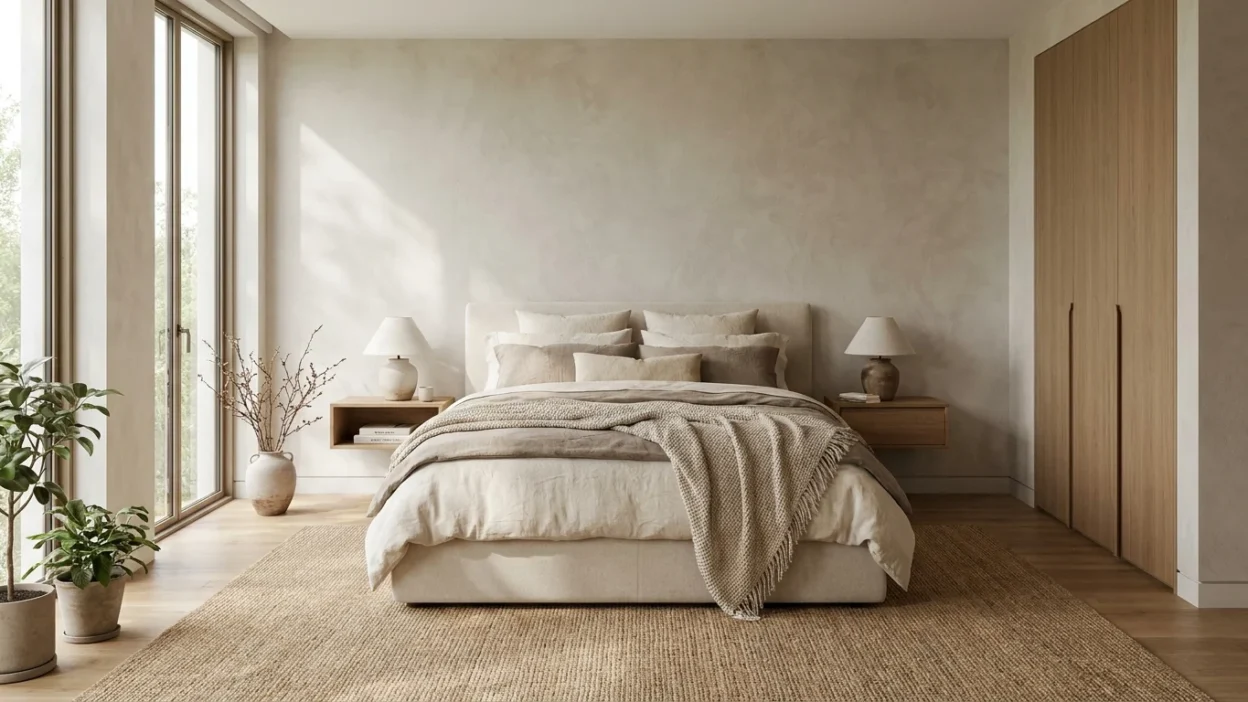
Finding the right synonyms for bedroom can make your writing more varied, natural and descriptive. Although bedroom is a simple and familiar word, English offers many alternatives that can change the tone or provide a more specific description of the space.
A bedroom is generally a private room in a house, flat, hotel or other building where someone sleeps. Depending on the setting, it may also be called a sleeping room, bedchamber, chamber, sleeping quarters, guest room, master bedroom, suite or bunk room.
Understanding these differences is important if you want your English to sound precise. A word that works well in a historical novel may sound unusual in an everyday conversation about your home.
Synonyms of Bedroom
The most suitable alternative for bedroom depends on the context. Some words are direct or near synonyms, while others describe a particular type of bedroom.
| Synonym | Pronunciation (IPA) | Part of Speech | Meaning | Example Sentence |
| Sleeping room | /ˈsliːpɪŋ ruːm/ | Noun | A room intended for sleeping | The cottage has a small sleeping room upstairs. |
| Bedchamber | /ˈbedtʃeɪmbə/ | Noun | A bedroom, especially in historical or formal language | The prince retired to his bedchamber. |
| Chamber | /ˈtʃeɪmbə/ | Noun | A private room, traditionally including a bedroom | The old house contained a spacious chamber. |
| Sleeping quarters | /ˈsliːpɪŋ ˈkwɔːtəz/ | Noun phrase | A place or rooms where people sleep | The sailors returned to their sleeping quarters. |
| Sleeping area | /ˈsliːpɪŋ ˌeəriə/ | Noun phrase | A space designed for sleeping | The studio flat has a separate sleeping area. |
| Guest room | /ˈɡest ruːm/ | Noun | A bedroom provided for visitors | We prepared the guest room for our relatives. |
| Spare room | /ˈspeə ruːm/ | Noun | An extra room that can be used as a bedroom | She turned the spare room into an office. |
| Principal bedroom | /ˈprɪnsəpəl ˈbedruːm/ | Noun phrase | The main bedroom in a home | The principal bedroom overlooks the garden. |
| Master bedroom | /ˌmɑːstə ˈbedruːm/ | Noun phrase | The largest or main bedroom in a home | The master bedroom has its own bathroom. |
| Children’s room | /ˈtʃɪldrənz ruːm/ | Noun phrase | A bedroom used by children | The children’s room was decorated with bright colours. |
| Nursery | /ˈnɜːsəri/ | Noun | A room prepared for a baby or young child | They decorated the nursery before the baby arrived. |
| Dormitory | /ˈdɔːmɪtəri/ | Noun | A room or building where several people sleep | The students shared a dormitory at the college. |
| Bunk room | /ˈbʌŋk ruːm/ | Noun phrase | A room containing several bunk beds | The holiday cottage has a large bunk room. |
| Sleeping quarters | /ˈsliːpɪŋ ˈkwɔːtəz/ | Noun phrase | Designated sleeping accommodation | The crew’s sleeping quarters were below deck. |
| Suite | /swiːt/ | Noun | A set of connected rooms, often including a bedroom | The hotel offered a luxurious suite. |
| Lodging room | /ˈlɒdʒɪŋ ruːm/ | Noun phrase | A room provided as accommodation | The traveller was given a simple lodging room. |
| Private room | /ˈpraɪvət ruːm/ | Noun phrase | A room intended for one person or private use | She requested a private room for the night. |
| Sleeping chamber | /ˈsliːpɪŋ ˈtʃeɪmbə/ | Noun phrase | A room specifically used for sleeping | The castle contained a large sleeping chamber. |
| Bed space | /ˈbed speɪs/ | Noun phrase | A designated area for a bed or sleeping | Each resident was given a private bed space. |
| Accommodation room | /əˌkɒməˈdeɪʃən ruːm/ | Noun phrase | A room provided for temporary or residential accommodation | The building contains several accommodation rooms. |
Some of these expressions are contextual alternatives rather than exact synonyms. In everyday English, bedroom remains the most natural and widely used term.
What Does Bedroom Mean?
A bedroom is a room in a home, hotel or other building that is primarily used for sleeping.
The word combines bed and room, making its basic meaning quite straightforward: a room containing a bed or intended for sleeping.
For example:
My bedroom is on the first floor.
Here, bedroom clearly identifies the purpose of the room.
A bedroom can also serve several additional purposes. People may use it for reading, studying, dressing, relaxing or working. However, its main function is normally sleeping.
Bedroom in a house
In a home, bedrooms are usually private spaces.
A house may contain:
- a principal bedroom
- children’s bedrooms
- a guest bedroom
- a spare bedroom
- a nursery
- additional bedrooms
The exact terminology depends on the occupants and purpose of each room.
Bedroom in a hotel
Hotels often use bedroom differently.
A standard hotel room may contain a bed, bathroom, wardrobe, desk and other facilities. In everyday conversation, people may simply call it a room rather than a bedroom.
For example:
We booked a room for two nights.
The word room works because the context makes the purpose clear.
Bedroom in historical writing
Older houses, castles and estates are often described using words such as bedchamber or chamber.
For example:
The queen entered her private bedchamber.
These words create a historical atmosphere and are especially common in novels, historical accounts and descriptions of old buildings.
Most Common Synonyms for Bedroom
1. Sleeping Room
Sleeping room is one of the clearest literal alternatives to bedroom.
It describes a room intended primarily for sleeping. The phrase is understandable, but bedroom is much more common in everyday British English.
Example:
The small cottage has one sleeping room upstairs.
This term can be useful when you want to emphasise the function of the room rather than its conventional name.
2. Bedchamber
Bedchamber is a traditional word for a bedroom.
It often appears in historical writing, literature and descriptions of grand houses or castles.
Example:
The king retired to his private bedchamber.
In modern everyday conversation, saying bedchamber instead of bedroom may sound theatrical or old-fashioned.
It is therefore an excellent choice for historical or literary writing but usually unnecessary in casual speech.
3. Chamber
Chamber is a broader word that can mean a room, especially a private room.
Historically, it could refer to a bedroom or private living space.
Example:
The nobleman returned to his chamber.
In modern English, chamber is not normally used as a direct replacement for bedroom. Its meaning is broader and can depend on context.
4. Sleeping Quarters
Sleeping quarters refers to a place or group of rooms where people sleep.
It is especially useful when discussing groups of people, such as soldiers, sailors, workers or students.
Example:
The crew went to their sleeping quarters after dinner.
It sounds more functional than bedroom and is not usually used to describe an ordinary family bedroom.
5. Sleeping Area
A sleeping area is a space set aside for sleeping.
This expression is particularly useful when the sleeping space is not a separate room.
For example, a studio flat may have a living area and a sleeping area without having a separate bedroom.
Example:
The flat has an open-plan sleeping area.
This makes sleeping area more precise than bedroom in certain situations.
6. Guest Room
A guest room is a bedroom intended for visitors.
It is one of the most common bedroom-related expressions in British English.
Example:
We cleaned the guest room before our friends arrived.
A guest room is technically a type of bedroom rather than a perfect synonym for every bedroom.
7. Spare Room
A spare room is an additional room that is not regularly occupied.
It can be used as a guest bedroom, office, storage space or hobby room.
Example:
We use the spare room when relatives come to stay.
The important difference is that a spare room does not necessarily function as a bedroom all the time.
8. Principal Bedroom
Principal bedroom is a modern term for the main or most important bedroom in a home.
It is increasingly used in property descriptions and contemporary writing.
Example:
The principal bedroom has an en-suite bathroom and a balcony.
It is more specific than bedroom because it identifies the main bedroom rather than any bedroom.
9. Master Bedroom
Master bedroom traditionally refers to the main or largest bedroom in a house.
For example:
The master bedroom has a large wardrobe.
The term remains widely recognised, particularly in property descriptions and everyday speech, although principal bedroom is also used in modern contexts.
10. Children’s Room
A children’s room is a room designed or used by children.
It may contain one or more beds, toys, desks and storage areas.
Example:
The children’s room was decorated with colourful furniture.
It is more specific than bedroom because it tells us who uses the room.
Difference Between Bedroom and Its Synonyms
Understanding the difference between bedroom and related words is essential for accurate English.
| Word | Meaning | Relationship to Bedroom |
| Sleeping room | Room intended for sleeping | Close alternative |
| Bedchamber | Traditional or historical bedroom | Near synonym |
| Chamber | Private room | Broader term |
| Sleeping quarters | Place where people sleep | Usually refers to group accommodation |
| Sleeping area | Space used for sleeping | May not be a separate room |
| Guest room | Bedroom for visitors | Specific type of bedroom |
| Spare room | Extra room | May or may not be used as a bedroom |
| Principal bedroom | Main bedroom | Specific type of bedroom |
| Master bedroom | Main or largest bedroom | Specific type of bedroom |
| Nursery | Room for a baby or young child | Special type of bedroom |
| Dormitory | Shared sleeping room/building | Not a normal private bedroom |
| Bunk room | Room with bunk beds | Special type of bedroom |
| Suite | Group of connected rooms | Usually larger than a bedroom |
| Stairway | Set of stairs | Not a synonym for bedroom |
Bedroom vs sleeping room
These terms are very close in meaning.
Bedroom is the normal everyday term.
Sleeping room is more descriptive and may be used when the function of the room needs emphasis.
Bedroom vs bedchamber
The main difference is style and historical association.
Bedroom is modern and neutral.
Bedchamber sounds traditional, formal or literary.
Compare:
She went to her bedroom.
with:
The queen returned to her bedchamber.
The second sentence creates a historical atmosphere.
Bedroom vs guest room
A guest room is a bedroom, but it has a specific purpose.
A guest room is intended for visitors, whereas a bedroom can be occupied by anyone.
Bedroom vs spare room
A spare room is an additional room that is not regularly used by a particular resident.
It may contain a bed, but it could also be an office or hobby room.
Therefore:
Every guest bedroom may be a spare room, but not every spare room is necessarily a bedroom.
Bedroom vs nursery
A nursery is designed for a baby or young child.
It can be used for sleeping, but it may also be used for changing, feeding and caring for the child.
Bedroom vs dormitory
A bedroom is generally private or shared by a small number of household members.
A dormitory usually accommodates several people.
Therefore, these words should not be used interchangeably.
Bedroom vs suite
A suite is generally a collection of connected rooms.
A hotel suite may include:
- a bedroom
- a sitting room
- a bathroom
- a dining or working area
Therefore, suite is broader than bedroom.
Common Mistakes When Using Bedroom
Treating every related word as an exact synonym
Words such as guest room, nursery and suite are not exact replacements for bedroom.
They describe particular types of rooms or accommodation.
Always check whether the alternative has the same meaning before replacing the original word.
Using “chamber” in everyday conversation
Although chamber can refer to a bedroom historically, saying:
I am going to my chamber.
would sound unusual in modern British English.
The natural expression is:
I am going to my bedroom.
Use chamber when the context is historical, literary or formal.
Confusing a suite with a bedroom
A suite normally contains several connected areas.
For example:
We booked a suite at the hotel.
This does not simply mean that you booked a bedroom. It suggests a larger accommodation arrangement.
Calling every spare room a bedroom
A spare room can be used for many purposes.
For example:
We turned the spare room into a study.
Once it is used as a study rather than sleeping accommodation, bedroom may no longer be the best description.
Using “dormitory” for a private bedroom
A dormitory usually involves shared sleeping accommodation.
You should not normally describe a private bedroom as a dormitory.
Tips for Using Bedroom Correctly
1. Use “bedroom” in everyday English
When speaking or writing about an ordinary room where someone sleeps, bedroom is usually the best choice.
For example:
My bedroom is next to the bathroom.
There is no need to replace it with a more complicated expression.
2. Use “guest room” when visitors are involved
If a bedroom is specifically intended for visitors, guest room is more precise.
For example:
We prepared the guest room for our relatives.
This tells the reader more than simply saying bedroom.
3. Use “spare room” when the room has no fixed occupant
If an extra room is available for different purposes, spare room is often appropriate.
For example:
The spare room is currently being used as an office.
4. Use “bedchamber” for historical settings
When writing about castles, kings, queens or historical homes, bedchamber can create an appropriate atmosphere.
For example:
The queen summoned her advisers to the bedchamber.
The word immediately gives the sentence a more historical feel.
5. Use “sleeping area” for open-plan spaces
If there is no separate bedroom, use sleeping area.
For example:
The studio contains a kitchen, living space and sleeping area.
This is much more accurate than calling the entire open-plan space a bedroom.
6. Use “nursery” for babies and very young children
If a room has been specially prepared for a baby, nursery is more informative than bedroom.
For example:
The nursery is ready for the new arrival.
7. Use “dormitory” for shared accommodation
In educational institutions and hostels, dormitory is suitable when several people share sleeping accommodation.
For example:
The university dormitory accommodates six students.
8. Consider your audience
A property advertisement may use terms such as principal bedroom, guest bedroom and en-suite bedroom.
A children’s story might use sleeping chamber or bedchamber for a historical setting.
An everyday conversation will normally use bedroom.
The best vocabulary is always vocabulary that suits the situation.
Bedroom Vocabulary in British English
British English has several common expressions related to bedrooms.
For example:
- bedroom – the standard term
- spare bedroom – an additional bedroom
- guest bedroom – a bedroom for visitors
- principal bedroom – the main bedroom
- en-suite bedroom – a bedroom with its own bathroom
- children’s bedroom – a bedroom used by children
- box room – a very small room, sometimes used as a bedroom
- loft bedroom – a bedroom created in a loft or attic space
These expressions can be more useful than trying to replace bedroom with a rare synonym.
For example:
The house has three bedrooms and a spacious principal bedroom.
This is more natural than repeatedly using unusual alternatives such as bedchamber or sleeping chamber.
Choosing the Best Synonym for Different Situations
The right choice depends on what you want to communicate.
For everyday conversation
Use:
Bedroom
This is the safest and most natural option.
For a hotel
Use:
Room, guest room or suite, depending on the accommodation.
For visitors
Use:
Guest room or guest bedroom.
For an extra room
Use:
Spare room.
For a baby
Use:
Nursery.
For shared student accommodation
Use:
Dormitory.
For a historical story
Use:
Bedchamber or sleeping chamber.
For an open-plan home
Use:
Sleeping area.
This context-based approach will help you avoid awkward vocabulary choices.
Why Learning Synonyms for Bedroom Is Useful
Learning synonyms for bedroom can improve both vocabulary and writing style, but the main benefit is understanding specificity.
Consider these sentences:
The house has four bedrooms.
This gives basic information.
The house has a principal bedroom, two children’s bedrooms and a guest room.
The second sentence gives much more information without becoming unnecessarily complicated.
Good vocabulary is not simply about finding a different word. It is about finding the most accurate word.
This is particularly important for students and writers. In descriptive writing, choosing between bedroom, bedchamber, sleeping area and guest room can change the atmosphere and meaning of a sentence.
In property writing, the distinction between a bedroom, principal bedroom, box room and suite can also be important.
Summary
There are many useful synonyms for bedroom, but they do not all have exactly the same meaning.
The most direct alternatives include sleeping room, bedchamber, sleeping chamber and, in some contexts, chamber. Other expressions describe particular types of bedroom, such as guest room, spare room, principal bedroom, master bedroom, nursery and bunk room.
For shared sleeping accommodation, dormitory and sleeping quarters may be appropriate. For open-plan homes, sleeping area is often more accurate. A suite, meanwhile, usually includes a bedroom plus additional rooms or areas and therefore should not be treated as a direct synonym.
The most important rule is simple: choose the word that matches the context.
In ordinary British English, bedroom remains the clearest and most natural choice. More specialised alternatives are useful when you want to show purpose, occupants, accommodation type, historical setting or architectural detail.
FAQ
1. What is the best synonym for bedroom?
The closest alternatives include sleeping room, bedchamber and sleeping chamber. However, bedroom is normally the most natural word in modern British English.
2. What is another word for a bedroom?
Depending on the context, you can use sleeping room, bedchamber, sleeping chamber or chamber. For specific types of bedrooms, terms such as guest room, spare room and principal bedroom may be more appropriate.
3. Is “bedchamber” a synonym for bedroom?
Yes. Bedchamber is an older or more formal word for bedroom. It is especially common in historical and literary writing rather than everyday conversation.
4. Is “guest room” the same as bedroom?
A guest room is a type of bedroom intended for visitors. Therefore, it is related to bedroom but is more specific.
5. What is a synonym for bedroom in a hotel?
In a hotel, room is usually the most natural term. Depending on the accommodation, you might also use guest room or suite. A suite is larger and generally contains more than one area.
6. What is another word for a child’s bedroom?
Depending on the child’s age, you can use children’s room, children’s bedroom or nursery. A nursery usually refers to a room prepared for a baby or very young child.
7. What is the difference between a bedroom and a sleeping area?
A bedroom is normally a separate room intended for sleeping. A sleeping area may simply be a designated part of a larger open-plan space, such as a studio flat.
8. Is “dormitory” another word for bedroom?
Not exactly. A dormitory is usually a shared sleeping room or building, particularly in schools, universities and hostels. A normal private bedroom should not generally be called a dormitory.