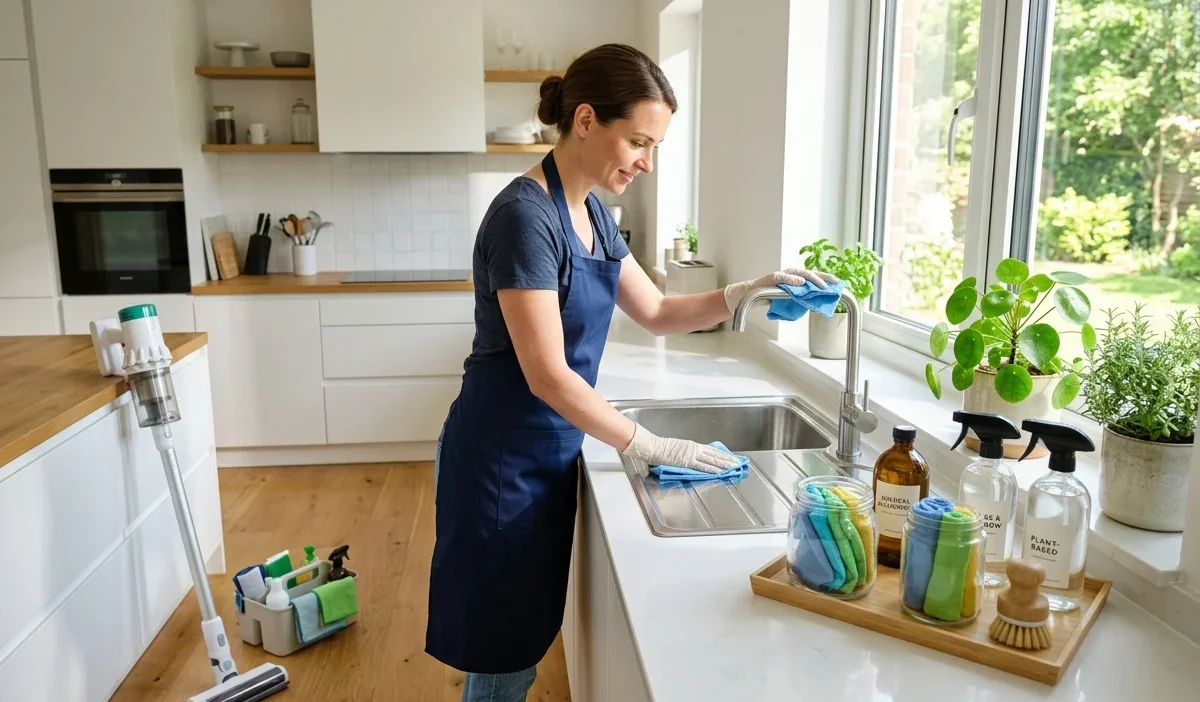
The English language is filled with words that have similar meanings but are used in different situations. One such word is cleaner, which has several meanings depending on the context.
It can refer to a person whose job is cleaning homes or workplaces, a product used for cleaning, or something that is cleaner than another item. Because of these different meanings, there are many synonyms that can replace cleaner in specific situations.
Choosing the right synonym helps you communicate more accurately and naturally. For example, if you are referring to someone who cleans offices, the word janitor or housekeeper may be more appropriate.
If you are talking about a cleaning product, detergent or disinfectant might be the better choice. Likewise, when describing something that is more hygienic or environmentally friendly, words such as purer, tidier, or greener may fit the context perfectly.
Understanding these differences not only improves your vocabulary but also strengthens your writing and speaking skills. Whether you are a student, writer, job seeker, or English learner, learning the most suitable synonyms for cleaner can help you express your ideas with greater confidence and precision.
Synonyms of Cleaner
The word cleaner has several meanings, so its synonyms can be grouped into different categories.
A. Synonyms for Cleaner (Person Who Cleans)
| Synonym | Pronunciation (IPA) | Part of Speech | Meaning | Example Sentence |
| Janitor | /ˈdʒænɪtə/ | Noun | A person responsible for cleaning and maintaining a building | The janitor cleaned the school corridors before classes began. |
| Housekeeper | /ˈhaʊsˌkiːpə/ | Noun | Someone employed to clean and manage a house or hotel | The hotel housekeeper prepared every room perfectly. |
| Custodian | /kʌˈstəʊdiən/ | Noun | A person who looks after and cleans a building | The custodian locked the building after finishing his duties. |
| Caretaker | /ˈkeəteɪkə/ | Noun | Someone who maintains and cleans a property | The caretaker keeps the gardens and hall spotless. |
| Maid | /meɪd/ | Noun | A domestic worker responsible for household cleaning | The maid changed the bed linen every morning. |
| Domestic Worker | /dəˈmestɪk ˈwɜːkə/ | Noun | Someone employed to perform household tasks | The domestic worker cleaned the kitchen thoroughly. |
| Porter | /ˈpɔːtə/ | Noun | A worker who may also maintain cleanliness in certain buildings | The hospital porter helped keep the entrance tidy. |
| Groundskeeper | /ˈɡraʊndzˌkiːpə/ | Noun | A person responsible for maintaining outdoor areas | The groundskeeper swept the paths every morning. |
B. Synonyms for Cleaner (Cleaning Product)
| Synonym | Pronunciation (IPA) | Part of Speech | Meaning | Example Sentence |
| Detergent | /dɪˈtɜːdʒənt/ | Noun | A substance used for washing clothes or surfaces | Add the detergent before starting the washing machine. |
| Disinfectant | /ˌdɪsɪnˈfektənt/ | Noun | A chemical that kills germs | The hospital uses a powerful disinfectant daily. |
| Sanitiser | /ˈsænɪtaɪzə/ | Noun | A product that reduces bacteria and germs | Keep a bottle of hand sanitiser with you. |
| Soap | /səʊp/ | Noun | A cleaning substance used with water | Wash your hands thoroughly with soap. |
| Degreaser | /diːˈɡriːzə/ | Noun | A product that removes grease | This degreaser works well on kitchen appliances. |
| Bleach | /bliːtʃ/ | Noun | A chemical used to whiten and disinfect | Never mix bleach with other cleaning chemicals. |
C. Synonyms for Cleaner (Meaning More Clean)
| Synonym | Pronunciation (IPA) | Part of Speech | Meaning | Example Sentence |
| Tidier | /ˈtaɪdiə/ | Adjective | More neat and organised | Your room looks much tidier today. |
| Purer | /ˈpjʊərə/ | Adjective | Less contaminated | Mountain water is often purer than city water. |
| Fresher | /ˈfreʃə/ | Adjective | Cleaner and newer in appearance or smell | The house felt fresher after opening the windows. |
| Spotless | /ˈspɒtləs/ | Adjective | Completely clean | The kitchen was absolutely spotless. |
| Hygienic | /ˌhaɪdʒiˈiːnɪk/ | Adjective | Promoting health through cleanliness | Stainless steel is highly hygienic. |
| Greener | /ˈɡriːnə/ | Adjective | More environmentally friendly | Electric vehicles are considered a greener transport option. |
What Does Cleaner Mean?
The word cleaner is a versatile English word with several meanings. Its exact definition depends entirely on the context in which it is used.
1. A Person Who Cleans
Perhaps the most common meaning refers to someone whose job involves cleaning buildings, homes, offices, schools, hotels, hospitals, or other premises.
Examples:
- The cleaner arrived before everyone else.
- Office cleaners usually work after business hours.
- The school hired an additional cleaner during the winter.
In this sense, cleaner is an occupation or job title.
2. A Cleaning Product
A cleaner may also refer to a substance or product designed to remove dirt, stains, grease, bacteria, or unpleasant odours.
Examples include:
- Glass cleaner
- Carpet cleaner
- Oven cleaner
- Bathroom cleaner
- Floor cleaner
- Multi-purpose cleaner
Example sentence:
This kitchen cleaner removes grease within minutes.
3. Something That Is More Clean
Although less common, cleaner is also the comparative form of the adjective clean.
Examples:
- This room is cleaner than the previous one.
- Electric power is cleaner than coal.
- Solar energy is much cleaner for the environment.
Here, cleaner simply means more clean, less polluted, or more hygienic.
4. A Device That Cleans
In everyday conversation, cleaner can also describe a machine designed for cleaning.
Examples include:
- Vacuum cleaner
- Steam cleaner
- Carpet cleaner
- Pool cleaner
- Pressure cleaner
In these cases, the machine performs the cleaning rather than a person.
Why Context Matters
Many English learners assume that cleaner always means a person. In reality, native speakers use the word in several different ways.
Consider these examples:
- The cleaner arrived at 7 a.m. (a person)
- Buy a bathroom cleaner. (a product)
- This fuel is cleaner. (comparative adjective)
- The robot cleaner works automatically. (a machine)
Recognising the intended meaning from the surrounding words will help you choose the correct synonym and avoid confusion.
Most Common Synonyms of Cleaner
Although cleaner is a widely used word, there are many alternatives that fit different situations. Choosing the right synonym depends on whether you are referring to a person, a cleaning product, or something that is more clean than another.
Below are some of the most common synonyms and how they are used in everyday British English.
1. Janitor
A janitor is someone responsible for cleaning and maintaining schools, offices, apartment buildings, or other public premises. In British English, the term is understood, although caretaker is often more common in schools and residential buildings.
Example:
- The janitor cleaned the classrooms before the pupils arrived.
Best used when:
- Talking about schools
- Office buildings
- Public facilities
2. Housekeeper
A housekeeper is responsible for cleaning, organising, and managing a home or hotel. Unlike a general cleaner, a housekeeper often performs additional household duties.
Example:
- The housekeeper prepared the guest rooms every morning.
Common workplaces:
- Hotels
- Private homes
- Holiday resorts
3. Caretaker
A caretaker looks after a building or property. Cleaning is often only one part of the job, alongside maintenance and security.
Example:
- The school caretaker unlocked the gates before sunrise.
Difference from cleaner:
A cleaner focuses mainly on cleaning, whereas a caretaker has broader responsibilities.
4. Custodian
Custodian is a formal term often used in North American English for someone who maintains buildings. It is less common in everyday British English but is still recognised.
Example:
- The museum custodian ensured every gallery remained spotless.
5. Maid
A maid is employed to clean and maintain private homes or hotel rooms.
Example:
- The maid changed the towels and vacuumed the room.
Today, many employers prefer the more inclusive term housekeeper, especially in professional settings.
6. Domestic Worker
This is a broader term that includes people who perform household duties such as cleaning, laundry, ironing, cooking, and childcare.
Example:
- The domestic worker helped with cleaning and meal preparation.
7. Detergent
When cleaner refers to a product, detergent is one of the most common alternatives.
It is mainly used for washing:
- Clothes
- Dishes
- Floors
- Fabrics
Example:
- Use a mild detergent for delicate fabrics.
8. Disinfectant
Unlike ordinary cleaners, a disinfectant is designed to kill harmful bacteria and viruses.
Example:
- Hospitals rely on strong disinfectants to reduce infection risks.
9. Sanitiser
A sanitiser reduces germs on hands or surfaces.
Example:
- Always carry hand sanitiser when travelling.
10. Spotless
When describing something as extremely clean, spotless is an excellent alternative.
Example:
- The kitchen looked absolutely spotless after the renovation.
11. Hygienic
Hygienic describes something that promotes cleanliness and good health rather than simply looking clean.
Example:
- Stainless steel surfaces are easy to keep hygienic.
12. Tidier
Tidier means more organised rather than cleaner.
For example:
- A tidy room may still be dusty.
- A clean room may not necessarily be tidy.
Example:
- After organising the shelves, the office looked much tidier.
13. Purer
Purer often refers to air, water, or materials that contain fewer pollutants or impurities.
Example:
- Rural areas usually have purer air than busy cities.
14. Fresher
This adjective suggests cleanliness combined with a pleasant smell or appearance.
Example:
- Fresh flowers made the room feel fresher.
15. Greener
When discussing sustainability, greener refers to environmentally friendly products or practices.
Example:
- Many households are switching to greener cleaning solutions.
Difference Between Cleaner and Its Synonyms
Although many words appear similar to cleaner, they are not always interchangeable. Understanding the differences helps you choose the most accurate word for every situation.
| Word | Best Used For | Key Difference |
| Cleaner | General term | Can describe a person, product, machine, or comparative adjective |
| Janitor | Schools and offices | Responsible for cleaning and building maintenance |
| Housekeeper | Homes and hotels | Performs cleaning plus household management |
| Caretaker | Buildings and property | Includes maintenance and security duties |
| Custodian | Public buildings | Formal term for maintaining facilities |
| Maid | Hotels and homes | Domestic cleaning role |
| Detergent | Washing | Removes dirt using soap-based ingredients |
| Disinfectant | Hygiene | Kills germs and bacteria |
| Sanitiser | Health protection | Reduces germs on hands or surfaces |
| Spotless | Appearance | Means perfectly clean |
| Hygienic | Health | Focuses on preventing contamination |
| Tidier | Organisation | Refers to neatness rather than cleanliness |
| Purer | Air, water, substances | Indicates fewer impurities |
| Fresher | Appearance or smell | Suggests renewed cleanliness |
| Greener | Environment | Highlights eco-friendly qualities |
Cleaner vs Janitor
A cleaner is a broad term for anyone employed to clean.
A janitor usually has additional responsibilities, such as:
- Minor repairs
- Waste management
- Locking buildings
- General maintenance
Example:
✔ The cleaner vacuumed the carpets.
✔ The janitor repaired the broken classroom door.
Cleaner vs Housekeeper
A cleaner mainly performs cleaning tasks.
A housekeeper may also:
- Wash clothes
- Change bedding
- Organise rooms
- Manage household supplies
Example:
A luxury hotel often employs housekeepers rather than general cleaners.
Cleaner vs Caretaker
Caretakers usually supervise an entire property.
Their duties may include:
- Cleaning
- Repairs
- Security
- Gardening
- Opening and locking buildings
Cleaning is only one aspect of their role.
Cleaner vs Disinfectant
Many people mistakenly use these words interchangeably.
A cleaner removes dirt.
A disinfectant kills bacteria and viruses.
For example:
- Soap cleans hands.
- Disinfectant destroys germs.
Many products combine both functions, but they remain different concepts.
Cleaner vs Sanitiser
Sanitisers reduce germs but do not always remove visible dirt.
For example:
- Wash muddy hands with soap first.
- Then use sanitiser if necessary.
Cleaner vs Tidier
This is one of the most common vocabulary mistakes.
Consider these examples:
Clean but untidy
A desk with scattered papers but no dust.
Tidy but dirty
A neatly arranged room that has not been cleaned.
Being tidy does not always mean being clean.
Cleaner vs Spotless
Cleaner is comparative.
Spotless is absolute.
Examples:
- The bathroom is cleaner today.
- The bathroom is spotless.
A spotless room has virtually no dirt at all.
Cleaner vs Hygienic
Something may appear clean but still contain bacteria.
For example:
A chopping board can look clean but still be unhygienic if raw meat bacteria remain.
A hygienic surface has been properly cleaned and sanitised.
Cleaner vs Greener
When discussing environmental issues:
Cleaner often means producing less pollution.
Greener means more environmentally sustainable.
For example:
Electric vehicles are cleaner because they produce fewer emissions.
Cycling is greener because it has almost no environmental impact.
Choosing the Right Synonym
To select the best synonym, ask yourself these questions:
- Am I talking about a person?
- Am I referring to a cleaning product?
- Is the focus on hygiene?
- Am I describing appearance?
- Is environmental friendliness the main point?
The answers will help you choose the most natural and accurate word.
Common Mistakes When Using Cleaner
Even though cleaner is a familiar word, many English learners and even native speakers occasionally misuse it. These mistakes often occur because the word has several meanings or because it is confused with similar terms. Understanding these common errors will help you communicate more accurately.
1. Using Cleaner Instead of Cleaning Product
One of the most common mistakes is using cleaner when referring to every type of cleaning substance.
Incorrect:
- I bought a cleaner for washing my clothes.
Correct:
- I bought a detergent for washing my clothes.
Explanation:
A cleaner is a general term, while detergent specifically refers to products designed for washing clothes or dishes.
2. Confusing Cleaner with Janitor
Many people assume these words always mean the same thing.
Incorrect:
- The school cleaner repaired the broken lights.
Better:
- The school janitor (or caretaker in British English) repaired the broken lights.
Explanation:
A cleaner mainly performs cleaning tasks, whereas a janitor or caretaker often handles maintenance and repairs as well.
3. Mixing Up Clean and Tidy
These adjectives are related but not identical.
Incorrect:
- My room is clean because all my clothes are folded.
Better:
- My room is tidy, but it still needs cleaning.
Explanation:
A tidy room is organised, while a clean room is free from dirt, dust, and stains.
4. Using Spotless Too Often
Spotless means perfectly clean. It should not describe something that is merely cleaner than before.
Incorrect:
- The floor is spotless after a quick sweep.
Correct:
- The floor is cleaner after a quick sweep.
Explanation:
A quick sweep may improve cleanliness, but it rarely makes a floor spotless.
5. Confusing Disinfectant with Cleaner
Many people believe every cleaner kills germs.
Incorrect:
- This cleaner disinfects every surface.
Better:
- This disinfectant kills bacteria and viruses.
Explanation:
Some cleaners only remove dirt. Not all of them disinfect.
6. Forgetting the Context
Because cleaner has multiple meanings, context is essential.
Consider these examples:
- The cleaner arrived at eight. (person)
- Buy a bathroom cleaner. (product)
- This engine is cleaner than the old one. (comparative adjective)
- The robot cleaner works automatically. (machine)
Always identify the intended meaning before selecting a synonym.
7. Overusing the Same Word
Repeating cleaner several times in the same paragraph can make your writing sound repetitive.
Instead, vary your vocabulary where appropriate.
Instead of:
The cleaner used a cleaner to make the room cleaner.
Better:
The housekeeper used a disinfectant to leave the room spotless.
Tips for Using Cleaner Correctly
Expanding your vocabulary is not just about learning new words—it is about knowing when each word fits best. These practical tips will help you use cleaner and its synonyms confidently.
Understand the Context First
Before choosing a synonym, ask yourself:
- Am I referring to a person?
- Is it a product?
- Is it a machine?
- Am I comparing levels of cleanliness?
The answer determines the most suitable word.
Learn Synonyms by Category
Rather than memorising one long list, group related words together.
People
- Cleaner
- Janitor
- Housekeeper
- Caretaker
- Custodian
- Maid
- Domestic worker
Cleaning Products
- Cleaner
- Detergent
- Disinfectant
- Sanitiser
- Bleach
- Degreaser
Describing Cleanliness
- Cleaner
- Tidier
- Spotless
- Hygienic
- Fresher
- Purer
- Greener
Learning vocabulary this way makes it easier to remember.
Read Authentic British English
Reading newspapers, books, magazines, and trusted websites helps you see how native speakers naturally use these words.
Pay attention to:
- News articles
- Home improvement blogs
- Hotel websites
- Job advertisements
- Product descriptions
Real-life examples strengthen your understanding.
Build Your Own Sentences
Instead of only reading examples, practise writing your own.
For instance:
- The housekeeper prepared every room before the guests arrived.
- This eco-friendly cleaner is much greener than traditional chemicals.
- The hospital uses a powerful disinfectant every day.
The more you practise, the more natural these words will become.
Avoid Direct Translation
If English is not your first language, translating word for word may lead to mistakes.
Different languages often use one word where English requires several distinct terms. Always consider the context rather than relying on literal translations.
Expand Your Vocabulary Gradually
There is no need to memorise every synonym at once.
Start with the most frequently used words:
- Cleaner
- Janitor
- Housekeeper
- Detergent
- Disinfectant
- Spotless
- Hygienic
- Tidier
Once you feel comfortable with these, move on to less common alternatives.
Practise Through Conversation
Using new vocabulary in everyday conversation helps reinforce your learning.
For example:
- Describe your workplace.
- Talk about household chores.
- Discuss environmentally friendly cleaning products.
- Compare different cleaning methods.
Speaking regularly builds confidence and fluency.
Summary
The word cleaner is far more versatile than it first appears. Depending on the context, it can refer to a person who cleans, a cleaning product, a machine, or simply something that is more clean than another object.
Because of these multiple meanings, choosing the correct synonym is essential for clear communication. Words such as janitor, housekeeper, and caretaker describe different cleaning roles, while detergent, disinfectant, and sanitiser refer to specific cleaning products. Adjectives like spotless, tidier, hygienic, purer, and greener each highlight a particular aspect of cleanliness or organisation.
Understanding these distinctions will enrich your vocabulary, improve your writing, and help you communicate more naturally in both formal and informal situations. By paying attention to context, avoiding common mistakes, and practising regularly, you can confidently select the most appropriate synonym for cleaner every time.
FAQ
1. What is the best synonym for cleaner?
The best synonym depends on the context. For a person, housekeeper, janitor, or caretaker may be suitable. For a cleaning product, detergent or disinfectant is often more precise.
2. Is janitor the same as cleaner?
Not exactly. A janitor usually has additional responsibilities such as building maintenance and minor repairs, whereas a cleaner mainly focuses on cleaning tasks.
3. What is another word for a cleaning product?
Common alternatives include detergent, disinfectant, sanitiser, bleach, degreaser, and cleaning solution, depending on the intended use.
4. What is the difference between clean and tidy?
Clean means free from dirt, dust, or stains, while tidy means neat and organised. A room can be tidy but still require cleaning.
5. Can cleaner describe something that is environmentally friendly?
Yes. In some contexts, cleaner refers to producing less pollution, such as cleaner energy or cleaner fuels. However, greener places greater emphasis on environmental sustainability.
6. Is spotless stronger than clean?
Yes. Spotless means perfectly clean, with no visible dirt or marks, whereas clean simply means free from dirt.
7. Why does cleaner have multiple meanings?
English often allows one word to serve different grammatical and contextual purposes. Cleaner can function as a noun, an adjective (comparative form of clean), or part of compound nouns such as vacuum cleaner.