Finding the right alternative to a strong descriptive word can make your writing more precise and expressive. Grotesque is a particularly vivid word because it can describe something that is strangely ugly, distorted, unnatural, absurd, or disturbingly comic.
Because of these different shades of meaning, simply replacing grotesque with any word that means “ugly” does not always work. Words such as distorted, hideous, monstrous, bizarre, freakish, and deformed each emphasise something different.
Synonyms of Synonyms for Grotesque
The adjective grotesque has several related meanings. It can describe something physically distorted or unattractive, something strange or bizarre, something frightening or monstrous, or something exaggerated in a way that seems absurd or comic.
Synonyms for Grotesque: Strange or Unusual
| Synonym | Pronunciation (IPA) | Part of Speech | Meaning | Example Sentence |
| Bizarre | /bɪˈzɑː/ | Adjective | Very strange, unusual, or unexpected | The artist created a bizarre collection of sculptures. |
| Weird | /wɪəd/ | Adjective | Very unusual, strange, or difficult to explain | A weird figure appeared in the background of the painting. |
| Eccentric | /ɪkˈsentrɪk/ | Adjective | Unconventional or noticeably unusual | The eccentric character wore unusually elaborate clothes. |
| Uncanny | /ʌnˈkæni/ | Adjective | Strange in a way that creates an unsettling feeling | The doll had an uncanny resemblance to a real person. |
| Freakish | /ˈfriːkɪʃ/ | Adjective | Unusually strange, abnormal, or unexpected | The creature had a freakish appearance. |
These words are useful when the main idea behind grotesque is unusualness rather than ugliness. Bizarre is broad, while uncanny specifically suggests something strangely unsettling.
Synonyms for Grotesque: Ugly, Distorted or Deformed
| Synonym | Pronunciation (IPA) | Part of Speech | Meaning | Example Sentence |
| Hideous | /ˈhɪdiəs/ | Adjective | Extremely ugly or unpleasant to look at | The monster had a hideous face. |
| Ugly | /ˈʌɡli/ | Adjective | Unpleasant or unattractive in appearance | The building had an ugly, distorted exterior. |
| Deformed | /dɪˈfɔːmd/ | Adjective | Having an abnormal shape or structure | The sculpture represented a deliberately deformed figure. |
| Distorted | /dɪˈstɔːtɪd/ | Adjective | Changed from a normal or recognisable shape | The mirror showed a distorted reflection. |
| Misshapen | /ˌmɪsˈʃeɪpən/ | Adjective | Having an unusual or badly formed shape | A misshapen statue stood in the corner of the room. |
| Unsightly | /ʌnˈsaɪtli/ | Adjective | Unpleasant or unattractive to look at | The abandoned structure had become an unsightly landmark. |
These alternatives are particularly suitable when grotesque refers to physical appearance or shape. Distorted focuses on alteration from a normal form, while hideous focuses strongly on extreme ugliness.
Synonyms for Grotesque: Frightening, Monstrous or Disturbing
| Synonym | Pronunciation (IPA) | Part of Speech | Meaning | Example Sentence |
| Monstrous | /ˈmɒnstrəs/ | Adjective | Extremely large, ugly, frightening, or unnatural | The story describes a monstrous creature emerging from the forest. |
| Macabre | /məˈkɑːb/ | Adjective | Connected with death or disturbing subjects in a grim way | The museum contained a macabre collection of historical objects. |
| Horrific | /hɒˈrɪfɪk/ | Adjective | Extremely shocking, frightening, or disturbing | The novel contains several horrific scenes. |
| Ghastly | /ˈɡɑːstli/ | Adjective | Extremely unpleasant, frightening, or disturbing | The abandoned house had a ghastly appearance. |
| Dreadful | /ˈdredfəl/ | Adjective | Very unpleasant, terrible, or frightening | The character recalled the dreadful scene with fear. |
These words add a stronger emotional or frightening quality. Macabre is particularly useful for subjects involving death, while monstrous can describe something that appears unnaturally large, frightening, or deformed.
Synonyms for Grotesque: Absurd or Exaggerated
| Synonym | Pronunciation (IPA) | Part of Speech | Meaning | Example Sentence |
| Absurd | /əbˈsɜːd/ | Adjective | Completely unreasonable, ridiculous, or illogical | The film presents an absurd version of everyday life. |
| Ludicrous | /ˈluːdɪkrəs/ | Adjective | So unreasonable or ridiculous that it deserves to be laughed at | The exaggerated costume looked almost ludicrous. |
| Ridiculous | /rɪˈdɪkjələs/ | Adjective | Extremely silly, unreasonable, or deserving ridicule | His exaggerated expression looked ridiculous rather than frightening. |
| Exaggerated | /ɪɡˈzædʒəreɪtɪd/ | Adjective | Made larger, stronger, or more extreme than normal | The artist used exaggerated features to create a striking character. |
These synonyms are useful when grotesque has a comic, exaggerated, or absurd quality rather than simply meaning ugly.
What Does Synonyms for Grotesque Mean?
The phrase “synonyms for grotesque” refers to words and expressions that can communicate a meaning similar to grotesque in a particular context.
The word grotesque generally describes something that is strangely ugly, distorted, bizarre, unnatural, or disturbing. It can also refer to something that combines frightening or unpleasant features with absurd or comic elements.
For example:
The artist painted a grotesque face with exaggerated features.
Here, distorted, misshapen, deformed, or hideous might communicate aspects of the same idea.
However, consider:
The situation became grotesque as the argument continued.
Here, bizarre, absurd, ludicrous, or ridiculous may be more appropriate depending on the intended meaning.
The word is particularly interesting because it can combine opposites. Something grotesque may be frightening and funny at the same time. It may be ugly but artistically fascinating. It may be strange without being genuinely horrifying.
In literature and art, grotesque is often used deliberately to create an unusual reaction. A writer might describe an exaggerated face, an unnatural creature, or a bizarre situation as grotesque to make the audience feel discomfort, surprise, amusement, or all three.
Therefore, choosing a synonym requires you to identify which aspect of the original word matters most.
If the focus is strange, choose words such as bizarre, weird, or uncanny.
If the focus is ugliness, hideous, unsightly, or ugly may be more suitable.
If the focus is distortion, distorted, misshapen, or deformed can be more precise.
If the focus is fear, horrific, ghastly, or monstrous may work better.
If the focus is absurdity, consider absurd, ludicrous, or ridiculous.
Most Common Synonyms of Synonyms for Grotesque
1. Bizarre
Bizarre is one of the most flexible alternatives to grotesque. It describes something extremely unusual, strange, or unexpected.
It does not necessarily mean ugly or frightening.
Example:
The gallery displayed a bizarre collection of modern sculptures.
Use bizarre when unusualness is more important than ugliness.
2. Distorted
Distorted is a strong choice when something has been changed from its normal shape or appearance.
Example:
The photograph showed a distorted version of the original building.
It is particularly useful in descriptions of faces, bodies, reflections, images, sounds, or representations.
3. Hideous
Hideous focuses strongly on extreme ugliness.
Example:
The creature had a hideous appearance that frightened everyone.
Unlike bizarre, this word tells the reader clearly that something is extremely unattractive or unpleasant.
4. Monstrous
Monstrous can describe something that resembles a monster or is extraordinarily large, unnatural, frightening, or disturbing.
Example:
The painter depicted a monstrous figure with enormous hands.
It can also have a figurative meaning:
The novel describes the monstrous consequences of unchecked ambition.
5. Uncanny
Uncanny describes something that feels strangely familiar, unnatural, or unsettling.
Example:
The portrait had an uncanny quality that made visitors uncomfortable.
This word is especially effective when something looks almost normal but contains something subtly wrong.
6. Freakish
Freakish emphasises an unusual or abnormal appearance or behaviour.
Example:
The character had a freakish silhouette beneath the dim light.
It can work well in creative descriptions, although it can sound judgemental when applied to real people.
7. Misshapen
Misshapen specifically refers to something with an unusual or badly formed shape.
Example:
The artist deliberately created a misshapen statue.
It is more precise than grotesque when shape is the central concern.
8. Macabre
Macabre is associated with death, corpses, grim subjects, or disturbing imagery.
Example:
The author uses macabre imagery throughout the novel.
Do not use macabre simply to mean ugly. The word carries a strong association with death and grimness.
9. Absurd
Absurd is useful when something is unreasonable, illogical, or ridiculous.
Example:
The play presents an absurd world where ordinary rules no longer apply.
It is often a better choice than grotesque when the main idea is irrationality rather than physical appearance.
10. Ludicrous
Ludicrous means so unreasonable, ridiculous, or exaggerated that it appears laughable.
Example:
The character’s ludicrous costume added humour to the scene.
It is particularly useful when the grotesque quality is deliberately comic.
Difference Between Synonyms for Grotesque and Its Synonyms
Understanding subtle differences is essential because many words associated with grotesque have stronger or narrower meanings.
Grotesque vs Bizarre
Both words can describe something unusual, but grotesque often carries an additional sense of ugliness, distortion, or disturbing imagery.
Bizarre mainly means very strange or unexpected.
Compare:
The artist created a grotesque figure.
This suggests something distorted, ugly, or disturbing.
The artist created a bizarre figure.
This primarily tells us that the figure is unusual.
Grotesque vs Weird
Weird is common and informal. It simply means strange or unusual.
Grotesque is much more vivid and often suggests physical distortion, ugliness, or disturbing exaggeration.
For formal or descriptive writing, grotesque may communicate a more specific visual effect.
Grotesque vs Hideous
Hideous focuses on extreme ugliness.
Grotesque can involve ugliness but may also include strangeness, distortion, exaggeration, absurdity, or dark humour.
Therefore, something can be grotesque without being simply hideous.
Grotesque vs Distorted
Distorted focuses on shape or appearance being altered from its normal form.
Grotesque adds an emotional or aesthetic quality.
For example:
The reflection was distorted.
This simply describes a change in appearance.
The reflection was grotesque.
This suggests that the appearance was not merely changed but strangely unpleasant, disturbing, or bizarre.
Grotesque vs Monstrous
Monstrous often suggests something resembling a monster or something unnaturally large, frightening, or extreme.
Grotesque is broader.
A grotesque figure may be monstrous, but it could instead be comic, bizarre, or simply distorted.
Grotesque vs Macabre
Macabre is specifically associated with death and grim subjects.
Grotesque does not require a connection with death.
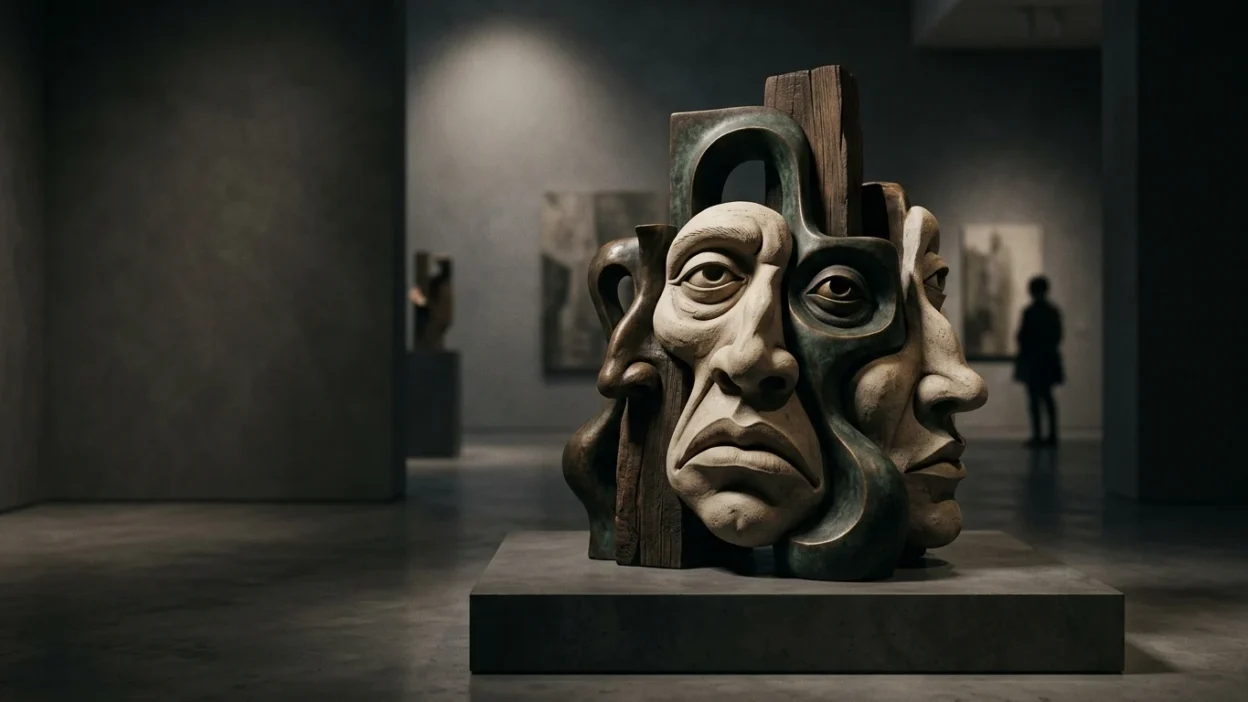
A grotesque sculpture could depict a distorted face without involving death at all.
Grotesque vs Absurd
Absurd focuses on illogical, unreasonable, or ridiculous situations.
Grotesque can describe absurdity, but it often adds an element of distortion or disturbing imagery.
For example:
The comedy was absurd.
This indicates ridiculous or illogical humour.
The comedy was grotesque.
This may suggest dark humour involving exaggeration, unpleasant imagery, or distorted characters.
Grotesque vs Ludicrous
Ludicrous is strongly connected with ridicule and something being laughably unreasonable.
Grotesque can be humorous, but it can also be frightening or disturbing.
Therefore, ludicrous is not a direct replacement when the sentence needs a sense of horror or ugliness.
Grotesque vs Freakish
Freakish emphasises unusualness or abnormality, particularly in appearance or behaviour.
Grotesque is often more literary and descriptive.
When describing real people, care should be taken with freakish, as it can sound insensitive or derogatory. In neutral writing, terms such as unusual, unconventional, or distinctive may be more appropriate.
Common Mistakes When Using Synonyms for Grotesque
Mistaking “Strange” for “Grotesque”
Not everything strange is grotesque.
Something can be unusual, unexpected, or unconventional without being ugly or disturbing.
For example:
She wore a bizarre but elegant dress.
Here, bizarre is suitable because the dress is unusual. Calling it grotesque would add a negative or disturbing quality that may not be intended.
Using “Hideous” When You Only Mean Unusual
Hideous is a strong word. It means extremely ugly or unpleasant.
If you only want to say that something looks unusual, bizarre, unusual, or strange may be more accurate.
Using “Macabre” for Any Frightening Thing
A frightening object is not automatically macabre.
Macabre usually relates to death, mortality, corpses, or grim subjects.
For general fear, horrific, frightening, or terrifying may be more suitable.
Using “Absurd” to Describe Physical Ugliness
Absurd usually concerns logic, reason, behaviour, or situations.
For a physically distorted object, misshapen, distorted, or deformed may be more precise.
Using “Deformed” Carelessly
Deformed can have medical and biological implications when used to describe real people or animals.
In fictional or artistic contexts, it may be appropriate, particularly when discussing intentional distortion. However, writers should consider whether a less loaded word such as distorted or misshapen communicates the intended meaning more accurately.
Treating All Synonyms as Interchangeable
A thesaurus may group several words together, but their meanings and emotional effects can differ considerably.
For example:
- Bizarre = very strange
- Hideous = extremely ugly
- Distorted = altered from a normal form
- Uncanny = strangely unsettling
- Macabre = associated with death or grim subjects
- Absurd = unreasonable or illogical
- Ludicrous = laughably ridiculous
Knowing these distinctions is more useful than simply memorising a list.
Overusing Strong Words
Words such as horrific, hideous, and monstrous carry considerable emotional weight.
If every object in a piece of writing is described this way, the language can lose its impact.
Use strong vocabulary when the context genuinely supports it.
Tips for Using Synonyms for Grotesque Correctly
Identify the Main Shade of Meaning
Before choosing an alternative, ask what grotesque means in your sentence.
Is it:
- strange?
- ugly?
- distorted?
- frightening?
- unnatural?
- death-related?
- absurd?
- humorous?
- exaggerated?
This simple question will usually lead you to a better synonym.
Choose “Bizarre” for Extreme Strangeness
When something is unusually strange but not necessarily ugly, bizarre is often a natural choice.
It works well in journalism, creative writing, general descriptions, and everyday conversation.
Choose “Distorted” for Altered Shapes
Use distorted when the original shape or appearance has been changed.
This works particularly well for:
- reflections
- images
- faces
- voices
- sounds
- photographs
- representations
Choose “Hideous” for Extreme Ugliness
If your main message is that something looks extremely unpleasant, hideous is more direct than grotesque.
For example:
The monster had a hideous face.
The reader immediately understands that the appearance is extremely ugly.
Choose “Uncanny” for Subtle Unease
Uncanny is particularly effective when something is almost familiar but feels wrong.
It is a useful word in descriptions of:
- lifelike dolls
- artificial figures
- portraits
- familiar places that have changed
- strange similarities
- unsettling experiences
Choose “Monstrous” for Extreme or Unnatural Forms
Use monstrous when you want to suggest enormous size, frightening appearance, unnatural qualities, or something resembling a monster.
It can also work metaphorically when describing something exceptionally cruel or extreme.
Choose “Macabre” for Dark Imagery
When death or mortality is central to the description, macabre can be more precise than grotesque.
For example:
The novel contains macabre descriptions of abandoned graves.
This immediately establishes a grim atmosphere.
Choose “Absurd” for Illogical Situations
If something is ridiculous because it makes no sense, absurd may be the most accurate alternative.
For example:
The film presents an absurd situation in which nobody follows the usual rules.
This is different from describing an ugly or distorted object.
Consider the Tone
The same basic idea can sound very different depending on the word you choose.
Weird sounds casual.
Bizarre sounds more descriptive.
Grotesque sounds vivid and often literary.
Hideous sounds strongly negative.
Uncanny sounds mysterious and unsettling.
Macabre sounds dark and literary.
Ludicrous sounds mocking or humorous.
Choosing the right tone helps your writing communicate the intended reaction.
Be Careful When Describing Real People
Words associated with physical abnormality can be sensitive when applied to real people.
If you are discussing a fictional character, artwork, or deliberately distorted sculpture, words such as grotesque, misshapen, or distorted may be appropriate.
When discussing real individuals, neutral and respectful language is generally preferable unless the physical description is directly relevant and carefully framed.
Use Context Instead of Relying on a Thesaurus
A thesaurus can provide possibilities, but it cannot always tell you which word sounds natural in your exact sentence.
Read the entire sentence after replacing grotesque. Ask whether the new word preserves the intended meaning, tone, and emotional effect.
A good synonym should not merely look similar in a dictionary. It should fit the sentence naturally.
Summary
The word grotesque is versatile and can describe something strangely ugly, distorted, bizarre, unnatural, frightening, exaggerated, or absurd.
The best synonyms for grotesque depend on which aspect of the word you want to emphasise. Bizarre and weird focus on strangeness, while distorted, misshapen, and deformed focus on unusual physical form.
For extreme ugliness, hideous is particularly direct. For frightening or unnatural qualities, monstrous, horrific, and ghastly can be effective. Macabre is better when death or grim imagery is central.
When the meaning is humorous, exaggerated, or illogical, absurd, ludicrous, ridiculous, and exaggerated may be more appropriate.
The key is to choose a word according to the exact meaning you want your reader to understand. A carefully selected synonym can make descriptive writing more accurate, vivid, and engaging.
FAQs
1. What is the closest synonym for grotesque?
There is no single synonym that matches every use of grotesque. Bizarre, distorted, hideous, monstrous, and uncanny can all be close alternatives in different contexts.
2. What is a synonym for grotesque that means very ugly?
Hideous is a strong synonym when grotesque is being used to mean extremely ugly or unpleasant to look at. Unsightly is another option, although it is generally less intense.
3. What is another word for grotesque in literature?
Literary alternatives include bizarre, uncanny, monstrous, macabre, distorted, freakish, and misshapen. The best choice depends on whether the passage emphasises strangeness, fear, ugliness, distortion, or dark imagery.
4. Is “bizarre” the same as “grotesque”?
Not exactly. Bizarre means very strange or unusual, whereas grotesque often suggests a combination of strangeness with ugliness, distortion, unnaturalness, or disturbing exaggeration.
5. What is the difference between grotesque and macabre?
Grotesque can describe something distorted, ugly, strange, frightening, or absurd. Macabre specifically relates to death, mortality, corpses, or grim and disturbing subjects.
6. Can “distorted” be used instead of “grotesque”?
Yes, when the main idea is that something has an altered or unnatural shape. However, distorted does not necessarily suggest ugliness or emotional disturbance, so it may be less intense than grotesque.
7. What is a positive synonym for grotesque?
There is no exact positive synonym because grotesque commonly carries a negative or unsettling quality. In an artistic context, words such as unconventional, striking, surreal, or distinctive may describe an unusual appearance without the same negative judgement.
8. What is the opposite of grotesque?
Depending on the intended meaning, possible opposites include beautiful, attractive, normal, natural, elegant, pleasant, or harmonious. The appropriate opposite depends on whether grotesque refers to appearance, behaviour, style, or an unusual situation.