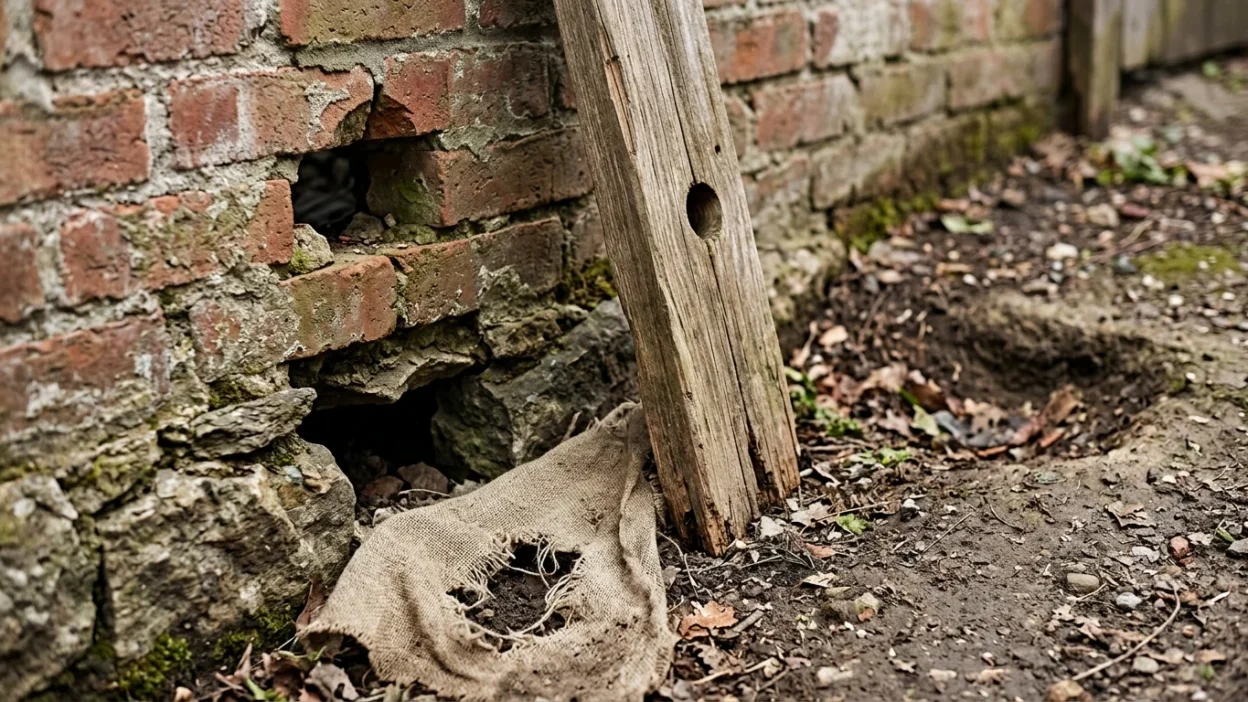
The word hole is simple and familiar, but it can describe many different things. It may refer to an opening in a wall, a hollow space in the ground, a gap in fabric, a missing section, or an empty space inside an object. Because these meanings are not always identical, choosing the right alternative can make your writing much clearer.
This guide explores useful synonyms and related terms for hole, explains their differences, and provides practical examples in British English.
Synonyms of Hole
The most suitable synonym depends on what kind of hole you are describing. Some words refer to physical openings, while others describe cavities, gaps, damage, or spaces in a surface.
| Synonym | Pronunciation (IPA) | Part of Speech | Meaning | Example Sentence |
| Opening | /ˈəʊpənɪŋ/ | Noun | A space or gap that allows access or passage | There was a small opening in the fence. |
| Gap | /ɡæp/ | Noun | An empty space between two things or within something | A narrow gap appeared in the wall. |
| Cavity | /ˈkævəti/ | Noun | An enclosed or partly enclosed hollow space | The dentist found a cavity in the tooth. |
| Hollow | /ˈhɒləʊ/ | Noun/Adjective | A space that is empty inside or a small low area of land | The animal hid inside a hollow tree. |
| Pit | /pɪt/ | Noun | A deep hole or depression in the ground | Workers dug a large pit near the building. |
| Aperture | /ˈæpətʃə/ | Noun | An opening, especially one designed for a particular purpose | Light entered through a narrow aperture. |
| Breach | /briːtʃ/ | Noun | A break or opening in a wall, barrier, or defence | The storm created a breach in the sea wall. |
| Crevice | /ˈkrevɪs/ | Noun | A narrow crack or opening, especially in rock | Water collected in a deep crevice. |
| Crack | /kræk/ | Noun | A narrow break or split in a surface | There was a crack in the kitchen wall. |
| Fissure | /ˈfɪʃə/ | Noun | A long, narrow split or opening in a solid surface | A large fissure appeared in the rock. |
| Puncture | /ˈpʌŋktʃə/ | Noun | A small hole caused by something sharp | The bicycle tyre had a puncture. |
| Perforation | /ˌpɜːfəˈreɪʃən/ | Noun | A small hole made through a material | Tear the paper along the perforation. |
| Notch | /nɒtʃ/ | Noun | A small cut or indentation in an edge or surface | The carpenter made a notch in the wooden board. |
| Indentation | /ˌɪndenˈteɪʃən/ | Noun | A hollow or depression in a surface | The impact left a deep indentation in the metal. |
| Depression | /dɪˈpreʃən/ | Noun | A lower or sunken area in a surface or landscape | Rainwater gathered in the depression. |
| Void | /vɔɪd/ | Noun | An empty space or completely unoccupied area | The builders discovered a void beneath the floor. |
| Tunnel | /ˈtʌnəl/ | Noun | A passage through or under a surface or structure | The miners entered the tunnel before sunrise. |
| Bore | /bɔː/ | Noun/Verb | A hole made by drilling or boring | The engineer measured the diameter of the bore. |
| Ditch | /dɪtʃ/ | Noun | A long narrow excavation in the ground | A drainage ditch ran alongside the road. |
| Tear | /teə/ | Noun | A split or hole in fabric or paper caused by damage | There was a tear in the sleeve of his coat. |
These words are not all exact replacements for hole. Some describe specific types of openings, while others refer to spaces, damage, or depressions that may resemble a hole. Selecting the correct term depends on the context.
Physical Openings
When hole refers to an opening through something, words such as opening, gap, aperture, perforation, and puncture can be useful.
An opening is the broadest option. It can describe a deliberate entrance or an accidental gap.
An aperture is more formal and is often used in technical, scientific, architectural, or photographic contexts.
A perforation is usually a small hole deliberately made through a material. A puncture, by contrast, is generally associated with a hole caused by something sharp.
Holes in the Ground
For holes or depressions in the earth, pit, hollow, depression, ditch, and sometimes cavity can be appropriate.
A pit is normally deeper and more substantial than an ordinary hole. A ditch is generally long and narrow and is often created for drainage or another practical purpose.
A hollow can refer to a low area of land or an empty space inside something, such as a hollow tree.
Cracks and Narrow Openings
When a hole is narrow rather than broad, crevice, fissure, or crack may be more precise.
A crevice is usually a narrow opening between rocks or in a hard surface. A fissure is a long, narrow split, often used in geological or technical descriptions.
A crack is the most everyday term for a narrow break in a solid surface.
Damage and Missing Material
Sometimes hole refers to damage rather than a naturally occurring opening. In these situations, tear, puncture, breach, or perforation may be more accurate.
For example, a hole in a tyre caused by a sharp object is usually called a puncture. A hole or opening in a defensive wall caused by damage may be described as a breach.
What Does Synonyms for Hole Mean?
The phrase “synonyms for hole” refers to words that can replace hole or describe a similar type of opening, hollow space, gap, or depression.
The noun hole has a broad meaning. In its simplest sense, it refers to an opening or empty space in something.
For example:
- There is a hole in the wall.
- The dog fell into a hole.
- Someone drilled a hole in the wood.
- There is a hole in my sock.
- The box has a hole in the side.
However, these examples do not necessarily describe the same kind of opening. A hole in a sock is likely to be a tear. A deliberately drilled hole could be a bore. A large opening in a wall might be a breach. A deep hole in the ground could be a pit.
This is why context is essential when choosing a synonym.
The word hole can also be used figuratively. Someone might describe a missing piece of information as a “gap in the evidence”, or describe an emotional absence as a “void”. In such cases, the alternatives are not physical equivalents but convey a related idea of absence or emptiness.
The safest approach is therefore to identify the specific meaning of hole before choosing an alternative.
Most Common Synonyms of Hole
Opening
Opening is one of the most versatile alternatives to hole. It can refer to a space through which something can enter, leave, pass, or be seen.
It is especially useful when the opening is intentional rather than accidental.
Example: “The ventilation system has a small opening on the side of the building.”
The word can also sound more neutral and less negative than hole.
Gap
A gap is an empty space between two things or within something. It does not necessarily mean that material has been completely removed.
For example, there may be a gap between two fence panels. The word is particularly useful when describing spaces that are relatively narrow or irregular.
Example: “There was a gap between the boards.”
Cavity
A cavity is a hollow space, often inside a solid object or body.
It is common in medical, scientific, engineering, and descriptive contexts. A cavity may be naturally formed or created by damage.
Example: “The inspection revealed a cavity beneath the concrete.”
The term often sounds more technical than hole.
Hollow
Hollow describes something empty inside or a low area of land. As a noun, it can refer to a depression or sheltered low place.
Example: “The fox disappeared into a hollow beneath the trees.”
It is especially useful in natural or literary descriptions.
Pit
A pit is generally a deep hole or depression in the ground. It can be natural or deliberately excavated.
Example: “The workers dug a pit for the foundations.”
The word is also common in industrial and mining contexts.
Aperture
Aperture is a formal word for an opening, especially one with a particular function.
It is often used in photography, engineering, architecture, optics, and science.
Example: “The camera’s aperture controls how much light enters the lens.”
In ordinary conversation, opening or hole would usually sound more natural.
Breach
A breach is a break or opening in something that normally forms a barrier.
It is commonly used for walls, defences, dams, security systems, and agreements, although the latter is figurative.
Example: “The flood caused a breach in the river bank.”
A breach is therefore more specific than an ordinary hole because it suggests that a barrier has been broken.
Crevice
A crevice is a narrow opening or crack, especially in rock.
Example: “The climber carefully checked the crevice before placing his hand inside.”
The word creates a strong image of a narrow, difficult-to-reach opening.
Crack
A crack is a narrow split or break in a surface.
Example: “A crack had appeared in the glass.”
A crack is not necessarily a hole because the material may remain mostly intact. However, a large crack can eventually create an opening.
Fissure
Fissure is similar to crack but tends to sound more technical or descriptive.
It is common in geology and medical writing.
Example: “The earthquake produced a long fissure in the ground.”
The term is useful when the opening is long, narrow, and clearly defined.
Puncture
A puncture is a small hole made by something sharp or pointed.
It is especially common when discussing tyres, skin, balloons, pipes, and other materials.
Example: “The front tyre has a puncture.”
It describes both the resulting hole and, in some contexts, the act of creating one.
Perforation
A perforation is a small hole deliberately made through a material.
Paper, tickets, packaging, filters, and manufactured materials commonly have perforations.
Example: “Fold the sheet along the perforation.”
This word is more precise than hole when the openings are regularly made for a specific purpose.
Void
A void is an empty or unoccupied space. It is often used in technical, architectural, scientific, or figurative contexts.
Example: “Engineers discovered a void beneath the structure.”
In everyday conversation, empty space or gap may be more natural.
Tear
A tear is a split in a flexible material such as fabric, paper, or plastic.
Example: “There is a tear in the pocket of my trousers.”
Although a tear can create a hole, the words are not identical. Tear describes the damage or split that produced the opening.
Difference Between Hole and Its Synonyms
The most important distinction is that hole is a general term, while many alternatives provide additional information.
A hole can be almost any opening or empty space. It does not automatically tell the reader whether the opening is large or small, deliberate or accidental, narrow or wide.
An opening is often more neutral and may suggest that the space serves a purpose. A doorway is an opening, but we would not normally call it a hole.
A gap describes space between things or missing material. A gap does not necessarily extend completely through an object.
A cavity usually refers to an enclosed or partly enclosed hollow space, particularly inside a solid object.
A pit is generally a deep opening in the ground.
A crevice is narrow and often occurs naturally in rock or other hard surfaces.
A fissure is a long, narrow split, particularly in geological or technical descriptions.
A puncture is a small hole caused by something sharp.
A perforation is generally intentional and repeated or patterned.
A breach implies that a barrier has been broken.
A void emphasises emptiness rather than the physical shape of the opening.
The choice therefore depends on what you want the reader to understand.
Compare these sentences:
- “There is a hole in the wall.”
- “There is a crack in the wall.”
- “There is a breach in the wall.”
- “There is a cavity behind the wall.”
All four sentences describe an unusual space or break, but they create different images.
The first is general. The second suggests a narrow split. The third suggests significant damage to a barrier. The fourth suggests an empty space hidden behind the surface.
Common Mistakes When Using Hole and Its Synonyms
Using Every Related Word as a Direct Replacement
One of the most common mistakes is assuming that every word associated with hole can replace it in every sentence.
For instance, a ditch is not simply any hole. It is normally a long, narrow excavation. Similarly, a crevice suggests a narrow natural opening.
Confusing a Crack with a Hole
A crack is usually a narrow break rather than a complete opening.
For example, a crack in a wall may not allow you to see through it. A hole normally suggests a more substantial opening.
Using Pit for Small Openings
A pit usually suggests depth or a sizeable depression in the ground.
Calling a tiny indentation in the pavement a “pit” may exaggerate its size.
Confusing Puncture with Perforation
A puncture is normally caused by something sharp, while a perforation is generally an intentional hole made through a material.
A tyre has a puncture, whereas a sheet of postage stamps may contain perforations.
Using Aperture in Casual Conversation
Aperture is correct in many contexts, but it is relatively formal or technical.
In everyday speech, “opening” or “hole” is usually more natural unless you are discussing photography, optics, engineering, or a similar subject.
Using Void for an Ordinary Hole
Void often has a technical or abstract quality. Saying “There is a void in my sock” would sound unusual in normal conversation.
For damaged clothing, hole or tear is much more natural.
Ignoring the Cause of the Opening
The cause can determine the best word.
If a nail goes through a tyre, puncture is appropriate. If fabric is pulled apart, tear is better. If a wall collapses and leaves an opening, breach may be more accurate.
Tips for Using Hole and Its Synonyms Correctly
Identify the Shape
Ask whether the opening is round, narrow, deep, long, wide, or irregular.
A narrow opening might be a crevice or fissure, while a deep opening in the ground could be a pit.
Consider Whether It Is Intentional
An intentional opening may be called an aperture, perforation, or opening.
An accidental opening might be a puncture, tear, crack, or breach.
Think About the Material
Different materials naturally suggest different words.
A hole in fabric may be a tear. A hole in a tyre is often a puncture. An opening in rock may be a crevice. A hollow area beneath a building may be a void.
Consider the Register
Use everyday terms such as hole, gap, and opening in ordinary conversation.
Use more specialised terms such as aperture, fissure, perforation, and void when the subject or audience requires greater precision.
Avoid Unnecessary Complexity
A sophisticated word is not automatically better.
If “There is a hole in the fence” communicates your meaning perfectly, there is no need to replace it with a technical expression.
Good writing is precise, not unnecessarily complicated.
Use the Surrounding Context
Context can make the intended meaning obvious.
If you are describing a camera, aperture is likely to be more appropriate. If you are describing a tyre, puncture is more natural. If you are discussing a geological formation, fissure or crevice may be the best choice.
Check the Level of Precision
Before choosing a synonym, ask what additional information the word provides.
If you want to say only that an opening exists, use hole or opening. If you want to explain that the opening is narrow, damaged, deliberate, or deep, select a more specific term.
Summary
The best synonym is therefore not necessarily the most unusual word. It is the word that communicates the exact type of opening you mean. When writing in British English, consider the object’s material, the opening’s size and shape, its cause, and the formality of the situation before making your choice.
FAQs
1. What is the most common synonym for hole?
Opening and gap are among the most common alternatives. However, the best choice depends on context. Opening is broad and neutral, while gap usually describes an empty space between things or missing material.
2. What is another word for a small hole?
Depending on the situation, a small hole can be called a puncture, perforation, opening, or aperture. A puncture is particularly suitable when something sharp caused the hole.
3. What is another word for a hole in the ground?
Common alternatives include pit, hollow, depression, and ditch. The correct term depends on the shape, depth, and purpose of the opening.
4. What is a synonym for a hole in fabric?
Tear is often the most accurate word when the fabric has split or been damaged. Rip can also be used in everyday English, while puncture may be appropriate if a sharp object caused the damage.
5. Is gap a synonym for hole?
Gap can be a synonym for hole in some contexts, but they are not always interchangeable. A gap usually refers to an empty space between things or a missing section, whereas a hole generally suggests an opening through or into something.
6. Is cavity another word for hole?
Cavity can describe a type of hole, particularly an enclosed or partly enclosed hollow space. It is more specific and is often used in medical, scientific, engineering, and technical contexts.
7. What is a formal word for hole?
Depending on the context, aperture, cavity, fissure, perforation, or void can provide more formal or technical alternatives. The most suitable choice depends on what kind of hole is being described.
8. What is the difference between a hole and a puncture?
A hole is a general term for an opening or empty space. A puncture specifically refers to a small hole caused by something sharp or pointed, such as a nail creating an opening in a tyre.