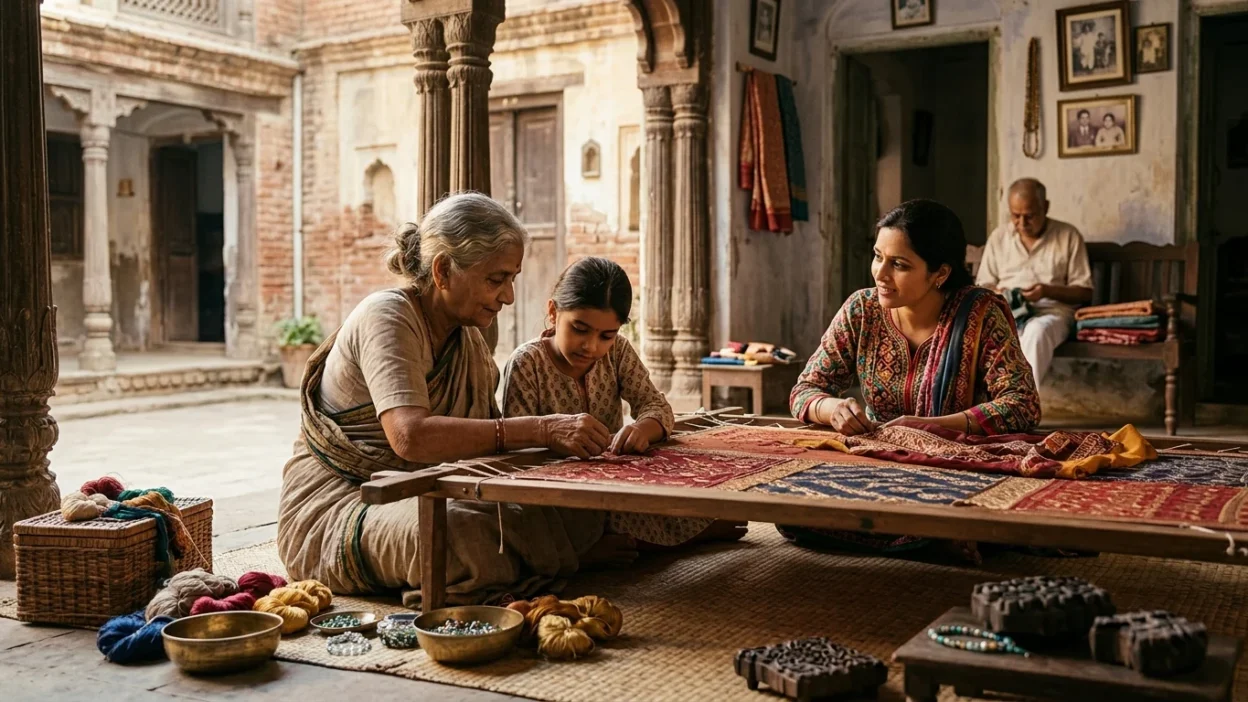
Tradition plays an important role in families, communities, cultures, and societies. From celebrating festivals in a particular way to passing stories from one generation to another, traditions help people maintain a connection with their past.
However, when writing or speaking, repeating the word tradition too often can make language sound dull or repetitive.
This guide explains the most useful synonyms for tradition, their meanings, pronunciation, differences, and correct usage. Clear examples will also help you understand which alternative works best in different contexts.
Synonyms of Tradition
The word tradition can have several shades of meaning. It may refer to an established custom, an inherited cultural practice, a repeated ceremony, or beliefs and values passed from one generation to another.
The following table presents useful alternatives according to these different meanings.
| Synonym | Pronunciation (IPA) | Part of Speech | Meaning | Example Sentence |
| Custom | /ˈkʌstəm/ | Noun | A long-established way of behaving or doing something | It is a local custom to welcome visitors with food and tea. |
| Practice | /ˈpræktɪs/ | Noun | A usual or established way of doing something | The practice has continued within the community for generations. |
| Convention | /kənˈvenʃən/ | Noun | A generally accepted social rule or way of behaving | By convention, guests wait until everyone has arrived before eating. |
| Habit | /ˈhæbɪt/ | Noun | Something done regularly, often automatically | Their Sunday walk became a family habit. |
| Usage | /ˈjuːsɪdʒ/ | Noun | An established way of using or doing something | The expression survives through traditional regional usage. |
| Heritage | /ˈherɪtɪdʒ/ | Noun | Culture, history, or values inherited from earlier generations | Traditional music is an important part of the country’s cultural heritage. |
| Legacy | /ˈleɡəsi/ | Noun | Something handed down from the past | The ancient buildings are an enduring legacy of the city’s history. |
| Inheritance | /ɪnˈherɪtəns/ | Noun | Something received from previous generations | These stories form part of the community’s cultural inheritance. |
| Folklore | /ˈfəʊklɔː/ | Noun | Traditional stories, beliefs, and customs of a community | The mysterious tale has become part of local folklore. |
| Lore | /lɔː/ | Noun | Traditional knowledge and stories passed through generations | Knowledge of medicinal plants survived through local lore. |
| Ritual | /ˈrɪtʃuəl/ | Noun | A fixed series of actions regularly performed | Lighting candles became an important part of the evening ritual. |
| Ceremony | /ˈserəməni/ | Noun | A formal event performed according to established rules | The annual ceremony honours the town’s founders. |
| Observance | /əbˈzɜːvəns/ | Noun | The act of following a customary or ceremonial practice | The day is marked by the observance of several old customs. |
| Convention | /kənˈvenʃən/ | Noun | An established principle or accepted way of doing something | The author deliberately rejected literary convention. |
| Institution | /ˌɪnstɪˈtjuːʃən/ | Noun | A long-established custom or feature of society | Afternoon tea became something of a national institution. |
| Precedent | /ˈpresɪdənt/ | Noun | An earlier example that influences later actions | The decision established a precedent for future ceremonies. |
| Belief | /bɪˈliːf/ | Noun | An accepted idea or conviction | The belief has been passed down through many generations. |
| Convention | /kənˈvenʃən/ | Noun | A traditional or widely accepted method | The design follows the conventions of classical architecture. |
Synonyms Related to Customs and Established Practices
Custom, practice, convention, usage, and habit are useful when tradition refers to an established way of behaving or doing something.
For instance:
“A family tradition of eating together” may be described as a family custom or practice.
However, habit usually refers to repeated personal behaviour rather than an important cultural practice. For this reason, it should not automatically replace tradition in every sentence.
Synonyms Related to Cultural Inheritance
Heritage, legacy, inheritance, folklore, and lore are more suitable when discussing things received from earlier generations.
For example:
“The village has a rich tradition of storytelling.”
In this context, heritage may work when referring to the wider cultural importance of storytelling, while folklore may be appropriate when referring specifically to traditional stories and beliefs.
Synonyms Related to Ceremonial Actions
Ritual, ceremony, and observance are suitable when tradition involves organised or repeated actions.
For example:
“The annual lighting of the lamps is an important tradition.”
If the event follows a fixed pattern, ritual may be appropriate. If it is a formal organised event, ceremony may be more precise.
What Does Tradition Mean?
Tradition is a noun referring to a custom, belief, practice, or way of doing something that has existed for a long time and is often passed from one generation to another.
Traditions may exist within families, religious communities, professional groups, schools, nations, or entire cultures. Some traditions are centuries old, while others may be relatively recent but have become established through repetition.
Consider this example:
“Decorating the house together has become a family tradition.”
Here, tradition describes something that family members regularly do and may continue doing in future generations.
In a cultural context, the word can have a broader meaning:
“Traditional crafts are an important part of the region’s heritage.”
Here, tradition is connected with knowledge, skills, and practices inherited from previous generations.
The word can also describe established principles within art, literature, education, philosophy, or another field.
For example:
“The poet wrote within the tradition of Romantic literature.”
In this sentence, tradition does not describe a festival or family custom. Instead, it refers to an established style, body of ideas, or method that developed over time.
This flexibility explains why there are many synonyms for tradition, but no single alternative works in every situation.
Most Common Synonyms of Tradition
Although many alternatives exist, several words are particularly common in everyday English.
Custom
Custom is one of the closest alternatives to tradition. It refers to an established way of behaving or doing something within a particular community, society, or group.
For example:
“It is a local custom to give visitors a small gift.”
The word is particularly useful when discussing social or cultural behaviour.
A tradition often emphasises continuity from the past, whereas a custom places more emphasis on the behaviour itself.
Practice
Practice refers to a usual or established way of doing something. It is a broad word that can be used in cultural, professional, social, and institutional contexts.
For example:
“The practice of sharing food with neighbours has existed for generations.”
Unlike tradition, practice does not necessarily imply that something has been inherited from previous generations. A practice may simply be a commonly followed method.
Heritage
Heritage describes cultural, historical, or natural things inherited from the past and considered valuable enough to preserve.
For example:
“Traditional dance is an important part of the nation’s heritage.”
Heritage has a broader meaning than tradition. A country’s heritage might include architecture, monuments, language, literature, music, customs, crafts, and historical sites.
Therefore, an individual tradition can form part of a larger cultural heritage.
Convention
A convention is an accepted rule, method, or way of behaving that people generally follow.
For example:
“According to social convention, formal guests were introduced first.”
The word is especially useful when discussing expected behaviour, writing styles, artistic methods, or social rules.
Unlike tradition, convention does not always suggest something inherited from previous generations.
Ritual
A ritual is a fixed or repeated series of actions. It can be formal, ceremonial, religious, cultural, or personal.
For example:
“Preparing the meal together became a Sunday ritual.”
A ritual may be part of a tradition, but the words describe slightly different things. Tradition emphasises continuity, whereas ritual emphasises repeated actions performed in a particular way.
Legacy
Legacy describes something that remains from an earlier person, group, period, or civilisation.
For example:
“The city’s architecture is a legacy of its long history.”
A legacy does not need to be an activity that people continue performing. It may be an idea, achievement, influence, building, institution, or cultural contribution.
Folklore
Folklore refers to the traditional stories, beliefs, legends, customs, and knowledge of a particular community.
For example:
“The creature appears frequently in regional folklore.”
This word is useful when tradition relates specifically to stories, legends, beliefs, and cultural knowledge rather than general behaviour.
Observance
Observance describes the practice of following or respecting a custom, rule, religious occasion, or ceremony.
For example:
“The annual observance includes music, food, and community gatherings.”
It is more formal than custom and is particularly useful when discussing commemorative, ceremonial, or religious practices.
Difference Between Tradition and Its Synonyms
The main challenge when choosing synonyms for tradition is understanding that similar words often emphasise different aspects of the original meaning.
Tradition vs Custom
Tradition strongly suggests continuity over time and often involves something being passed between generations.
Custom focuses more directly on an established way of behaving.
For example:
“Preparing this dish during the festival is a family tradition.”
“It is customary to serve the dish to guests.”
Both ideas are related, but the first emphasises inheritance and continuity, while the second focuses on accepted behaviour.
Tradition vs Heritage
Tradition usually refers to a particular practice, belief, idea, or custom.
Heritage refers to the wider cultural or historical inheritance received from the past.
For example, folk dancing may be a tradition, while music, dancing, architecture, literature, language, and historical monuments may collectively form a nation’s heritage.
Tradition vs Ritual
A tradition is something maintained over time, particularly across generations.
A ritual is a repeated sequence of actions performed in a particular manner.
A morning cup of tea might jokingly be described as a personal ritual, but it would not necessarily be a tradition. However, a particular ceremony performed annually by generations of a community could be both a ritual and a tradition.
Tradition vs Convention
Convention refers to an accepted way of behaving or doing something.
Tradition normally carries a stronger connection with history and continuity.
For example, using a particular format in formal writing may be a convention. Holding an annual celebration that has continued for centuries is more naturally described as a tradition.
Tradition vs Habit
A habit is a repeated behaviour, usually associated with an individual.
A tradition normally has greater social, cultural, historical, or family significance.
Someone might have a habit of reading before bed. If generations of a family gather every winter to read the same story together, that activity may become a family tradition.
Tradition vs Legacy
A legacy is something left behind by a person, community, institution, or historical period.
A tradition is generally something people continue to practise, believe, or follow.
For example, an influential writer’s ideas may be their legacy. If later writers continue using a particular style associated with that writer, the style may become part of a literary tradition.
Tradition vs Practice
A practice is a usual way of doing something.
A tradition often carries historical or generational significance.
For example:
“Checking equipment before work is standard practice.”
“Gathering for an annual meal is a family tradition.”
The first sentence concerns a normal procedure, while the second involves continuity and shared cultural or family meaning.
Tradition vs Ceremony
A ceremony is a formal event or set of actions performed for a particular occasion.
A tradition can include a ceremony, but it is not necessarily ceremonial.
For instance, a graduation ceremony may contain traditions that have been followed by a school or university for many years.
Common Mistakes When Using Tradition
Choosing the correct word requires more than simply finding an alternative in a thesaurus. Several common mistakes can change the intended meaning.
1. Treating Every Synonym as Interchangeable
One of the most common mistakes is assuming that every synonym can directly replace tradition.
Consider:
“Storytelling is an important part of our cultural tradition.”
Replacing tradition with habit would sound unnatural because habit normally describes repeated individual behaviour rather than inherited cultural practices.
Always consider the precise meaning before replacing a word.
2. Confusing Tradition with Habit
A habit is something a person does repeatedly.
A tradition normally carries social, cultural, family, or historical significance.
For example:
“James drinks coffee every morning.”
This is a habit.
“Every New Year’s Day, the entire family prepares breakfast together.”
This could be a tradition.
Frequency alone does not make an activity a tradition.
3. Using Heritage for a Single Repeated Action
Heritage is usually broader than tradition.
Instead of writing:
“Our heritage is to eat together every Sunday.”
It would normally sound more natural to say:
“Our tradition is to eat together every Sunday.”
Heritage describes the larger cultural inheritance to which individual traditions may belong.
4. Using Ritual When There Is No Repeated Procedure
Ritual works best when actions follow a recognisable or repeated pattern.
For example:
“The opening ritual involved music followed by a formal greeting.”
Using ritual simply because an activity is old may create the wrong impression.
5. Ignoring Context
The most suitable alternative depends heavily on the sentence.
In cultural writing, heritage, custom, and folklore may be useful. In formal social contexts, convention may be better. For ceremonies, ritual or observance may be more accurate.
Context should guide word choice rather than similarity alone.
6. Confusing Custom and Customs
The singular noun custom means an established practice or way of behaving.
However, customs can also refer to the government authority that controls goods entering or leaving a country.
For example:
“Removing shoes before entering is a local custom.”
“The traveller declared the goods at customs.”
The surrounding sentence determines the meaning.
7. Overusing Unusual Alternatives
Writers sometimes replace a simple word with a more complicated alternative simply to avoid repetition. This can make writing less natural.
If tradition is already the clearest word, there is no need to replace every occurrence. Good writing uses synonyms when they improve meaning, clarity, or variety.
8. Forgetting the Generational Element
A central feature of many traditions is continuity.
A new activity performed once is not usually a tradition. However, something can gradually become traditional when it is regularly repeated and recognised as an established practice.
For example:
“What began as a small gathering eventually became an annual tradition.”
The sentence shows how repeated behaviour develops into something established over time.
Tips for Using Tradition Correctly
Understanding synonyms for tradition becomes easier when you focus on the idea you want to communicate.
Identify the Meaning First
Before choosing an alternative, ask what tradition means in your sentence.
Does it describe an established social behaviour?
Choose custom or convention.
Does it describe inherited culture?
Consider heritage or inheritance.
Does it describe repeated formal actions?
Ritual, ceremony, or observance may work.
Does it describe traditional stories and beliefs?
Folklore or lore may be appropriate.
Identifying the intended meaning first prevents awkward word choices.
Consider the Level of Formality
Some alternatives are more formal than others.
Custom and practice work naturally in everyday and formal English.
Observance is more formal and often appears in discussions of ceremonies, commemorations, or religious occasions.
Lore can have a literary or historical tone.
Selecting a word that matches the overall style makes writing sound more natural.
Think About Time
Tradition often suggests that something has existed for a considerable period.
If the historical element matters, tradition, heritage, or legacy may be stronger choices than practice or habit.
Compare:
“It is standard practice to check the doors before closing.”
“It is a centuries-old tradition to ring the bells during the celebration.”
Both sentences describe repeated actions, but only the second strongly emphasises historical continuity.
Consider Whether the Action Is Personal or Collective
A habit is usually personal.
A custom is generally associated with a group.
A tradition may belong to an individual family, community, organisation, culture, or nation.
For example:
“Reading before sleeping is her habit.”
“Eating together every Friday is their family tradition.”
“Offering food to visitors is a local custom.”
These sentences demonstrate how the scope of an activity affects word choice.
Use Heritage for Broader Cultural Meaning
When discussing an entire collection of inherited cultural features, heritage is often more suitable than tradition.
A community’s heritage may include its language, architecture, food, clothing, music, stories, crafts, beliefs, and traditions.
Therefore, traditions are often components of heritage rather than exact equivalents of it.
Use Ritual for Repeated Actions
Choose ritual when the sequence or repeated nature of an activity is important.
For example:
“The players followed their usual pre-match ritual.”
The activity does not need to be ancient or inherited. What matters is that it is regularly performed in a recognisable way.
Use Legacy for What the Past Leaves Behind
Legacy is useful when discussing the lasting influence of a person, event, institution, civilisation, or historical period.
For example:
“The legal system remains an important legacy of that period.”
Unlike tradition, a legacy does not have to involve an activity that people continue performing.
Read the Sentence Aloud
One simple way to test a synonym is to read the complete sentence aloud.
If the replacement sounds forced or changes the intended meaning, the original word may be better.
For example:
“The festival is part of our cultural heritage.”
This sounds natural.
“The festival is part of our cultural habit.”
This does not express the same idea.
Natural usage should always take priority over replacing words merely for variety.
Summary
The word tradition refers to a custom, belief, practice, or way of doing something that has been established over time and is often passed from one generation to another.
Useful synonyms for tradition include custom, practice, convention, heritage, legacy, inheritance, folklore, lore, ritual, ceremony, observance, habit, and usage.
However, these alternatives do not have identical meanings.
Custom focuses on established behaviour. Heritage describes cultural or historical inheritance. Ritual emphasises repeated actions. Convention refers to accepted rules or practices. Legacy describes something left behind by the past, while folklore relates particularly to traditional stories and beliefs.
The best word therefore depends on context. Rather than replacing tradition automatically, consider whether you are discussing cultural inheritance, family behaviour, social rules, ceremonial actions, historical influence, or repeated personal behaviour.
Choosing the most precise synonym will make your English clearer, more natural, and more expressive.
FAQs
1. What is the best synonym for tradition?
Custom is one of the closest general synonyms for tradition. However, the best alternative depends on context. Heritage, practice, ritual, convention, and legacy may be more accurate in particular sentences.
2. What are some common synonyms for tradition?
Common alternatives include custom, practice, heritage, convention, ritual, legacy, observance, folklore, and inheritance. Each word has a slightly different meaning.
3. Are custom and tradition the same?
They are closely related but not completely identical. A custom is an established way of behaving, while a tradition usually has a stronger connection with continuity, history, and practices passed through generations.
4. What is the difference between tradition and heritage?
A tradition is usually a particular custom, belief, or practice maintained over time. Heritage is broader and refers to cultural or historical things inherited from the past. Traditions can therefore form part of a person’s or community’s heritage.
5. Is ritual a synonym for tradition?
Ritual can be a synonym in certain contexts, particularly when the tradition involves a repeated sequence of actions. However, rituals do not necessarily have to be inherited across generations, while traditions often involve historical continuity.
6. Can habit be used instead of tradition?
Sometimes, but only when the context involves regularly repeated behaviour. Habit normally refers to individual behaviour, whereas tradition often has family, social, cultural, or historical importance.
7. What is a formal synonym for tradition?
Depending on the context, convention, observance, heritage, or practice may serve as formal alternatives. Observance is particularly appropriate for ceremonial or commemorative traditions.
8. What synonym for tradition is best for cultural writing?
Heritage is often suitable when discussing culture broadly. Custom works well for established cultural behaviour, while folklore is more specific to traditional stories, legends, beliefs, and community knowledge.