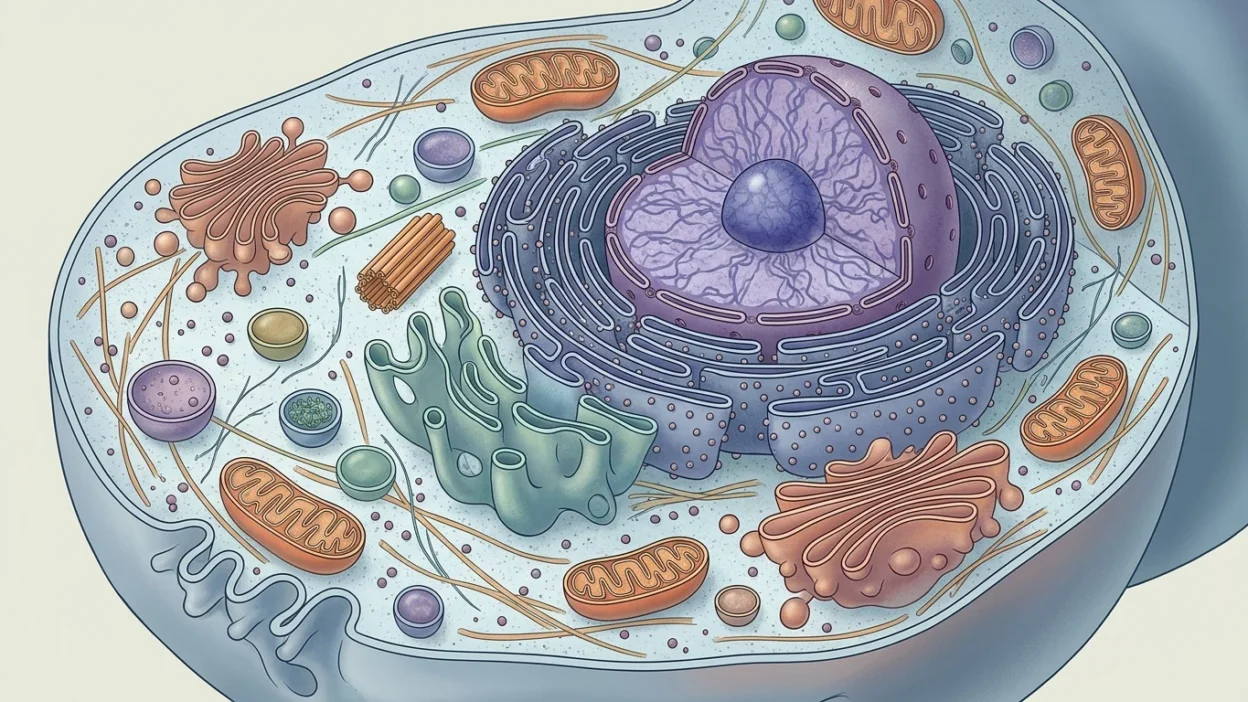
The word cytoplasm is an important term in biology and cell science. It refers to the material inside a cell that lies outside the nucleus in eukaryotic cells. It includes the cytosol, cell organelles, and various structures and substances found within the cell.
Unlike everyday words such as happy, large, or important, cytoplasm does not have many exact synonyms.
It is a specific scientific term with a well-defined meaning. However, several related expressions can sometimes be used when explaining the concept, especially in educational or general scientific writing.
Some of the closest terms include cytosol, cytoplasmic matrix, protoplasm, cell contents, and intracellular material. These words overlap with the idea of cytoplasm, but they are not always interchangeable.
Synonyms of Cytoplasm
Because cytoplasm has a highly specific scientific meaning, the following terms should be understood as near-synonyms, contextual alternatives, or closely related expressions, rather than assuming that every term is an exact replacement.
Closest Terms and Contextual Alternatives
| Synonym | Pronunciation (IPA) | Part of Speech | Meaning | Example Sentence |
| Cytosol | /ˈsaɪtəʊsɒl/ | Noun | The fluid component of the cytoplasm surrounding cellular structures | Many chemical reactions take place in the cytosol. |
| Cytoplasmic matrix | /ˌsaɪtəˈplæzmɪk ˈmeɪtrɪks/ | Noun | The fluid and structural environment in which cellular components are suspended | Organelles are suspended within the cytoplasmic matrix. |
| Protoplasm | /ˈprəʊtəplæzəm/ | Noun | The living material of a cell; a broader traditional term than cytoplasm | Early biology texts often used the term protoplasm to describe living cell material. |
| Cell contents | /sel ˈkɒntents/ | Noun phrase | The materials and structures contained within a cell | The cell contents are enclosed by the cell membrane. |
| Intracellular material | /ˌɪntrəˈseljʊlə məˈtɪəriəl/ | Noun phrase | Material located inside a cell | The organelles are surrounded by intracellular material. |
| Intracellular substance | /ˌɪntrəˈseljʊlə ˈsʌbstəns/ | Noun phrase | Substance found within a cell | Various intracellular substances support cellular processes. |
| Cell matrix | /sel ˈmeɪtrɪks/ | Noun phrase | A general term for the material or framework surrounding cellular components | The cell matrix provides an environment for many cellular reactions. |
| Cellular material | /ˈseljʊlə məˈtɪəriəl/ | Noun phrase | Material associated with or contained within cells | The cellular material varies between different types of cells. |
| Living cell material | /ˈlɪvɪŋ sel məˈtɪəriəl/ | Noun phrase | A descriptive expression for the living material making up a cell | The living cell material contains numerous specialised structures. |
| Cellular interior | /ˈseljʊlə ɪnˈtɪəriə/ | Noun phrase | The inside region of a cell | Proteins and organelles occupy much of the cellular interior. |
| Cell interior | /sel ɪnˈtɪəriə/ | Noun phrase | The internal part of a cell | Nutrients are transported throughout the cell interior. |
| Intracellular environment | /ˌɪntrəˈseljʊlə ɪnˈvaɪərənmənt/ | Noun phrase | The internal environment in which cellular processes occur | Enzymes function within a carefully regulated intracellular environment. |
| Cytoplasmic substance | /ˌsaɪtəˈplæzmɪk ˈsʌbstəns/ | Noun phrase | Material associated with or forming part of the cytoplasm | The cytoplasmic substance contains dissolved molecules and cellular structures. |
| Cytoplasmic material | /ˌsaɪtəˈplæzmɪk məˈtɪəriəl/ | Noun phrase | Material present within the cytoplasm | The cytoplasmic material surrounds the nucleus. |
| Cytoplasmic region | /ˌsaɪtəˈplæzmɪk ˈriːdʒən/ | Noun phrase | The region of a cell occupied by cytoplasm | The cytoplasmic region contains numerous organelles. |
| Cytoplasmic compartment | /ˌsaɪtəˈplæzmɪk kəmˈpɑːtmənt/ | Noun phrase | The cytoplasmic part of a cell considered as a functional space | Several metabolic reactions occur in the cytoplasmic compartment. |
It is important to remember that these terms do not all mean exactly the same thing. Cytosol is the closest specialised term but is actually only one component of cytoplasm. Expressions such as cell interior and cell contents are broader and less technically precise.
What Does Synonyms of Cytoplasm Mean?
The phrase synonyms of cytoplasm refers to words and expressions that can be used to describe cytoplasm or closely related cellular material.
However, there is an important distinction between an exact synonym and a related scientific term.
In biology, cytoplasm has a specific definition. In a typical eukaryotic cell, it refers to the material between the cell membrane and the nucleus. It contains the cytosol, organelles, cytoskeletal structures, dissolved substances, and other cellular components.
The term cytosol is often confused with cytoplasm. Cytosol is the fluid portion of the cytoplasm. Therefore, saying that cytosol and cytoplasm are always exact synonyms would be inaccurate.
The word protoplasm can also cause confusion. Historically, protoplasm was used to describe the living substance of a cell. In many traditional definitions, it includes both the cytoplasm and the contents of the nucleus. Modern biology generally uses more precise terms rather than relying on protoplasm as a direct synonym for cytoplasm.
Expressions such as cell contents, intracellular material, and cellular interior are useful when explaining the general idea to beginners. However, they may include structures or regions that a specialist would distinguish from cytoplasm.
This is why the best approach is not simply to replace cytoplasm with another word. Instead, choose a related term according to exactly what you want to describe.
Most Common Synonyms of Cytoplasm
1. Cytosol
Cytosol is probably the most important term to understand when discussing alternatives to cytoplasm.
It is the fluid component of the cytoplasm. Many metabolic and biochemical reactions occur in the cytosol.
However, cytosol is not the same as the whole cytoplasm.
A useful way to remember the distinction is:
Cytoplasm = cytosol + organelles and other cellular components outside the nucleus
For example:
Enzymes involved in glycolysis are found in the cytosol.
Using cytoplasm instead of cytosol in this sentence could make the statement less precise.
2. Cytoplasmic Matrix
Cytoplasmic matrix is a useful expression for the material or environment in which cellular components are suspended.
It may be used in educational descriptions of the internal structure of cells.
Example:
The organelles are suspended in the cytoplasmic matrix.
The term is closely related to cytoplasm but may focus more specifically on its matrix-like environment.
3. Protoplasm
Protoplasm is an older and broader biological term.
It traditionally refers to the living substance of a cell. Depending on the definition and historical context, it can encompass the cytoplasm and nuclear material.
Because of this broader meaning, protoplasm should not normally be treated as a perfect synonym for cytoplasm.
It is more likely to appear in older biology texts or historical discussions of cell theory.
4. Cell Contents
Cell contents is a simple descriptive expression.
It can be useful when explaining what is found inside a cell to someone who is unfamiliar with specialist terminology.
Example:
The cell membrane separates the cell contents from the external environment.
However, cell contents is broader than cytoplasm because it may include the nucleus and other structures.
5. Intracellular Material
Intracellular material means material located inside a cell.
It is a useful scientific expression but is broader than cytoplasm.
For example, material inside the nucleus is also intracellular. Therefore, the term should not automatically be used as an exact replacement.
Example:
The researchers examined the intracellular material under a microscope.
6. Cellular Material
Cellular material is another broad descriptive term.
It can refer to biological material associated with cells without identifying a specific cellular compartment.
It is therefore useful in general explanations but less precise in specialist biology.
7. Cellular Interior
Cellular interior refers generally to the inside of a cell.
It can be useful in beginner-friendly explanations.
For example:
Organelles are located within the cellular interior.
The expression does not specifically identify the cytoplasm, because the nucleus is also part of the interior of a eukaryotic cell.
8. Intracellular Environment
The intracellular environment refers to the internal conditions within a cell.
It includes chemical, physical, and biological conditions that affect cellular processes.
This expression is especially useful when discussing how enzymes, proteins, ions, and organelles interact.
Example:
The intracellular environment is carefully regulated to support normal cellular activity.
9. Cytoplasmic Material
Cytoplasmic material is a descriptive expression referring specifically to material found in the cytoplasm.
It is more closely tied to cytoplasm than broad expressions such as cellular material.
Example:
The cytoplasmic material surrounds the nucleus.
10. Cytoplasmic Substance
Cytoplasmic substance is another descriptive phrase that can refer to material within the cytoplasm.
It is useful in educational or explanatory writing, particularly when discussing the physical substance surrounding organelles.
11. Cytoplasmic Region
Cytoplasmic region refers to the part of a cell occupied by cytoplasm.
It can be useful when describing cellular organisation.
Example:
Ribosomes are distributed throughout the cytoplasmic region.
12. Cytoplasmic Compartment
A cytoplasmic compartment refers to the cytoplasmic part of a cell considered as a distinct functional space.
This term is more specialised and is especially useful when discussing cellular organisation and biochemical processes.
Difference Between Synonyms of Cytoplasm and Its Synonyms
The most important point when studying synonyms of cytoplasm is that many alternatives are actually related terms rather than exact synonyms.
Cytoplasm vs Cytosol
This is the most common distinction.
Cytoplasm includes the cytosol and various structures located outside the nucleus.
Cytosol is the fluid component of the cytoplasm.
Therefore:
Cytosol is part of cytoplasm.
But:
Cytoplasm is not simply another word for cytosol.
For example, mitochondria are part of the cytoplasm but are not part of the cytosol.
Cytoplasm vs Protoplasm
Protoplasm is a broader and more traditional term.
Depending on the scientific definition being used, it can refer to the living material of a cell, including both cytoplasm and nuclear material.
Modern biological writing generally prefers more specific terms such as cytoplasm, cytosol, and nucleoplasm.
Cytoplasm vs Cell Contents
Cell contents is a general expression for the materials contained within a cell.
It can include the nucleus, cytoplasm, organelles, and other structures.
Therefore, it is broader than cytoplasm.
For beginner-level writing, the phrase may be helpful, but in scientific writing, cytoplasm is usually more precise.
Cytoplasm vs Intracellular Material
Intracellular material means material inside a cell.
Because the nucleus and its contents are also intracellular, the term covers a wider area than cytoplasm.
Use cytoplasm when you specifically mean the material outside the nucleus in a eukaryotic cell.
Cytoplasm vs Cellular Interior
The cellular interior is a broad descriptive phrase.
It can include all internal regions of a cell.
Therefore, it is useful for general explanations but should not be considered an exact synonym for cytoplasm.
Cytoplasm vs Cytoplasmic Matrix
Cytoplasmic matrix is closely related to cytoplasm and may be used to describe its supporting or fluid environment.
However, scientific terminology can vary depending on the textbook or context.
When precision matters, simply using cytoplasm is generally clearer.
Cytoplasm vs Cytoplasmic Material
Cytoplasmic material is a descriptive phrase that directly refers to material associated with the cytoplasm.
It can sometimes substitute for cytoplasm in explanatory writing, but the original term is usually more concise and scientifically established.
Common Mistakes When Using Synonyms of Cytoplasm
1. Assuming Cytosol and Cytoplasm Are Identical
This is one of the most common mistakes.
Cytosol is the fluid component of the cytoplasm, whereas cytoplasm encompasses more than just the fluid.
A simple analogy is that cytosol is one component of cytoplasm rather than the whole structure.
2. Calling Every Cell Interior Cytoplasm
The interior of a cell is not necessarily synonymous with cytoplasm.
In eukaryotic cells, the nucleus is a distinct compartment.
Therefore, saying that the entire inside of a cell is cytoplasm can create a misleading explanation.
3. Treating Protoplasm as an Exact Modern Synonym
Protoplasm has a broader historical meaning.
Although it is related to cytoplasm, it should not automatically replace the term in modern scientific writing.
4. Using Cell Contents in Technical Biology
The expression cell contents is understandable, but it is broad.
It may be appropriate for a beginner-friendly explanation, but scientific writing often requires more precise terminology.
5. Using Intracellular Material Too Narrowly
Intracellular material means material inside the cell generally.
It does not specifically mean cytoplasm.
Nuclear material, for example, is also intracellular.
6. Assuming Related Terms Are Interchangeable
Scientific vocabulary often contains words that overlap without being identical.
Cytoplasm, cytosol, protoplasm, and intracellular material are related concepts, but they describe different scopes.
Understanding these distinctions improves both scientific accuracy and writing quality.
7. Using Informal Expressions in Specialist Writing
Phrases such as inside of the cell or cell stuff might be understandable in casual conversation, but they are unsuitable for formal biology writing.
When precision matters, use established scientific terminology.
8. Forgetting the Nucleus When Defining Cytoplasm
A common simplified definition says that cytoplasm is “everything inside the cell”.
This is not sufficiently precise for eukaryotic cells.
A clearer definition is that cytoplasm is the material outside the nucleus and inside the cell membrane, including cytosol and cellular structures located there.
Tips for Using Synonyms of Cytoplasm Correctly
1. Use Cytoplasm When Precision Matters
If you specifically mean the material outside the nucleus, cytoplasm is usually the best term.
There is no need to replace it merely for the sake of variation.
2. Use Cytosol for the Fluid Component
When discussing the fluid portion of the cytoplasm, use cytosol.
For example:
Many metabolic reactions occur in the cytosol.
This is more precise than saying that every such reaction occurs throughout the entire cytoplasm.
3. Use Protoplasm Carefully
Protoplasm can be useful when discussing historical biology or older scientific terminology.
For modern school, university, or scientific writing, make sure the broader meaning is understood.
4. Use Cell Contents for Beginner-Friendly Explanations
If your audience is unfamiliar with biology, cell contents can be useful as a general descriptive expression.
For example:
The cell membrane protects the cell contents from the surrounding environment.
However, explain the specific components if scientific accuracy is important.
5. Use Intracellular Material for Broad Descriptions
Use intracellular material when you mean material located anywhere inside the cell.
Do not use it when you specifically need to identify the cytoplasm.
6. Do Not Replace Technical Terms Unnecessarily
Good scientific writing values precision over excessive synonym variety.
If the term cytoplasm is exactly what you mean, using it repeatedly is often better than replacing it with an inaccurate alternative.
7. Consider Your Audience
For young learners, terms such as cell interior and cell contents can make an explanation easier to understand.
For advanced biology students, cytosol, cytoplasmic matrix, and other specialised terms may be more appropriate.
8. Explain Related Terms When Necessary
When introducing cytosol, explain that it is the fluid component of cytoplasm.
When introducing protoplasm, explain that it is a broader or historical term.
A short explanation prevents readers from assuming that all the terms are exact equivalents.
9. Prioritise Scientific Accuracy
In vocabulary writing, using many alternatives can sometimes make an article appear richer. In science, however, accuracy is more important than having a long synonym list.
For this reason, terms in this article have been identified as related or contextual alternatives where they are not exact synonyms.
Summary
Cytoplasm is a specialised biological term describing the material of a cell outside the nucleus. Because it has a precise scientific meaning, it does not have a large number of true synonyms.
The closest related term is cytosol, but cytosol is actually the fluid component of cytoplasm rather than the entire cytoplasm. Other terms, including cytoplasmic matrix, cytoplasmic material, and cytoplasmic substance, can be useful in particular explanatory contexts.
Broader expressions such as cell contents, cellular material, cellular interior, and intracellular material can help explain the concept to general readers, but they should not automatically be treated as exact scientific equivalents.
Protoplasm is another important related term. It has a broader and more historical meaning and should be used carefully in modern biology.
FAQs
1. What is the closest synonym for cytoplasm?
Cytosol is often considered the closest related term, but it is not an exact synonym. Cytosol is the fluid portion of cytoplasm, while cytoplasm includes the cytosol along with organelles and other cellular components outside the nucleus.
2. Is cytosol the same as cytoplasm?
No. Cytosol is the fluid component of cytoplasm. Cytoplasm is a broader term that includes cytosol and cellular structures such as organelles located outside the nucleus.
3. Is protoplasm a synonym for cytoplasm?
Not exactly. Protoplasm is a broader and traditionally used biological term referring to the living material of a cell. Depending on the definition, it can include both cytoplasm and nuclear material.
4. What is another word for cytoplasm in simple English?
For a beginner-friendly explanation, expressions such as cell contents, cell interior, or material inside the cell can help explain the general idea. However, these are broader expressions rather than exact scientific synonyms.
5. What is the difference between cytoplasm and cell contents?
Cell contents is a broad phrase referring to the materials and structures inside a cell. Cytoplasm specifically refers to the material outside the nucleus in a eukaryotic cell. Therefore, cell contents can include more than cytoplasm.
6. What is the difference between cytoplasm and intracellular material?
Intracellular material means material located anywhere inside a cell. Cytoplasm is more specific and refers to the material outside the nucleus. Therefore, intracellular material is a broader concept.
7. Does cytoplasm include organelles?
Yes. In standard descriptions of eukaryotic cells, cytoplasm includes the cytosol and organelles and other structures located outside the nucleus. Some specialised definitions may describe particular components separately, so context can matter.
8. Why are there so few exact synonyms for cytoplasm?
Cytoplasm is a technical scientific term with a specific definition. Unlike ordinary descriptive words, specialised biological terms are not always easily replaced without changing their meaning. For scientific accuracy, using cytoplasm is often preferable to forcing a synonym.