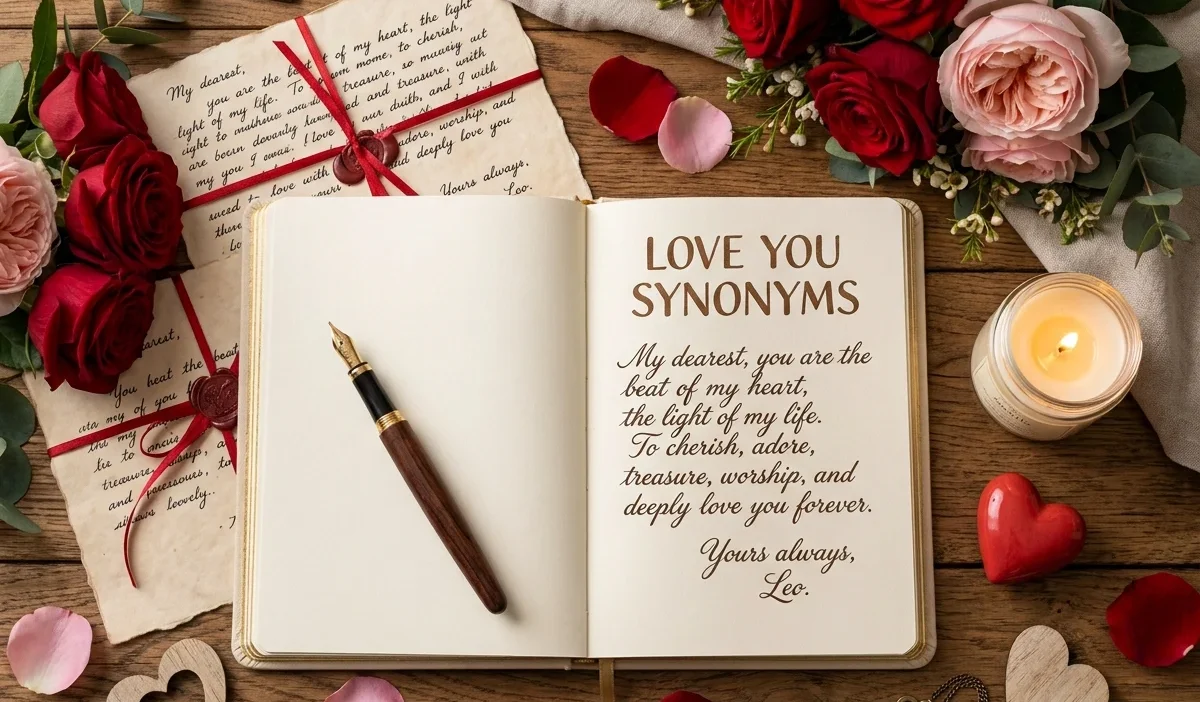
When people search for love you synonyms, they often focus on finding new words, but the real value comes from understanding your partner and their love languages. The best way to communicate is to learn how both of you give and receive love. For example, one person may want to hear specific words of affirmation every day to feel appreciated, while another feels truly loved when their external needs are met. In either case, honest conversations help both people grow together.
Synonyms of Love You Synonyms
Although “I love you” is a complete phrase rather than a single word, English offers many expressions that communicate similar feelings. Some are romantic, some are caring, and others express deep appreciation or devotion.
| Synonym | Pronunciation (IPA) | Part of Speech | Meaning | Example Sentence |
| I adore you | /aɪ əˈdɔː juː/ | Phrase | Love someone deeply | I adore you more every day. |
| I cherish you | /aɪ ˈtʃerɪʃ juː/ | Phrase | Value someone greatly | I cherish every moment with you. |
| I’m crazy about you | /aɪm ˈkreɪzi əˈbaʊt juː/ | Phrase | Feel strong romantic attraction | I’m crazy about you. |
| I’m devoted to you | /aɪm dɪˈvəʊtɪd tə juː/ | Phrase | Show complete loyalty and love | I’m devoted to you always. |
| You mean the world to me | /juː miːn ðə wɜːld tə miː/ | Phrase | Someone is extremely important | You mean the world to me. |
| I’m fond of you | /aɪm fɒnd əv juː/ | Phrase | Like someone warmly | I’m very fond of you. |
| I’m head over heels for you | /aɪm hed ˈəʊvə hiːlz fə juː/ | Phrase | Be deeply in love | I’m head over heels for you. |
| I’ve fallen for you | /aɪv ˈfɔːlən fə juː/ | Phrase | Have become romantically attached | I’ve completely fallen for you. |
| I care about you | /aɪ keə əˈbaʊt juː/ | Phrase | Show concern and affection | I care about you deeply. |
| You’re my everything | /jɔː maɪ ˈevriθɪŋ/ | Phrase | Someone means everything | You’re my everything. |
| I can’t live without you | /aɪ kɑːnt lɪv wɪˈðaʊt juː/ | Phrase | Express deep emotional dependence | I can’t imagine life without you. |
| You have my heart | /juː hæv maɪ hɑːt/ | Phrase | Give someone your love completely | You have my heart forever. |
| I treasure you | /aɪ ˈtreʒə juː/ | Phrase | Hold someone dear | I treasure every memory with you. |
| You’re my soulmate | /jɔː maɪ ˈsəʊlmeɪt/ | Phrase | Perfect life partner | You’re my soulmate. |
| I appreciate you | /aɪ əˈpriːʃieɪt juː/ | Phrase | Value someone’s presence | I appreciate everything you do. |
| I’m yours | /aɪm jɔːz/ | Phrase | Express complete romantic commitment | I’m yours forever. |
Synonyms by Meaning
Romantic Expressions
- I adore you
- I’m head over heels for you
- I’ve fallen for you
- You have my heart
- You’re my soulmate
- I’m yours
Deep Affection
- I cherish you
- I treasure you
- I care about you
- You mean the world to me
Appreciation and Devotion
- I appreciate you
- I’m devoted to you
- I’m fond of you
What Does Love You Synonyms Mean?
The phrase love you synonyms refers to alternative words or expressions that communicate feelings similar to saying “I love you.” Rather than repeating the exact phrase every time, speakers use different expressions to match the situation, emotional intensity, and relationship.
For example, telling your partner, “You mean the world to me,” often communicates just as much affection as saying “I love you.” Likewise, phrases such as “I cherish you” or “I adore you” can sound even more personal because they highlight admiration, gratitude, or commitment.
Not every synonym has exactly the same meaning. Some express romantic love, while others emphasise appreciation, loyalty, or emotional support. Choosing the right phrase depends on who you are speaking to and what you want to express.
Many English speakers naturally alternate between these expressions to make conversations feel genuine. Instead of repeating the same words, they select phrases that better fit birthdays, anniversaries, everyday conversations, apologies, or moments of encouragement.
For this reason, learning love you synonyms helps improve both spoken and written communication. It also allows you to express emotions with greater variety and authenticity.
Most Common Synonyms of Love You Synonyms
Although there are countless ways to express love, some phrases are far more common in everyday English than others. These expressions sound natural, are widely understood, and suit different relationships and situations. Choosing the right words depends on the level of emotion you want to express and the person you are speaking to.
I Adore You
“I adore you” is one of the strongest alternatives to “I love you.” It expresses deep admiration as well as affection. Many couples use this phrase to add warmth and sincerity to romantic conversations.
Example:
“I adore you for always believing in me.”
This phrase works well in anniversary cards, love letters, and meaningful conversations.
I Care About You
“I care about you” focuses more on concern, kindness, and emotional support than romance. It is suitable for romantic partners, close friends, and family members.
Example:
“I care about you, and I always want the best for you.”
Because it is less intense than “I love you,” it is often used in developing relationships.
You Mean the World to Me
This expression tells someone that they are incredibly important in your life. It highlights emotional value rather than simply stating love.
Example:
“You mean the world to me, and I’m grateful for you every day.”
It is especially popular in birthday messages, wedding speeches, and anniversary wishes.
I Cherish You
To cherish someone means to value and appreciate them deeply. It suggests long-term commitment and respect.
Example:
“I cherish every memory we’ve made together.”
People often use this phrase in marriage vows and heartfelt letters.
I Treasure You
“I treasure you” is similar to “I cherish you,” but places even greater emphasis on seeing someone as precious.
Example:
“I’ll always treasure you and everything we’ve shared.”
Although less common in everyday conversation, it sounds elegant and sincere.
I’m Crazy About You
This expression is playful and romantic. It communicates excitement and strong attraction.
Example:
“I’m crazy about you, and I can’t stop thinking about you.”
It is particularly common among younger couples and in romantic films.
I’ve Fallen for You
When someone says, “I’ve fallen for you,” they mean they have gradually developed romantic feelings.
Example:
“Somewhere along the way, I’ve completely fallen for you.”
This phrase often appears during the early stages of a relationship.
I’m Head Over Heels for You
This idiom expresses complete romantic happiness and excitement.
Example:
“I’m head over heels for you after all this time.”
Because it is an idiomatic expression, it sounds lively and conversational.
You Have My Heart
This phrase symbolises giving someone your complete trust, affection, and commitment.
Example:
“You’ll always have my heart.”
It is especially common in romantic greetings and wedding vows.
I’m Devoted to You
Devotion goes beyond affection. It reflects loyalty, dedication, and long-term commitment.
Example:
“I’m devoted to you and our future together.”
This phrase is often used between married couples or long-term partners.
You’re My Everything
This emotional expression tells someone they are the most important person in your life.
Example:
“You’re my everything, and I appreciate you every day.”
Because it is highly emotional, it is best reserved for close romantic relationships.
I Appreciate You
While not always romantic, “I appreciate you” has become increasingly popular. It expresses gratitude and recognition for another person’s efforts.
Example:
“I appreciate you more than words can say.”
It works well in healthy relationships where appreciation is openly expressed.
Difference Between Love You Synonyms and Their Synonyms
Although many expressions are considered love you synonyms, they are not completely interchangeable. Each phrase carries its own emotional tone, level of intimacy, and purpose. Understanding these subtle differences helps you choose words that sound natural rather than forced.
“I Love You” vs “I Adore You”
“I love you” is the most direct declaration of romantic love. It is universal and suitable for almost every serious relationship.
“I adore you” adds admiration to love. It often suggests that you admire someone’s personality, qualities, or behaviour as much as you love them.
Example:
- I love you because you’re always there for me.
- I adore you because your kindness inspires me every day.
“I Love You” vs “I Care About You”
“I care about you” expresses concern and affection but does not necessarily indicate romantic love.
For example, you might say it to:
- A close friend
- A family member
- Someone you are dating
- A colleague during difficult times
“I love you,” however, usually represents a much deeper emotional commitment.
“I Love You” vs “I Cherish You”
To cherish someone means you value them deeply and appreciate their presence in your life.
While “I love you” expresses emotion directly, “I cherish you” focuses on appreciation and respect.
Many married couples naturally alternate between these expressions.
“I Love You” vs “You Mean the World to Me”
These phrases often overlap, but they emphasise different ideas.
“I love you” expresses affection.
“You mean the world to me” expresses importance.
Someone may use both together because one explains the feeling while the other explains the person’s value.
“I Love You” vs “I’m Devoted to You”
Devotion suggests loyalty, sacrifice, and commitment over time.
This phrase often suits relationships that have grown stronger through shared experiences.
For example:
“I’m devoted to you through every challenge we face together.”
“I Love You” vs “I Appreciate You”
Love and appreciation often go hand in hand, but they are not identical.
Appreciation recognises someone’s efforts, kindness, and support.
Love expresses a broader emotional bond.
Healthy relationships usually include both.
“I Love You” vs “I’m Crazy About You”
“I’m crazy about you” sounds energetic and playful. It often describes excitement and attraction during the early stages of romance.
“I love you” usually reflects a deeper and more stable emotional connection.
Choosing the Right Expression
Ask yourself three simple questions before choosing a synonym:
- How close is my relationship with this person?
- How serious is the situation?
- What emotion do I want to express?
For example:
| Situation | Best Expression |
| Wedding vows | I cherish you |
| Anniversary card | You mean the world to me |
| Everyday conversation | I love you |
| New relationship | I’ve fallen for you |
| Showing appreciation | I appreciate you |
| Romantic text | I adore you |
| Offering reassurance | I care about you |
Common Mistakes When Using Love You Synonyms
Learning different ways to express affection can make your conversations more meaningful, but using the wrong phrase at the wrong time may create confusion. The best love you synonyms are those that match the relationship, the situation, and your genuine feelings. Here are some of the most common mistakes people make and how to avoid them.
Using Very Strong Expressions Too Soon
One of the biggest mistakes is choosing an expression that feels more serious than the relationship itself. For example, saying “You’re my everything” or “I’m devoted to you” during the first few dates may feel overwhelming.
Instead, choose gentler alternatives such as:
- I enjoy being with you.
- I care about you.
- I’ve really fallen for you.
As your relationship grows, stronger expressions will feel more natural.
Assuming Every Synonym Means Exactly the Same Thing
Although many phrases communicate affection, each has a different emotional meaning.
For example:
- I adore you shows admiration.
- I cherish you highlights appreciation.
- I appreciate you expresses gratitude.
- I care about you focuses on support.
- I’m crazy about you emphasises excitement.
Understanding these differences helps you choose words that truly reflect your emotions.
Ignoring the Situation
The same expression may sound perfect in one situation but awkward in another.
For instance:
- A wedding anniversary calls for heartfelt language.
- A casual text message may suit something shorter and lighter.
- A difficult conversation may require reassurance instead of romance.
Matching your words to the occasion makes your message feel more authentic.
Overusing the Same Phrase
Even the most beautiful expression can lose its impact if repeated too often.
Instead of always saying:
“I love you.”
Try varying your language naturally.
For example:
- I adore you.
- You mean the world to me.
- I’m grateful to have you.
- I treasure every moment with you.
This variety keeps conversations fresh without sounding forced.
Copying Romantic Quotes Without Meaning
Many people search online for romantic sayings and copy them word for word. While there is nothing wrong with using inspiration, messages become much more meaningful when they reflect your own experiences.
Instead of sending a generic quote, mention a shared memory or a quality you genuinely admire. Personal words often have a stronger emotional impact than famous quotations.
Forgetting That Actions Matter Too
Words are powerful, but they work best when supported by actions.
Telling someone you appreciate them while consistently showing kindness, respect, and support creates trust. Genuine affection is expressed through both language and behaviour.
Tips for Using Love You Synonyms Correctly
Choosing the right expression is about more than finding an alternative phrase. It involves understanding the person you are speaking to and communicating sincerely. These practical tips can help you use love you synonyms naturally.
Be Genuine
The most memorable expressions are honest ones.
Choose words that reflect how you truly feel rather than trying to sound poetic or impressive. Authenticity is far more meaningful than elaborate language.
Think About Your Relationship
Different relationships call for different expressions.
For example:
- Romantic partners may appreciate I adore you or You have my heart.
- Family members may respond better to I care about you.
- Close friends may appreciate You mean a lot to me.
Selecting an expression that suits the relationship helps avoid misunderstandings.
Match the Tone to the Occasion
A light-hearted text, a birthday card, and wedding vows each require a different tone.
For everyday conversations, simple phrases often work best.
For significant moments, longer and more heartfelt expressions may feel more appropriate.
Personalise Your Message
Adding a personal detail makes any expression more memorable.
Instead of saying:
“I cherish you.”
You could say:
“I cherish the way you always encourage me when life becomes difficult.”
Specific details make your words unique.
Use Variety Naturally
There is no need to replace “I love you” completely. In fact, the classic phrase remains one of the most meaningful expressions in the English language.
Mixing it with other affectionate expressions creates a natural balance.
For example, over time you might say:
- I love you.
- I appreciate everything you do.
- You mean the world to me.
- I’m so grateful to have you.
This keeps your communication warm and sincere.
Pay Attention to Your Partner’s Preferences
Everyone expresses affection differently. Some people value spoken words, while others feel loved through thoughtful actions, quality time, or acts of kindness.
Listen carefully to how your partner communicates affection and adapt your language accordingly. This creates stronger emotional connections.
Speak Naturally
Avoid using expressions simply because they sound impressive.
If a phrase feels unnatural when you say it aloud, choose one that matches your everyday way of speaking. Comfortable language always sounds more genuine than overly formal expressions.
Summary
Finding the right love you synonyms allows you to express affection in ways that feel fresh, sincere, and meaningful. While “I love you” remains the most recognised declaration of love, English offers many beautiful alternatives, including I adore you, I cherish you, I care about you, You mean the world to me, and I’m devoted to you.
Each expression carries its own emotional tone. Some highlight admiration, others show appreciation, while others express commitment or deep affection. Understanding these differences helps you communicate more naturally and choose words that suit the moment.
FAQs
1. What are the best love you synonyms?
Some of the most popular alternatives include I adore you, I cherish you, I care about you, You mean the world to me, I’m crazy about you, and You have my heart.
2. Is “I adore you” stronger than “I love you”?
Not necessarily. I adore you often expresses admiration alongside love, while I love you remains the most direct and universal expression of deep affection.
3. Can I use these expressions with friends?
Some expressions, such as I care about you or I appreciate you, are suitable for friends and family. Others, like I’m head over heels for you, are clearly romantic.
4. Which synonym sounds the most romantic?
Expressions such as You have my heart, I’m devoted to you, I cherish you, and You’re my soulmate are among the most romantic alternatives.
5. Are these expressions suitable for text messages?
Yes. Many of these phrases work well in text messages, greeting cards, emails, and handwritten notes, provided they match your relationship and feel genuine.
6. Why do people search for love you synonyms?
People often want fresh, meaningful ways to express affection without repeating the same phrase. Different expressions also suit different emotions and occasions.
7. Can love you synonyms improve my writing?
Yes. Using varied yet natural expressions can make romantic writing, greeting cards, speeches, and personal messages more engaging while avoiding repetition.