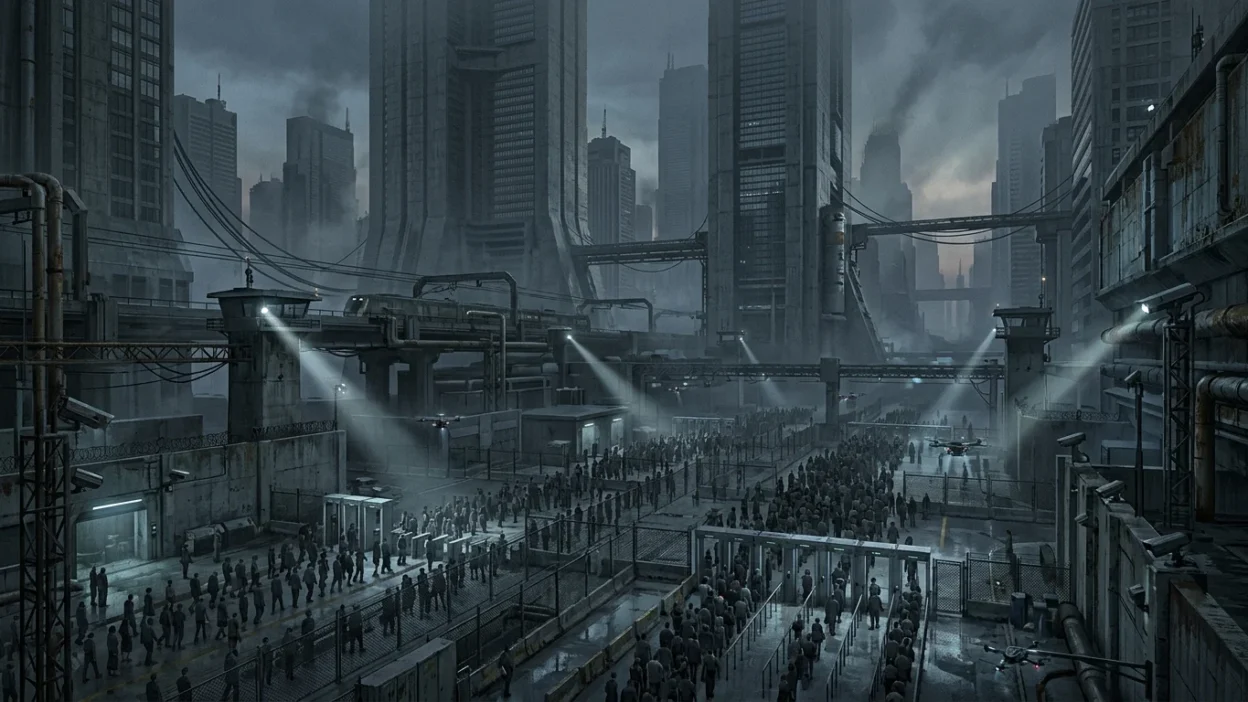
Finding the right words to describe a frightening, unfair, or deeply troubled society can make writing much more powerful. The word dystopia is often used for an imagined world where people live under oppression, extreme control, social injustice, fear, or terrible living conditions.
It commonly appears in novels, films, political discussions, academic writing, and descriptions of possible futures.
Understanding these alternatives helps you choose a word that fits the exact context. For example, police state focuses on government surveillance and control, while bleak future focuses more generally on an unpleasant future. Similarly, anti-utopia directly contrasts with the idea of an ideal society, while social nightmare emphasises suffering and disorder.
Whether you are writing an essay, reviewing a dystopian novel, preparing for an English exam, or simply trying to improve your vocabulary, these alternatives can help you express the idea more precisely.
Synonyms of Synonyms for Dystopia
Because dystopia is a specialised noun, many of its alternatives are contextual rather than exact dictionary synonyms. The following terms are grouped according to the ideas they emphasise.
Alternatives Focused on an Oppressive Society
| Synonym | Pronunciation (IPA) | Part of Speech | Meaning | Example Sentence |
| Nightmare society | /ˈnaɪtmeə səˌsaɪəti/ | Noun phrase | A society characterised by fear, suffering, or terrible conditions | The novel presents a nightmare society where citizens have no freedom. |
| Oppressive society | /əˈpresɪv səˌsaɪəti/ | Noun phrase | A society in which people experience severe control or unfair treatment | The story describes an oppressive society controlled by a powerful government. |
| Totalitarian society | /ˌtəʊtəlɪˈteəriən səˌsaɪəti/ | Noun phrase | A society under a government that seeks extensive control over people’s lives | The film depicts a totalitarian society where independent thought is forbidden. |
| Authoritarian society | /ɔːˌθɒrɪˈteəriən səˌsaɪəti/ | Noun phrase | A society governed through strong authority and limited freedom | Citizens in the authoritarian society are discouraged from questioning the state. |
| Police state | /pəˈliːs steɪt/ | Noun phrase | A state where government control is maintained through surveillance and policing | The novel imagines a police state where every citizen is monitored. |
| Surveillance state | /səˈveɪləns steɪt/ | Noun phrase | A society in which authorities extensively monitor people’s activities | The book explores the dangers of living in a surveillance state. |
Alternatives Focused on a Dark or Unpleasant Future
| Synonym | Pronunciation (IPA) | Part of Speech | Meaning | Example Sentence |
| Bleak future | /bliːk ˈfjuːtʃə/ | Noun phrase | A future expected to be unhappy, difficult, or hopeless | The author warns readers about a bleak future shaped by environmental collapse. |
| Grim future | /ɡrɪm ˈfjuːtʃə/ | Noun phrase | A future involving serious problems, suffering, or little hope | The story portrays a grim future after decades of conflict. |
| Dark future | /dɑːk ˈfjuːtʃə/ | Noun phrase | An unpleasant or threatening possible future | The film imagines a dark future dominated by artificial intelligence. |
| Doomed society | /duːmd səˈsaɪəti/ | Noun phrase | A society that appears destined for destruction or collapse | The novel follows people trying to survive in a doomed society. |
| Ruined society | /ˈruːɪnd səˌsaɪəti/ | Noun phrase | A society that has suffered severe destruction or collapse | The characters travel through a ruined society after a global disaster. |
| Failed society | /feɪld səˈsaɪəti/ | Noun phrase | A society in which major social or political systems no longer function properly | The novel explores life inside a failed society. |
Alternatives Focused on an Ideal Society Gone Wrong
| Synonym | Pronunciation (IPA) | Part of Speech | Meaning | Example Sentence |
| Anti-utopia | /ˌænti juːˈtəʊpiə/ | Noun | An imagined society that contrasts with an ideal or perfect society | The novel is often described as an anti-utopia because its perfect system creates misery. |
| Social nightmare | /ˈsəʊʃəl ˌnaɪtmeə/ | Noun phrase | A society or social situation involving extreme suffering or fear | The author presents the new political system as a social nightmare. |
| Hellish society | /ˈheliʃ səˌsaɪəti/ | Noun phrase | A society that is extremely unpleasant, cruel, or unbearable | The survivors return to a hellish society after the war. |
| Dehumanised society | /diːˈhjuːmənaɪzd səˌsaɪəti/ | Noun phrase | A society where people are treated as less than fully human | The novel portrays a dehumanised society in which individuals are valued only for their productivity. |
| Oppressive regime | /əˈpresɪv reɪˌʒiːm/ | Noun phrase | A harsh system of government that restricts people’s freedom | The resistance movement challenges the oppressive regime. |
| Controlled society | /kənˈtrəʊld səˌsaɪəti/ | Noun phrase | A society in which people’s choices and behaviour are heavily regulated | The characters struggle to escape the controlled society. |
These expressions are not all interchangeable in every sentence. A police state, for example, specifically suggests extensive policing and surveillance, whereas a bleak future may describe a dystopian setting without mentioning government control. Choosing the right alternative depends on the feature of dystopia you want to highlight.
What Does Synonyms for Dystopia Mean?
The phrase synonyms for dystopia refers to words and expressions that can be used instead of, or in connection with, the word dystopia. These alternatives describe imaginary or hypothetical societies that are deeply unpleasant, oppressive, dysfunctional, frightening, or undesirable.
The noun dystopia is commonly understood as the opposite of utopia. A utopia represents an imagined ideal society, while a dystopia represents an imagined society in which life has become seriously problematic.
A dystopian world may involve extreme government control, poverty, inequality, environmental destruction, technological surveillance, social division, war, censorship, or the loss of individual freedom.
For example:
The novel describes a dystopia where citizens are constantly monitored.
This could also be expressed in different ways:
The novel describes a surveillance state where citizens are constantly monitored.
Or:
The novel presents an oppressive society where citizens have almost no freedom.
Dystopia vs Utopia
The easiest way to understand dystopia is to compare it with utopia.
A utopia is an imagined ideal society where social problems have been solved and people enjoy peace, fairness, security, or prosperity.
A dystopia is an imagined society where life is significantly worse because of oppression, injustice, environmental disaster, technological control, political extremism, or another major problem.
The contrast can be seen clearly in these examples:
- Utopia: an ideal society based on equality and peace.
- Dystopia: an oppressive society based on control and fear.
- Utopia: citizens enjoy extensive freedom.
- Dystopia: citizens have severely restricted choices.
- Utopia: technology improves people’s lives.
- Dystopia: technology is used to monitor or control people.
This contrast is particularly useful when discussing novels, films, or social theories.
Most Common Synonyms of Synonyms for Dystopia
Some alternatives are more useful than others in everyday writing. The best choice depends on the exact idea you want to communicate.
1. Nightmare Society
Nightmare society is a vivid and accessible expression for a society that is frightening, cruel, or extremely unpleasant.
It works particularly well in reviews, essays, and general descriptions.
Example:
The author creates a nightmare society where ordinary people live in constant fear.
Unlike dystopia, this expression is less technical and more emotional.
2. Oppressive Society
Oppressive society is one of the closest alternatives when the main feature of a dystopian world is the restriction of freedom.
It suggests that people are controlled, mistreated, or prevented from living freely.
Example:
The novel explores how individuals survive in an oppressive society.
3. Totalitarian Society
A totalitarian society is particularly appropriate when the government attempts to exercise extremely extensive control over political, social, and personal life.
This term is more specific than dystopia.
Example:
The story is set in a totalitarian society where independent political thought is forbidden.
Not every dystopia is totalitarian, so the expression should be used when the political structure fits.
4. Authoritarian Society
An authoritarian society is controlled by strong authority, usually with limited political freedom.
It is useful when discussing political systems.
Example:
The protagonist secretly challenges the rules of the authoritarian society.
5. Police State
A police state is a particularly strong alternative when surveillance, policing, intimidation, and state enforcement dominate the setting.
Example:
The citizens live in a police state where even private conversations are monitored.
A police state is therefore more specific than dystopia.
6. Surveillance State
Use surveillance state when constant monitoring is the central feature of the fictional society.
Example:
The novel warns readers about the dangers of becoming a surveillance state.
This expression is especially useful when discussing technology and privacy.
7. Anti-Utopia
Anti-utopia is a close conceptual counterpart to dystopia because it describes an imagined society that contrasts with the idea of an ideal world.
Example:
The book presents an anti-utopia in which attempts to create a perfect society lead to severe restrictions.
The term is particularly useful in literary discussions.
8. Bleak Future
A bleak future refers to a future that appears unhappy, dangerous, or without much hope.
Example:
The film presents a bleak future after years of environmental damage.
It does not necessarily describe a complete society, so it should not automatically replace dystopia.
9. Grim Future
Grim future is similar to bleak future, but it often creates a stronger sense of seriousness or impending trouble.
Example:
The story imagines a grim future in which resources have become extremely scarce.
10. Social Nightmare
A social nightmare describes a deeply troubling social situation.
Example:
The writer imagines a social nightmare caused by extreme inequality.
It is useful when the emphasis is on human suffering rather than the political structure.
11. Oppressive Regime
An oppressive regime focuses on the government or ruling authority rather than the whole society.
Example:
The main character joins a resistance group against the oppressive regime.
This is therefore particularly useful when discussing political dystopian fiction.
12. Dehumanised Society
A dehumanised society highlights the loss of dignity, individuality, compassion, or human value.
Example:
The novel portrays a dehumanised society where people are treated as numbers rather than individuals.
This expression works especially well in literary and academic writing.
Difference Between Synonyms for Dystopia and Its Synonyms
Although many expressions can describe a dystopian world, they do not all have exactly the same meaning. The most important difference is what each expression emphasises.
Dystopia vs Nightmare Society
Dystopia is a recognised literary and social concept. Nightmare society is more descriptive and emotional.
Use dystopia when discussing a genre, fictional social system, or theoretical concept.
Use nightmare society when you want to emphasise how frightening or unbearable the society feels.
Dystopia vs Oppressive Society
An oppressive society focuses on restriction, cruelty, or unfair control.
A dystopia can be oppressive, but oppression is not the only possible feature. A dystopian society might also be defined by ecological collapse, technological dependence, economic inequality, or social fragmentation.
Dystopia vs Totalitarian Society
Totalitarian society specifically suggests extreme political control.
A dystopia does not necessarily need to have a totalitarian government. A fictional world destroyed by climate disaster could be dystopian without being totalitarian.
Dystopia vs Police State
A police state specifically emphasises excessive policing and surveillance.
A dystopian society may be a police state, but the two concepts are not identical.
Dystopia vs Surveillance State
A surveillance state focuses on monitoring people through government or institutional systems.
This may be one feature of a dystopia rather than the complete definition.
Dystopia vs Bleak Future
A bleak future simply means an unpleasant or worrying future.
It does not necessarily describe an entire social system.
For example:
The film predicts a bleak future because of climate change.
This does not automatically mean the film depicts a dystopia.
Dystopia vs Anti-Utopia
These terms are closely related. Both contrast with the concept of utopia.
However, dystopia is much more common in modern English and is widely used to describe fictional societies characterised by severe social problems.
Dystopia vs Failed Society
A failed society suggests that important institutions or social systems no longer function effectively.
A dystopia may be a failed society, but a dystopian world can also have highly organised institutions that deliberately oppress people.
This distinction is important because dystopian systems are not always chaotic. Sometimes their frightening quality comes from excessive order and control.
Common Mistakes When Using Synonyms for Dystopia
1. Treating Every Alternative as an Exact Synonym
One of the most common mistakes is assuming that every related expression can replace dystopia in every sentence.
They cannot.
For example, surveillance state focuses on monitoring, while dystopia has a broader meaning.
Always consider what aspect of the fictional world you are describing.
2. Using Utopia Instead of Dystopia
The two words have opposite meanings.
A utopia is an ideal or perfect society, while a dystopia is an undesirable or deeply troubled society.
Incorrect idea:
The novel describes a dystopia where everyone lives peacefully and freely.
If the society is genuinely ideal, utopia may be the more appropriate word.
3. Using Police State Too Broadly
A police state specifically involves strong policing and state control.
If a fictional society is simply poor or environmentally damaged, calling it a police state may be inaccurate.
4. Assuming Every Dystopia Is in the Future
Many dystopian stories are set in the future, but a dystopia does not have to be futuristic.
The concept can also be used for fictional societies that resemble the present or a historical period.
5. Confusing Dystopia with Disaster
A disaster describes a catastrophic event or situation.
A dystopia usually involves a broader social or political condition.
A city destroyed by an earthquake is not automatically a dystopia. However, a fictional society that develops after a disaster and becomes oppressive or deeply dysfunctional may be described as dystopian.
6. Using “Dystopian” as a Complete Replacement for “Dystopia”
Dystopia is a noun.
Dystopian is normally an adjective.
Correct:
The novel presents a dystopia.
Correct:
The novel presents a dystopian society.
Incorrect:
The novel presents a dystopian.
Using the correct grammatical form makes your writing clearer and more professional.
7. Ignoring Context
The best synonym depends on what you are discussing.
For politics, totalitarian society, authoritarian society, or oppressive regime may be suitable.
For technology, surveillance state may be more precise.
For literary criticism, anti-utopia or dystopian society may work better.
For general description, nightmare society or bleak future may sound more natural.
Tips for Using Synonyms for Dystopia Correctly
1. Identify the Main Feature
Before choosing an alternative, ask yourself what makes the society dystopian.
Is it:
- government control?
- surveillance?
- inequality?
- environmental destruction?
- technological domination?
- poverty?
- social collapse?
- loss of freedom?
- dehumanisation?
Once you identify the main feature, selecting a suitable expression becomes much easier.
2. Use “Police State” for Excessive Policing
If citizens are monitored, arrested, intimidated, or controlled by powerful security forces, police state may be appropriate.
For example:
The novel depicts a police state where citizens are watched at every turn.
3. Use “Surveillance State” for Monitoring
When cameras, digital tracking, data collection, or constant observation are central to the story, surveillance state is often more precise.
4. Use “Bleak Future” for General Predictions
If you are describing a possible future without focusing on a particular political system, bleak future or grim future may be more natural.
For example:
The writer imagines a bleak future shaped by environmental destruction.
5. Use “Oppressive Society” for Loss of Freedom
When people cannot speak freely, make personal choices, or challenge those in power, oppressive society is a strong alternative.
6. Use “Totalitarian Society” Carefully
Reserve totalitarian society for settings where the government exercises extremely extensive control.
This makes your writing more accurate.
7. Remember That Dystopia Can Be Subtle
Not every dystopian setting looks like a ruined city or a violent dictatorship.
Some dystopias are clean, technologically advanced, and highly organised. Their disturbing nature may come from surveillance, social conditioning, lack of individuality, or the loss of personal choice.
This is why words such as controlled society, dehumanised society, and surveillance state can sometimes communicate a particular aspect of dystopia better than ruined society.
8. Choose Formal or Informal Language Appropriately
For academic writing, terms such as totalitarian society, authoritarian society, anti-utopia, and oppressive regime are often appropriate.
For creative writing, expressions such as nightmare society, hellish society, and dark future can create a stronger emotional effect.
9. Avoid Unnecessary Repetition
If you are writing an essay about dystopian literature, repeatedly using dystopia in every sentence can make the writing monotonous.
However, replacing it with an inaccurate synonym is not the answer.
Instead, vary your language carefully:
The novel creates a dystopia controlled by an oppressive regime. This authoritarian society uses surveillance to maintain power, creating a nightmare society in which individual freedom has almost disappeared.
Each expression adds a slightly different idea.
10. Prioritise Meaning Over Vocabulary Variety
Good vocabulary is not simply about using as many different words as possible.
The strongest writing uses the most accurate word for each situation.
If dystopia is the most precise term, keep it. Use an alternative only when it adds a meaningful distinction.
Summary
The word dystopia describes an imagined society or world where life is deeply undesirable because of oppression, inequality, fear, environmental destruction, technological control, political extremism, social collapse, or other serious problems.
There are relatively few perfect synonyms because dystopia is a specialised concept. Many useful alternatives are therefore contextual expressions rather than exact replacements.
For creative writing, vivid expressions such as nightmare society and hellish society can create emotional impact. For academic writing, more precise terms such as anti-utopia, authoritarian society, and totalitarian society may be more suitable.
The key is to remember that related words are not always interchangeable. Understanding their differences allows you to write more naturally, accurately, and effectively.
FAQs
1. What is the closest synonym for dystopia?
There is no single perfect synonym because dystopia is a specialised concept. Anti-utopia, nightmare society, and oppressive society are among the closest alternatives, depending on the context.
2. What is another word for a dystopian society?
You can use expressions such as oppressive society, nightmare society, totalitarian society, authoritarian society, controlled society, or dehumanised society. The best choice depends on the defining feature of the society.
3. Is “anti-utopia” a synonym for dystopia?
Yes, anti-utopia is a closely related term and is often used to describe an imagined society that contrasts with the ideal world represented by a utopia. However, the two terms can have slightly different uses in literary discussions.
4. What is the difference between dystopia and a police state?
A dystopia is a broader concept describing a deeply undesirable society. A police state specifically describes a society where authorities use extensive policing, surveillance, and enforcement to control citizens. A dystopian society can be a police state, but not every dystopia is one.
5. Can “bleak future” replace dystopia?
Sometimes. Bleak future is useful when describing an unpleasant or worrying possible future. However, it is broader than dystopia and does not necessarily suggest an oppressive or dysfunctional society.