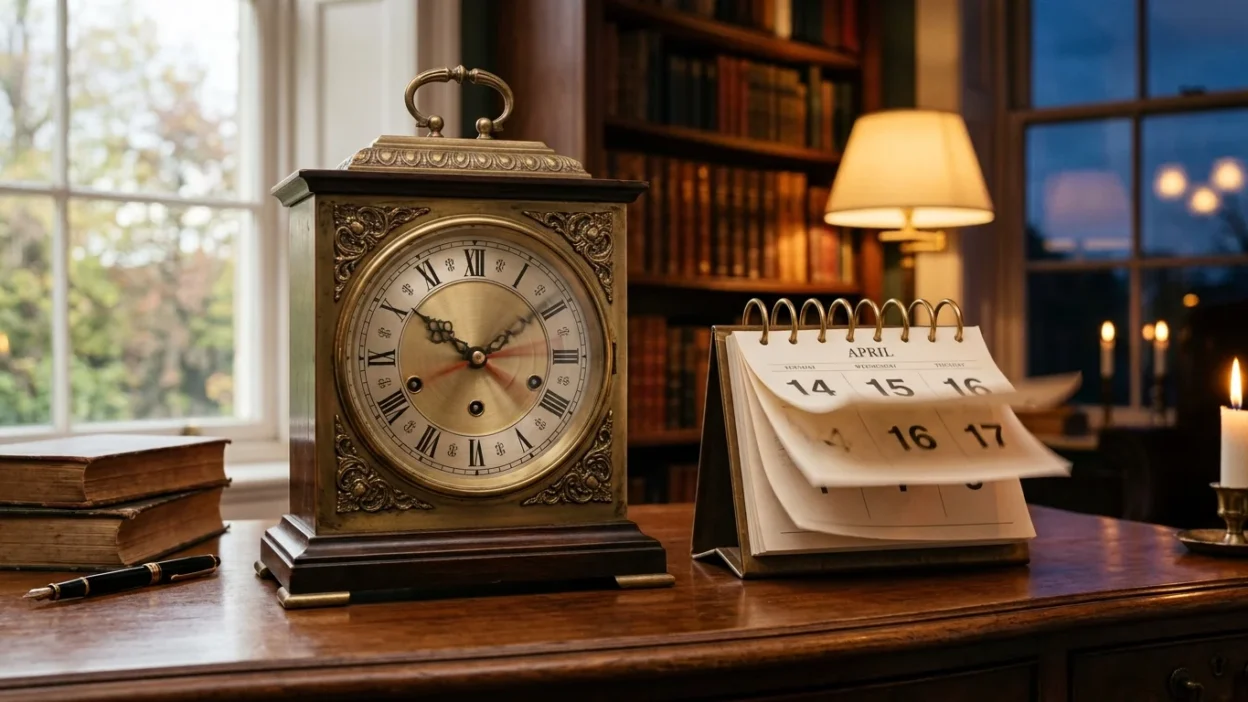
Have you ever started watching a film and suddenly realised that two hours have passed? Or perhaps you spent a wonderful afternoon with friends and wished the day could last longer.
In situations like these, we often say, “Time flies.” This common expression describes how quickly time seems to pass, especially when we are enjoying ourselves, staying busy, or becoming deeply involved in something.
Learning time flies synonyms can help you express this idea in different ways. Instead of repeating the same phrase, you can choose expressions such as “time passes quickly”, “the hours slip away”, “the days go by”, or “time seems to rush by”.
Each expression has a slightly different tone and may suit a particular situation.
It is also important to remember that time flies is an idiomatic expression. Therefore, some of its best alternatives are not single-word synonyms. They are phrases that communicate the same general idea: time appears to pass very quickly.
Synonyms of Time Flies
The following expressions can be used as synonyms or close alternatives to “time flies”. Some are direct replacements, while others express a similar idea with a slightly different emphasis.
| Synonym | Pronunciation (IPA) | Part of Speech | Meaning | Example Sentence |
| Time passes quickly | /taɪm ˈpɑːsɪz ˈkwɪkli/ | Phrase | Time moves from one moment to another very quickly. | Time passes quickly when you are having fun. |
| Time goes by quickly | /taɪm ɡəʊz baɪ ˈkwɪkli/ | Phrase | Time seems to move quickly. | Time goes by quickly when I am with my family. |
| Time moves quickly | /taɪm muːvz ˈkwɪkli/ | Phrase | Time appears to progress at a fast rate. | Time moves quickly when you are busy. |
| Time passes swiftly | /taɪm ˈpɑːsɪz ˈswɪftli/ | Phrase | Time moves past rapidly. | The summer holidays passed swiftly. |
| Time rushes by | /taɪm ˈrʌʃɪz baɪ/ | Phrase | Time seems to pass extremely quickly. | Time rushes by when we are enjoying ourselves. |
| Time slips away | /taɪm slɪps əˈweɪ/ | Idiomatic phrase | Time passes quietly and often before you notice it. | The evening slipped away while we talked. |
| The hours fly by | /ði ˈaʊəz flaɪ baɪ/ | Phrase | The hours seem to pass very quickly. | The hours fly by when I am reading a good book. |
| The days fly by | /ðə deɪz flaɪ baɪ/ | Phrase | Days seem to pass unusually quickly. | The days fly by during the school holidays. |
| The years go by | /ðə jɪəz ɡəʊ baɪ/ | Phrase | Years pass as time progresses. | The years go by, but old memories remain. |
| Time races by | /taɪm ˈreɪsɪz baɪ/ | Phrase | Time seems to move extremely fast. | Time races by when you have a busy schedule. |
| Time whizzes by | /taɪm ˈwɪzɪz baɪ/ | Informal phrase | Time passes very quickly. | The weekend whizzed by before I knew it. |
| Time speeds by | /taɪm spiːdz baɪ/ | Phrase | Time appears to move faster than expected. | Time speeds by when you are surrounded by good friends. |
| The moments pass quickly | /ðə ˈməʊmənts pɑːs ˈkwɪkli/ | Phrase | Individual periods of time seem to pass rapidly. | The moments passed quickly during our holiday. |
| The days pass swiftly | /ðə deɪz pɑːs ˈswɪftli/ | Phrase | Days move past rapidly. | The days passed swiftly as we prepared for the wedding. |
| Before you know it | /bɪˈfɔː juː nəʊ ɪt/ | Idiomatic phrase | Something happens sooner than expected. | Before you know it, the children will be teenagers. |
| In no time | /ɪn nəʊ taɪm/ | Idiomatic phrase | Very soon or after what feels like a short period. | We will be home in no time. |
| In the blink of an eye | /ɪn ðə blɪŋk əv ən aɪ/ | Idiomatic phrase | Extremely quickly or almost instantly. | In the blink of an eye, the whole afternoon had disappeared. |
| In a flash | /ɪn ə flæʃ/ | Idiomatic phrase | Very quickly. | The weekend was over in a flash. |
| Gone before you know it | /ɡɒn bɪˈfɔː juː nəʊ ɪt/ | Phrase | Finished or past sooner than expected. | The summer will be gone before you know it. |
| The time has flown | /ðə taɪm hæz fləʊn/ | Phrase | A period has passed surprisingly quickly. | The time has flown since we last met. |
These alternatives are not completely interchangeable in every sentence. For example, “time slips away” can suggest that someone has failed to notice time passing, while “time races by” gives a stronger impression of speed.
What Does Time Flies Mean?
“Time flies” is an idiomatic expression meaning that time seems to pass very quickly.
The expression is particularly common when a person is enjoying an experience or is so busy that they do not notice how much time has passed.
For example:
Time flies when you are having fun.
This is one of the most familiar uses of the expression. If you spend an enjoyable afternoon with friends, you may look at the clock and feel surprised that several hours have already passed.
The expression can also be used when discussing longer periods.
For example:
Time flies. It seems like only yesterday that we started university.
Here, the speaker is reflecting on how quickly several years have passed.
Why Do We Say “Time Flies”?
The word “flies” creates an image of something moving quickly through the air. Time itself does not literally fly, of course. The phrase is figurative.
English frequently uses movement to describe the passing of time. We say that time “goes by”, “passes”, “slips away”, “races”, or “flies”.
These expressions help us describe a feeling that is difficult to measure objectively. A day still contains the same number of hours, but it can feel shorter or longer depending on what we are doing.
An enjoyable day may seem short, while an uncomfortable wait may feel much longer.
“Time Flies” Is About Perception
When someone says “time flies”, they are usually talking about their experience of time rather than claiming that time has literally become faster.
For example:
I cannot believe it is already Friday. Time flies!
The speaker is expressing surprise that the week has passed so quickly.
This makes the phrase useful in casual conversations, personal writing, social situations, and reflective statements.
Most Common Synonyms of Time Flies
Although there are many alternatives, some expressions are much more natural and common than others.
1. Time Goes By Quickly
“Time goes by quickly” is one of the easiest alternatives to “time flies”.
It is clear, natural, and suitable for learners of English.
Example:
Time goes by quickly when you are doing something you love.
This expression is useful in both everyday conversation and general writing.
2. Time Passes Quickly
“Time passes quickly” is another straightforward alternative.
It sounds slightly more neutral and formal than “time flies”.
Example:
Time passes quickly when we are busy with our work.
This phrase is particularly useful when you want simple and direct language.
3. Time Slips Away
“Time slips away” has a more expressive quality.
It often suggests that time passes without the speaker noticing.
Example:
I was so interested in the book that the whole afternoon slipped away.
The phrase works especially well in reflective or descriptive writing.
4. The Hours Fly By
“The hours fly by” is very close in meaning to “time flies”.
It focuses specifically on hours rather than time in general.
Example:
The hours fly by whenever we have interesting conversations.
5. Time Rushes By
“Time rushes by” suggests particularly rapid movement.
Example:
Time rushes by when you have a long list of things to do.
It can also express a feeling of being unable to slow down.
6. Time Races By
“Time races by” is stronger and more vivid than “time passes quickly”.
The word “races” creates an image of very fast movement.
Example:
The final year of school seemed to race by.
7. Before You Know It
This idiom does not directly mention time, but it communicates a similar idea.
It means that something happens sooner than expected.
Example:
Keep working hard and, before you know it, your exams will be over.
It is common in friendly conversations and advice.
8. In the Blink of an Eye
This expression means something happens extremely quickly.
Example:
In the blink of an eye, the holiday was over.
It is more dramatic than “time flies”, so it should be used when a particularly quick change is being emphasised.
Difference Between Time Flies and Its Synonyms
The expressions related to “time flies” share a general meaning, but their tone and emphasis can differ.
| Expression | Main Idea | Tone | Typical Use |
| Time flies | Time seems to pass very quickly | Natural, conversational | Everyday speech |
| Time goes by quickly | Time moves quickly | Neutral | Conversation and writing |
| Time passes quickly | Time progresses rapidly | Neutral/formal | General writing |
| Time slips away | Time passes unnoticed | Reflective | Personal or descriptive writing |
| Time rushes by | Time passes very rapidly | Expressive | Conversation and writing |
| Time races by | Time seems extremely fast | Vivid | Descriptive writing |
| The hours fly by | Hours seem short | Friendly | Everyday conversation |
| Before you know it | Something happens sooner than expected | Conversational | Advice and conversation |
| In no time | Something happens very soon | Informal | Everyday speech |
| In the blink of an eye | Something happens almost instantly | Dramatic | Descriptive contexts |
Time Flies vs Time Goes By
These two expressions are extremely close.
Time flies when you are having fun.
and:
Time goes by quickly when you are having fun.
Both communicate the same basic idea.
However, “time flies” is more idiomatic and often sounds more natural in casual conversation.
Time Flies vs Time Slips Away
“Time slips away” adds the idea that time is passing without being noticed.
We talked for hours, and time slipped away.
The phrase can create a more emotional or reflective tone.
Time Flies vs Time Races By
“Time races by” suggests greater speed.
The years raced by.
This can sound more dramatic than:
The years went by quickly.
Time Flies vs Before You Know It
“Before you know it” focuses on the unexpected arrival of a future event.
Before you know it, Christmas will be here.
“Time flies”, on the other hand, directly describes the rapid feeling of time passing.
Time Flies vs In No Time
“In no time” usually means that something will happen very soon.
We will finish the project in no time.
“Time flies” describes the perception that time is passing quickly.
Therefore, these expressions are related but should not automatically replace each other in every sentence.
Common Mistakes When Using Time Flies
Learning the expression is easy, but learners can still make a few mistakes.
1. Taking the Expression Literally
“Time flies” is figurative.
It does not mean that time physically moves through the air.
For example:
Time flies when you are having fun.
The speaker means that time seems to pass quickly.
2. Using the Wrong Verb Form
The common expression is:
Time flies.
Not:
Time fly.
The subject “time” is singular and uncountable, so the present simple verb takes -s.
Compare:
- Time flies.
- The hours fly by.
- The days fly by.
“The hours” and “the days” are plural, so we use “fly”.
3. Adding an Unnecessary Preposition
A common expression is:
Time flies.
Another is:
Time flies by.
Both can be used, although “time flies” is the classic form.
Avoid creating unnatural combinations by adding prepositions randomly.
4. Confusing “Time Flies” with “Time Is Flying”
Both forms can be correct, but they have slightly different uses.
Time flies when you are having fun.
is a general observation.
Time is flying!
usually describes what the speaker feels at the moment.
For example:
We have only ten minutes left. Time is flying!
5. Using a Synonym Without Checking Its Meaning
Not every phrase that suggests speed is a direct synonym.
For example, “in a flash” can describe a very quick action:
He disappeared in a flash.
It does not always mean that a long period of time has passed quickly.
Similarly, “in no time” often refers to something happening soon rather than the experience of time passing.
Always consider the context before replacing “time flies”.
6. Overusing Idioms
Idioms can make English sound natural, but using too many in one paragraph can make writing feel unnatural.
Instead of writing:
Time flies, races, rushes and slips away every single day.
choose one expression that best communicates your intended meaning.
Simple writing is often more effective.
Tips for Using Time Flies Correctly
1. Use It When Time Feels Short
“Time flies” is ideal when you are surprised by how quickly a period has passed.
I cannot believe the lesson is already finished. Time flies!
2. Use “Time Flies When You Are Having Fun”
This is one of the most familiar patterns in English.
Time flies when you are having fun.
It is useful when discussing holidays, celebrations, hobbies, friendships, entertainment, or other enjoyable activities.
3. Choose “Time Slips Away” for a Reflective Tone
If you want to suggest that you did not notice time passing, use “time slips away”.
The evening slipped away as we discussed our plans.
This sounds natural in personal and descriptive writing.
4. Choose “Time Races By” for Stronger Emphasis
When you want to emphasise very rapid movement, “races by” is effective.
The final weeks of the year raced by.
5. Use “Before You Know It” for Future Events
This expression works well when warning or reassuring someone that something will happen sooner than expected.
Before you know it, you will be celebrating your graduation.
6. Match the Expression to the Tone
For simple everyday English, use:
- Time flies.
- Time goes by quickly.
- The hours fly by.
For more expressive writing, consider:
- Time slips away.
- Time races by.
- Time rushes by.
For an informal conversational style:
- Before you know it.
- In no time.
- In a flash.
Choosing the right phrase makes your writing more natural.
7. Think About the Emotional Meaning
“Time flies” can express happiness, surprise, nostalgia, or even sadness.
For example:
Time flies when we are together.
This may express happiness.
But:
Time flies. My children are adults already.
may express nostalgia.
The surrounding sentence determines the emotional effect.
Summary
“Time flies” is a common English idiom meaning that time seems to pass very quickly. It is especially useful when someone is surprised by how quickly an enjoyable, busy, or memorable period has ended.
Common alternatives include time goes by quickly, time passes quickly, time slips away, time rushes by, time races by, the hours fly by, the days fly by, before you know it, in no time, and in the blink of an eye.
The best way to learn these expressions is to notice how native speakers use them in real sentences. Practise choosing an expression based on the meaning, tone, and situation rather than simply replacing one phrase with another.
FAQs
1. What is the meaning of “time flies”?
“Time flies” means that time seems to pass very quickly. It is an idiomatic expression often used when someone is surprised by how quickly a period has ended.
2. What is another way to say “time flies”?
Common alternatives include “time goes by quickly”, “time passes quickly”, “time slips away”, “time rushes by”, “time races by”, and “the hours fly by”.
3. Is “time flies when you are having fun” correct?
Yes. “Time flies when you are having fun” is a very common English expression. It means that enjoyable experiences often seem to pass more quickly than expected.
4. Is “time flies” formal or informal?
“Time flies” is natural in everyday English and is generally conversational. It can also appear in informal and semi-formal writing when the context is appropriate.
5. What is the difference between “time flies” and “time slips away”?
“Time flies” simply says that time seems to pass quickly. “Time slips away” suggests that time passes quietly or unnoticed, often while someone is absorbed in an activity.
6. Can I say “time is flying”?
Yes. “Time is flying” is grammatically correct and is often used to describe the feeling that time is passing quickly at the present moment.
For example:
We need to leave soon. Time is flying!
7. What is the opposite of “time flies”?
Depending on the context, possible opposites include “time moves slowly”, “time drags”, and “time passes slowly”. “Time drags” is particularly common when someone feels that a period is taking a long time.
8. Why do people say “time flies”?
People say “time flies” because it is a figurative way of describing how quickly time can seem to pass. The expression is particularly common when someone is enjoying an activity or is very busy.