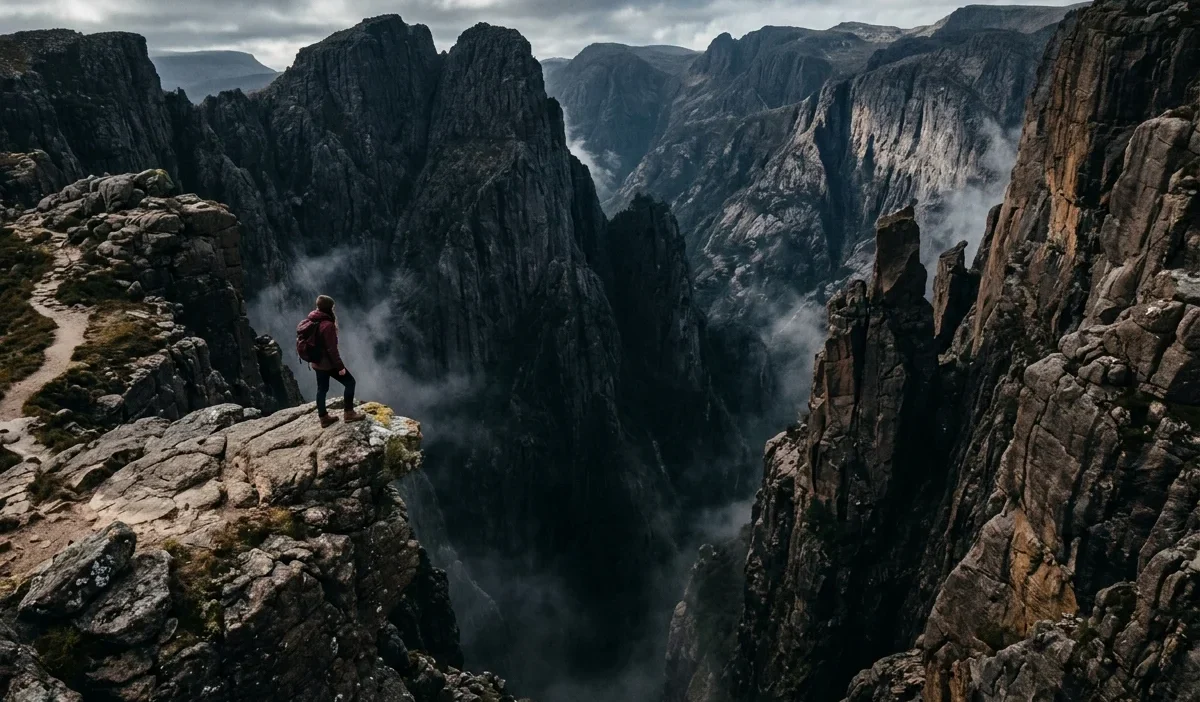
The English language contains many words that can describe depth, emptiness, darkness, and an apparently endless space. One of the most powerful among them is abyss. The word often creates an image of an extremely deep place whose bottom cannot be seen. It can describe a physical chasm, but it can also be used figuratively to express emotional emptiness, uncertainty, separation, or a seemingly limitless situation.
Learning the best synonyms for abyss can help writers express these ideas with greater precision. Words such as chasm, void, depths, gulf, and pit may appear similar, but they do not always carry exactly the same meaning. Some emphasise physical depth, while others suggest emptiness, separation, darkness, or an overwhelming emotional experience.
Understanding these distinctions is particularly useful for students, authors, bloggers, journalists, and English learners. Choosing the right alternative can make a sentence more vivid while ensuring that its intended meaning remains clear.
For example, a deep geological opening might be described as a chasm, while an overwhelming feeling of emptiness may be better described as a void. Similarly, a large separation between two groups may be called a gulf, even though it is not a literal hole in the ground.
Whether you are looking for a synonym for creative writing, academic work, or everyday English, understanding the subtle differences between these terms will help you choose the most appropriate word for your sentence.
Synonyms of Synonyms for Abyss
The word abyss can have both literal and figurative meanings. Literally, it refers to an extremely deep or apparently bottomless space. Figuratively, it can describe a profound emotional emptiness, a major separation, or a situation that seems impossible to escape.
| Synonym | Pronunciation (IPA) | Part of Speech | Meaning | Example Sentence |
| Chasm | /ˈkæzəm/ | Noun | A very deep opening or a wide division between things | A narrow bridge crossed the enormous chasm. |
| Void | /vɔɪd/ | Noun | An empty or completely vacant space | The abandoned building seemed to contain a dark void. |
| Gulf | /ɡʌlf/ | Noun | A deep gap or a major division between people or things | A wide gulf separated the two communities. |
| Pit | /pɪt/ | Noun | A deep hole or hollow in the ground | The miners descended into a deep pit. |
| Cavity | /ˈkævəti/ | Noun | An empty space or hollow area inside something | Water had collected inside a large rock cavity. |
| Depths | /depθs/ | Noun | The deepest part of something | Strange creatures live in the depths of the ocean. |
| Cleave | /kliːv/ | Verb | To split or divide into separate parts | The earthquake seemed to cleave the land apart. |
| Gorge | /ɡɔːdʒ/ | Noun | A narrow valley with steep sides, often formed by a river | The river flowed through a dramatic mountain gorge. |
| Ravine | /rəˈviːn/ | Noun | A deep, narrow valley or channel | They carefully walked along the edge of the ravine. |
| Precipice | /ˈpresɪpɪs/ | Noun | A very steep or vertical cliff or edge | They stood at the edge of a rocky precipice. |
| Chute | /ʃuːt/ | Noun | A steep passage through which something falls or moves | The water rushed down the narrow chute. |
| Hollow | /ˈhɒləʊ/ | Noun | A depressed or empty area | Mist filled the forest hollow. |
| Expanse | /ɪkˈspæns/ | Noun | A large, open, continuous area | They gazed across the vast expanse of the ocean. |
| Darkness | /ˈdɑːknəs/ | Noun | The absence of light; figuratively, a state of despair or uncertainty | He felt as though he were falling into darkness. |
| Nothingness | /ˈnʌθɪŋnəs/ | Noun | A state of complete emptiness or absence | The character feared being swallowed by nothingness. |
Physical meanings
Several alternatives are particularly useful when abyss refers to a physical feature of the landscape.
Chasm, for example, is one of the closest alternatives. It describes a deep crack, opening, or split in the earth and is often associated with dramatic landscapes.
Gorge and ravine can also describe deep geographical formations, although they usually have specific shapes and are not necessarily bottomless.
Pit is a more general term for a deep hole. It can refer to a natural depression or one created by people.
Precipice, meanwhile, focuses on a steep cliff or dangerous edge rather than the empty space below it.
Figurative meanings
When abyss is used figuratively, different alternatives become more appropriate.
Void is particularly useful for describing emotional or psychological emptiness. Someone experiencing profound grief, loneliness, or a lack of purpose might describe their feelings as a void.
Gulf is often used to describe a significant difference or separation. For instance, there may be a gulf between two political opinions, generations, or social groups.
Darkness can represent despair, uncertainty, or a difficult period in someone’s life.
Nothingness suggests complete absence and can be particularly effective in philosophical or literary writing.
What Does “Synonyms for Abyss” Mean?
The phrase “synonyms for abyss” refers to words that have meanings similar to abyss. The exact synonym depends on how the word is being used.
The noun abyss traditionally refers to something extremely deep or apparently bottomless. It can describe a physical space, such as a deep chasm, or a figurative condition, such as profound despair.
For example:
The explorers looked down into the abyss.
Here, abyss refers to a physical depth.
A synonym such as chasm would work naturally:
The explorers looked down into the enormous chasm.
However, if abyss is being used metaphorically, the best alternative may be different.
Consider:
She felt as though she had fallen into an abyss of loneliness.
In this sentence, abyss does not describe a literal hole. It represents an overwhelming emotional state. The word void might therefore be more appropriate:
She felt an enormous void of loneliness.
Similarly, consider the sentence:
There is an abyss between the two generations.
Here, the word refers to a major separation rather than a physical depth. Gulf would be a natural alternative:
There is a significant gulf between the two generations.
This demonstrates why context matters when selecting a synonym.
A synonym should not merely resemble the original word. It should also preserve the meaning and tone of the sentence.
Abyss as a physical depth
The literal meaning of abyss is associated with extreme depth. It can suggest a place that appears bottomless or whose full depth is difficult to determine.
Words such as chasm, pit, gorge, and ravine can sometimes replace it, depending on the physical feature being described.
For example:
The ancient cave opened into a vast abyss.
This could become:
The ancient cave opened into a vast chasm.
The second version is particularly appropriate if the opening is a deep crack or split in the earth.
Abyss as emotional emptiness
In literature and everyday expressive language, abyss can describe an intense emotional experience.
For example:
After the loss, he felt as though he were staring into an abyss.
Here, the word represents grief, uncertainty, or emotional emptiness.
Words such as void, nothingness, and darkness may communicate similar feelings.
Abyss as separation
The word can also represent an enormous difference between two people, groups, ideas, or situations.
For example:
An abyss separated the wealthy and the poor.
A natural alternative would be:
A gulf separated the wealthy and the poor.
In this context, gulf emphasises the distance or division between the two groups.
Why choosing the correct synonym matters
Not every synonym carries the same emotional strength.
For example, pit is relatively straightforward and concrete, while abyss sounds more dramatic and mysterious. Void tends to suggest emptiness, whereas chasm creates a stronger image of physical separation.
This means that replacing a word simply because it appears in a synonym list may change the tone of your writing.
A strong writer therefore considers three things:
- The exact meaning
- The context
- The emotional or stylistic tone
When these three elements are considered together, it becomes much easier to select an alternative that sounds natural and conveys the intended message.
Most Common Synonyms of Abyss
The word abyss has a powerful meaning, but it is not always the most suitable choice for every sentence. Depending on the context, words such as chasm, void, gulf, depths, and pit can communicate a similar idea while adding a slightly different shade of meaning.
Below are some of the most common and useful alternatives.
1. Chasm
Chasm is one of the closest synonyms for abyss when talking about a physical feature. It describes a deep, steep-sided opening or a large crack in the ground.
Unlike abyss, which can suggest an almost limitless depth, chasm usually creates a clearer image of a geological gap.
Example:
A narrow bridge stretched across the enormous chasm.
It can also be used figuratively to describe a major difference between people or ideas.
A political chasm had developed between the two groups.
2. Void
Void is particularly useful when abyss refers to emptiness rather than physical depth. It can describe an empty space or a profound emotional absence.
Example:
After her friend moved away, she felt a deep void in her life.
The word is common in philosophical, emotional, and literary writing.
3. Gulf
Gulf generally refers to a significant gap, distance, or division between people, ideas, or situations. It can also describe a large geographical body of water.
When used as an alternative to abyss, it is usually figurative.
Example:
A growing gulf separated the two communities.
The word is especially useful when discussing disagreements, social divisions, or differences in opinion.
4. Pit
Pit is a simpler and more direct word for a deep hole or hollow in the ground.
It does not usually have the same dramatic or literary quality as abyss, but it works well when the meaning is straightforward.
Example:
The workers discovered a deep pit beneath the old building.
It can also be used figuratively:
He felt trapped in a pit of despair.
5. Depths
Depths refers to the deepest parts of something, particularly the sea, an ocean, a cave, or another extensive space.
Example:
The submarine disappeared into the depths of the ocean.
It is also frequently used figuratively:
She explored the depths of her own imagination.
6. Ravine
A ravine is a deep, narrow valley or channel, usually created by erosion. It is more specific than abyss and should generally be used when describing a particular type of landscape.
Example:
The hikers carefully crossed the narrow ravine.
Calling a ravine an abyss may make the landscape sound more dramatic, but the two words are not exact equivalents.
7. Gorge
A gorge is another geographical term referring to a narrow valley with steep sides, often formed by a river.
Example:
The river winds through a spectacular mountain gorge.
Like ravine, this word is more specific than abyss. It is therefore best used when the physical characteristics match.
8. Precipice
A precipice refers to a very steep cliff or the edge of a dangerous drop.
Example:
They stood carefully at the edge of the precipice.
It differs from abyss because a precipice describes the edge or cliff itself rather than the deep space below.
9. Hollow
Hollow can describe a low or depressed area in the ground. It generally sounds less dramatic than abyss.
Example:
A small stream flowed through the wooded hollow.
The word is particularly useful for natural landscapes and literary descriptions.
10. Nothingness
Nothingness describes a state of complete absence or emptiness. It is usually figurative or philosophical rather than geographical.
Example:
The character feared disappearing into nothingness.
This word can be especially effective when writing about existence, mortality, isolation, or philosophical ideas.
Difference Between Abyss and Its Synonyms
Although many alternatives share aspects of the meaning of abyss, they are not identical. Understanding their differences allows you to choose a word that accurately communicates your intended idea.
| Word | Main Idea | Typical Use |
| Abyss | An extremely deep or seemingly bottomless space | Literal and figurative |
| Chasm | A deep opening or wide division | Physical and figurative |
| Void | Complete emptiness or absence | Emotional, philosophical, physical |
| Gulf | A significant gap or separation | Figurative and geographical |
| Pit | A deep hole | Mainly physical |
| Depths | The deepest part of something | Physical and figurative |
| Ravine | A deep, narrow valley | Physical |
| Gorge | A narrow valley with steep sides | Physical |
| Precipice | A steep cliff or dangerous edge | Physical and figurative |
| Nothingness | Complete absence | Philosophical and literary |
Abyss vs Chasm
These words are closely related, but abyss tends to sound more profound or limitless.
A chasm is usually a visible gap or crack with two identifiable sides.
An abyss, by contrast, can suggest an unfathomable depth whose bottom cannot be seen.
Example:
The climber looked into the dark chasm.
This creates a physical image.
The character stared into an emotional abyss.
This creates a psychological image.
Abyss vs Void
The main difference is depth versus emptiness.
An abyss suggests something extremely deep. A void suggests the absence of something.
Example:
The spacecraft disappeared into the cosmic abyss.
Here, the emphasis is on vast and mysterious depth.
Her departure left a painful void.
Here, the emphasis is on emotional emptiness.
Abyss vs Gulf
A gulf emphasises separation or distance, while an abyss generally emphasises depth or an overwhelming gap.
Example:
A vast gulf divided the two families.
This suggests disagreement or separation.
He felt he was falling into an abyss.
This suggests an overwhelming experience.
Abyss vs Pit
A pit is generally smaller and more concrete. It can be dug deliberately or occur naturally.
An abyss tends to sound larger, deeper, and more mysterious.
Compare:
The animal fell into a pit.
with:
The explorer stared into a seemingly endless abyss.
The second sentence has a much stronger literary and emotional impact.
Abyss vs Precipice
A precipice is the steep edge from which someone might fall. An abyss is the deep space or drop below.
For example:
He stood on the precipice.
means he was standing at the edge.
He looked down into the abyss.
means he was looking into the enormous depth beneath him.
Common Mistakes When Using Abyss
Understanding synonyms is only useful if they are used correctly. Several common mistakes can change the meaning of a sentence or make the writing sound unnatural.
1. Treating Every Synonym as an Exact Replacement
One of the biggest mistakes is assuming that every synonym can replace abyss in every sentence.
For example:
She felt an emotional abyss after the loss.
Replacing abyss with ravine would not make sense:
She felt an emotional ravine after the loss.
The words are related to depth, but ravine describes a specific physical landscape.
Always consider the context before selecting an alternative.
2. Confusing an Abyss with a Precipice
An abyss is the deep space or drop, whereas a precipice is the steep edge.
Incorrect:
The hikers fell from the abyss.
More natural:
The hikers fell from the precipice into the abyss.
Using both words together makes their distinction clear.
3. Using “Void” When You Mean a Physical Chasm
A void can describe an empty space, but it does not necessarily suggest extreme physical depth.
For example:
The cave opened into a vast abyss.
is more evocative than:
The cave opened into a vast void.
The second sentence may work in a poetic or science-fiction context, but it changes the emphasis from depth to emptiness.
4. Overusing Figurative Language
Abyss is a powerful word, so using it too frequently can reduce its impact.
For example, writing:
He faced an abyss of problems, an abyss of fear, and an abyss of uncertainty.
can sound exaggerated.
Instead, vary your vocabulary:
He faced a deep sense of fear, overwhelming uncertainty, and a seemingly bottomless problem.
This creates more natural prose.
5. Using Abyss in Situations That Are Not Especially Deep
The word generally implies something extreme, profound, or dramatic.
For instance:
I have an abyss of homework.
This is grammatically understandable but sounds exaggerated in ordinary writing.
A more natural expression would be:
I have a huge amount of homework.
6. Confusing Abyss with “Abysses”
The plural form abysses is grammatically correct when referring to multiple deep spaces or figurative divides.
Example:
The novel explores the psychological abysses experienced by its characters.
However, in most everyday situations, the singular abyss is more common.
7. Ignoring the Tone of the Word
Abyss has a dramatic and often ominous tone. It is particularly effective in literature, journalism, creative writing, and serious discussions.
If you are writing a simple everyday sentence, a less dramatic alternative may be better.
For example:
The child looked into the pit.
is more straightforward than:
The child looked into the abyss.
The latter creates a much darker and more dramatic impression.
Tips for Using Synonyms for Abyss Correctly
Choosing the right alternative to abyss is not simply about finding a word with a similar dictionary definition. Good writing depends on understanding the context, tone, and precise meaning of the word you want to use.
The following tips can help you use alternatives to abyss accurately and naturally.
1. Identify the Meaning First
Before choosing a synonym, determine what abyss means in your sentence.
If it describes an extremely deep physical space, chasm, pit, or depths may work well.
If it describes emotional emptiness, void or nothingness may be more suitable.
If it describes separation between people or ideas, gulf is often the better choice.
2. Consider the Tone
Abyss has a dramatic, serious, and sometimes frightening tone. Some alternatives have a similar effect, while others sound more neutral.
For example, chasm sounds dramatic, while pit is relatively straightforward. Void can sound mysterious or philosophical, whereas ravine is mainly descriptive.
Choose the word that matches the mood you want to create.
3. Use Specific Words for Physical Features
When describing a landscape, select a synonym based on the actual geographical feature.
A ravine is narrow and usually formed through erosion. A gorge has steep sides and is often associated with a river. A precipice is a steep cliff or edge.
Using the most precise term makes your description more believable.
4. Use Figurative Synonyms Carefully
When abyss is used metaphorically, words such as void, gulf, darkness, and nothingness can be effective.
For example:
After the tragedy, she felt an enormous void.
Here, void conveys emotional emptiness naturally.
5. Avoid Unnecessary Repetition
If you are writing a long article or essay, repeatedly using abyss can make your writing feel monotonous. Appropriate alternatives can add variety.
However, do not replace the word simply for the sake of avoiding repetition. The replacement should still make sense in context.
6. Think About Your Audience
Some alternatives are more familiar than others.
Words such as pit, gap, and depths are easy for most readers to understand. Terms such as precipice and nothingness may be more appropriate in literary, academic, or sophisticated writing.
Choose vocabulary that suits your audience.
7. Read the Complete Sentence Aloud
Reading your sentence aloud is a simple way to check whether a synonym sounds natural.
Compare:
The explorer gazed into the ravine.
with:
The explorer gazed into the abyss.
Both can work, but they create different images. The second sounds more mysterious and dramatic.
Summary
Understanding the best synonyms for abyss can help you make your writing more precise, expressive, and varied. The word abyss generally refers to an extremely deep or seemingly bottomless space, but it can also describe emotional emptiness, uncertainty, darkness, or a profound separation.
Some of the closest alternatives include chasm, void, gulf, pit, depths, ravine, gorge, precipice, hollow, and nothingness.
For figurative writing, darkness and nothingness can create a powerful emotional or philosophical effect. In contrast, ravine and gorge are more precise geographical terms.
The most important thing is to consider the meaning and tone of your sentence before selecting a synonym. A carefully chosen alternative can strengthen your writing, prevent unnecessary repetition, and help readers understand exactly what you mean.
FAQ
1. What is the best synonym for abyss?
Chasm is one of the closest synonyms when abyss refers to a very deep physical opening. However, void, gulf, or depths may be better depending on the context.
2. Is “void” a synonym for abyss?
Yes, void can be used as a synonym for abyss, particularly when the word refers to emptiness or a profound absence. However, void focuses more on emptiness than extreme depth.
3. What is the difference between an abyss and a chasm?
An abyss suggests an extremely deep or seemingly bottomless space. A chasm is generally a deep crack, gap, or opening in the ground. Chasm can also describe a significant figurative division.
4. Can abyss describe emotions?
Yes. Abyss is frequently used figuratively to describe profound emotional experiences such as grief, despair, loneliness, or uncertainty.
For example:
She felt as though she had fallen into an abyss of despair.
5. Is “gulf” the same as abyss?
Not exactly. Gulf usually emphasises separation or difference, while abyss emphasises extreme depth or an overwhelming gap. A gulf can therefore be a figurative synonym for abyss when describing a major divide.
6. What is another word for a deep hole?
Depending on the context, alternatives include pit, chasm, shaft, cavity, and abyss. The most appropriate word depends on the size, shape, and nature of the hole.
7. What is the opposite of an abyss?
There is no single perfect opposite in every context. Depending on the intended meaning, possible contrasts include surface, peak, summit, height, or fullness. For emotional uses, contentment or fulfilment may provide a stronger contrast to an emotional abyss.