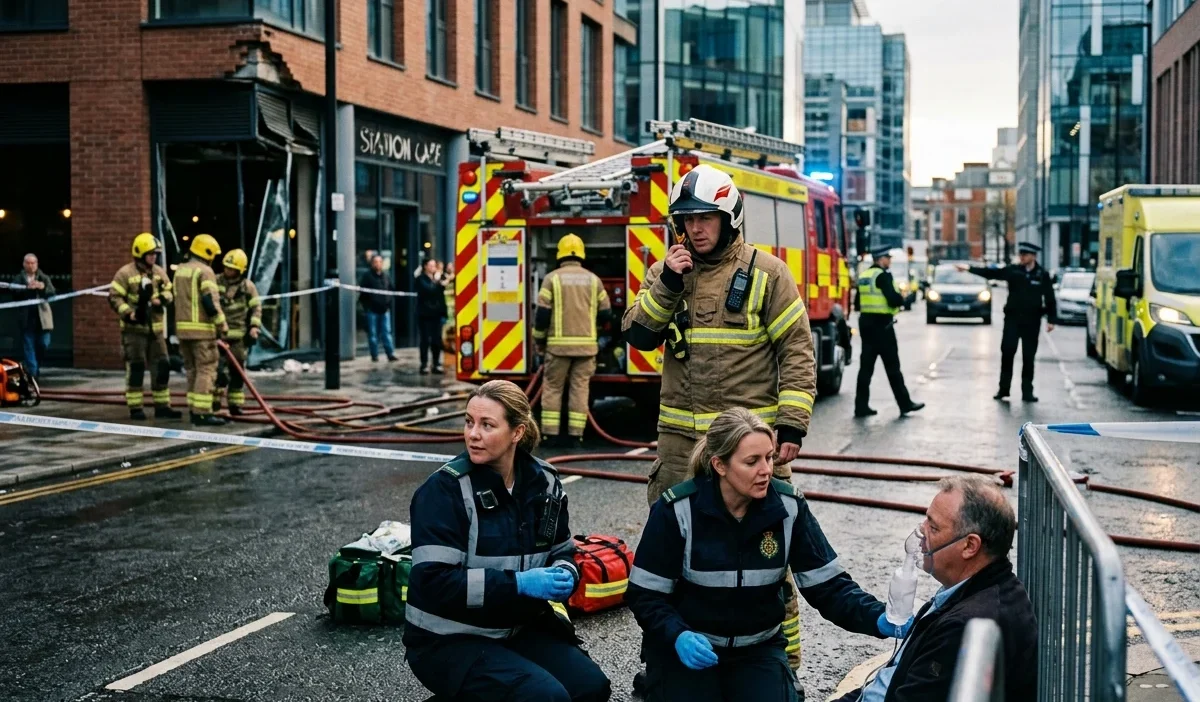
Knowing the right synonyms for emergency can make your English more precise, natural and effective. The word emergency is commonly used for a serious or unexpected situation that needs immediate attention. However, the best alternative depends on the situation, the level of danger and the type of writing.
For example, a sudden medical problem may be described as a crisis, while an unexpected difficulty at work could be called a predicament. A dangerous situation may be an urgent situation, critical situation or 危機 depending on the context. In formal writing, words such as contingency and crisis may be more suitable than casual alternatives.
Synonyms of Emergency
The word emergency has several related meanings. It can describe a dangerous situation, an urgent problem, a sudden crisis or an unexpected event requiring immediate action.
| Synonym | Pronunciation (IPA) | Part of Speech | Meaning | Example Sentence |
| Crisis | /ˈkraɪsɪs/ | Noun | A serious situation requiring urgent action | The organisation faced a financial crisis. |
| Urgency | /ˈɜːdʒənsi/ | Noun | The need for immediate attention or action | The situation was handled with great urgency. |
| Calamity | /kəˈlæməti/ | Noun | A serious disaster or misfortune | The earthquake was a terrible calamity. |
| Disaster | /dɪˈzɑːstə/ | Noun | A sudden event causing serious damage or harm | The flood became a major disaster. |
| Catastrophe | /kəˈtæstrəfi/ | Noun | An extremely serious or destructive event | The accident could have resulted in a catastrophe. |
| Predicament | /prɪˈdɪkəmənt/ | Noun | A difficult or unpleasant situation | They found themselves in a difficult predicament. |
| Plight | /plaɪt/ | Noun | A difficult or dangerous situation | The charity highlighted the plight of affected families. |
| Peril | /ˈperəl/ | Noun | Serious and immediate danger | The hikers were in considerable peril. |
| Danger | /ˈdeɪndʒə/ | Noun | The possibility of harm or injury | The workers were warned about the danger. |
| Hazard | /ˈhæzəd/ | Noun | Something that may cause harm or danger | Wet floors can create a serious hazard. |
| Exigency | /ˈeksɪdʒənsi/ | Noun | An urgent need or situation requiring action | The decision was made because of the exigencies of the situation. |
| Contingency | /kənˈtɪndʒənsi/ | Noun | A possible future event that requires preparation | The team created a contingency plan. |
| Critical situation | /ˈkrɪtɪkəl ˌsɪtʃuˈeɪʃən/ | Noun phrase | A situation requiring immediate attention | The hospital was dealing with a critical situation. |
| Urgent situation | /ˈɜːdʒənt ˌsɪtʃuˈeɪʃən/ | Noun phrase | A situation requiring quick action | Staff were called in to deal with the urgent situation. |
| Trouble | /ˈtrʌbəl/ | Noun | A problem or difficult situation | The engine developed trouble during the journey. |
| Crisis point | /ˈkraɪsɪs pɔɪnt/ | Noun phrase | A stage where a situation becomes extremely serious | The negotiations reached a crisis point. |
| Emergency situation | /ɪˈmɜːdʒənsi ˌsɪtʃuˈeɪʃən/ | Noun phrase | A situation needing immediate attention | The staff were trained to respond to an emergency situation. |
What Does Synonyms for Emergency Mean?
The phrase synonyms for emergency refers to alternative words and expressions that can describe an emergency or a closely related situation.
An emergency is generally an unexpected event or condition that requires immediate action. It can involve health, safety, natural events, transport, business, technology or everyday problems.
For example:
The hospital declared an emergency.
Here, the word suggests that normal procedures may not be enough and that immediate action is necessary.
However, the word can also be used more broadly.
I had an emergency at home and had to leave work early.
The situation may be serious, but the exact nature of the problem is not stated.
This is why choosing a synonym requires attention to context.
Emergency as a Dangerous Situation
When an emergency involves immediate danger, words such as danger, peril and hazard may be relevant.
However, these words are not identical.
Danger describes the possibility of harm.
Peril suggests serious or immediate danger.
Hazard usually refers to something that creates a risk.
For example:
The damaged bridge was a hazard.
This does not necessarily mean an emergency is already happening. It means the bridge presents a potential danger.
Emergency as a Serious Crisis
When an emergency involves a major problem that requires urgent decisions, crisis is often the strongest alternative.
For example:
The company entered a financial crisis.
A crisis may develop gradually rather than happen suddenly. An emergency, by contrast, often suggests an immediate need for action.
Emergency as an Urgent Need
Sometimes emergency focuses on the need to act quickly rather than the event itself.
In these situations, urgency can be useful.
For example:
The matter was treated with urgency.
Here, the emphasis is on speed and immediate attention.
Emergency as a Disaster
Some emergencies are caused by major destructive events.
In such cases, words such as disaster, calamity and catastrophe may be appropriate.
These words usually describe the scale or consequences of an event.
A disaster can be an emergency, but not every emergency is a disaster.
A broken water pipe might be an emergency for a household, but it would not normally be called a catastrophe.
Most Common Synonyms for Emergency
Crisis
Crisis is one of the most useful alternatives to emergency.
It describes a serious situation that requires important decisions or immediate action.
For example:
The government faced a major economic crisis.
The word is common in journalism, business, politics, education and everyday English.
A crisis does not always happen suddenly. It can build over time.
This is one important difference between crisis and emergency.
Urgency
Urgency focuses on the need to act quickly.
For example:
The issue was addressed with urgency.
Unlike emergency, urgency is not normally the name of the event itself. It describes how quickly something needs attention.
You can therefore say:
There is a sense of urgency.
But you would not normally use urgency as a direct replacement in every sentence containing emergency.
Disaster
A disaster is a serious event that causes significant damage, loss or disruption.
Natural disasters include floods, earthquakes and severe storms.
The word can also be used for personal or organisational problems.
For example:
The project became a complete disaster.
A disaster may create an emergency, but the two words focus on different aspects of the situation.
Calamity
Calamity describes a serious and often distressing event.
It is less common in everyday conversation than emergency or crisis.
For example:
The region suffered a devastating calamity.
It can add a serious or somewhat formal tone to writing.
Catastrophe
A catastrophe is an extremely serious event with severe consequences.
For example:
The failure of the safety system could have caused a catastrophe.
The word is stronger than emergency.
Calling a minor problem a catastrophe can therefore sound exaggerated.
Predicament
A predicament is a difficult or unpleasant situation.
For example:
We were in a difficult predicament after the vehicle broke down.
It does not necessarily involve danger or immediate action.
This makes it a weaker alternative to emergency in many situations.
Plight
Plight describes a difficult, unfortunate or distressing situation.
For example:
The report described the plight of displaced families.
It is particularly useful when focusing on people’s suffering or difficult circumstances.
It is not normally used for every type of urgent event.
Peril
Peril means serious danger.
For example:
The climbers were in peril.
It creates a strong sense of risk.
Unlike emergency, it focuses specifically on danger rather than the need for an organised response.
Danger
Danger is one of the simplest related words.
It refers to the possibility of harm.
For example:
The warning was issued because of the danger.
It is suitable for everyday English and formal communication.
However, danger does not necessarily mean that an emergency is taking place.
Hazard
A hazard is something that can cause harm.
For example:
Loose cables can become a safety hazard.
A hazard can exist before an emergency occurs.
This makes it particularly useful when discussing workplace safety, construction and public health.
Exigency
Exigency is a formal word for an urgent need or pressing situation.
For example:
The decision was made in response to the exigencies of the situation.
It is much more formal than emergency.
It is therefore more common in academic, legal or professional writing.
Contingency
A contingency is a possible future event or problem that people prepare for.
For example:
The company has a contingency plan.
This is different from an emergency that is already happening.
A contingency concerns preparation for what might happen.
Critical Situation
The phrase critical situation is useful when a problem has become extremely serious.
For example:
The engineers were called to deal with a critical situation.
It is particularly suitable for professional and formal communication.
Urgent Situation
An urgent situation is one that requires quick action.
For example:
The manager left the meeting to handle an urgent situation.
This phrase is clear and easy to understand.
It can sometimes be used when emergency sounds too dramatic.
Difference Between Synonyms for Emergency and Its Synonyms
Understanding the differences between related words helps you avoid awkward or inaccurate sentences.
Emergency vs Crisis
An emergency usually requires immediate action.
A crisis is a serious situation that may require urgent action, but it can also develop gradually.
For example:
The patient was taken to hospital because of a medical emergency.
But:
The company was experiencing a financial crisis.
Both situations are serious, but the focus is different.
Emergency vs Disaster
A disaster describes a destructive or highly damaging event.
An emergency focuses more on the immediate need for action.
For example, a major flood can be both a disaster and an emergency.
A minor medical problem can be an emergency without being a disaster.
Emergency vs Danger
Danger means a possibility of harm.
Emergency describes a situation in which immediate action is needed.
For example:
The broken electrical wire is a danger.
If someone is injured by it and requires immediate assistance, that becomes an emergency.
Emergency vs Hazard
A hazard is a source of possible harm.
An emergency is an urgent situation.
For example:
Wet stairs are a hazard.
If someone falls and suffers a serious injury, the resulting situation may become an emergency.
Emergency vs Calamity
A calamity is a serious misfortune or disaster.
It usually suggests a major negative event.
An emergency can be relatively small.
For example:
A child becoming seriously ill can be a family emergency.
Calling it a calamity would sound much more dramatic.
Emergency vs Predicament
A predicament is a difficult situation.
It does not necessarily involve urgency or danger.
For example:
We were in a predicament after missing the last train.
This may be inconvenient, but it is not necessarily an emergency.
Emergency vs Contingency
An emergency is happening or requires immediate attention.
A contingency is something that might happen in the future.
For example:
The staff responded to the emergency.
But:
The staff prepared a contingency plan.
The first describes a response. The second describes preparation.
Common Mistakes When Using Synonyms for Emergency
Treating Every Synonym as Identical
The most common mistake is assuming that all alternatives can replace emergency in every sentence.
They cannot.
Each word has a specific focus.
Crisis emphasises a serious problem.
Danger emphasises risk.
Hazard refers to a source of risk.
Urgency emphasises the need for speed.
Disaster emphasises serious damage.
Using Catastrophe for Minor Problems
Catastrophe is a very strong word.
Saying:
Losing my pen was a catastrophe.
may be grammatically correct, but it is usually humorous or exaggerated.
For a small problem, difficulty, problem or predicament may be more appropriate.
Confusing Hazard with Emergency
A hazard is a potential source of danger.
An emergency requires immediate action.
For example, an uncovered hole may be a hazard. Someone falling into it and suffering a serious injury could create an emergency.
Confusing Contingency with Emergency
A contingency concerns something that may happen.
An emergency is an urgent situation.
Therefore, a contingency plan is designed to prepare for possible problems.
Using Formal Words in Casual Conversation
Words such as exigency can sound overly formal in everyday speech.
Instead of:
I have an exigency at home.
a natural speaker would usually say:
I have an emergency at home.
Choose vocabulary according to your audience and purpose.
Ignoring the Level of Urgency
Not every serious problem requires immediate action.
A crisis may last for days, weeks or months.
An emergency usually demands faster attention.
Understanding this difference makes your writing more accurate.
Tips for Using Synonyms for Emergency Correctly
Identify the Main Meaning
Before choosing a synonym, ask what you want to emphasise.
Is it:
- immediate action?
- danger?
- serious damage?
- a difficult situation?
- a sudden increase in problems?
- preparation for a possible event?
Your answer will help you select the right word.
Use Crisis for Serious Problems
Choose crisis when describing a major problem that needs attention, especially in business, politics, finance or society.
For example:
The organisation is dealing with a serious crisis.
Use Urgency for the Need to Act Quickly
Choose urgency when the speed of response is the main point.
For example:
The message was sent with a sense of urgency.
Use Disaster for Major Damage
Choose disaster when an event causes widespread destruction, loss or disruption.
For example:
The storm became a natural disaster.
Use Danger for Risk
Choose danger when you are talking about the possibility of harm.
For example:
The warning highlighted the danger of driving too quickly.
Use Hazard for a Source of Harm
Use hazard when something creates a potential safety risk.
For example:
Chemicals can present a serious workplace hazard.
Use Peril for Serious Danger
Choose peril when the danger is severe and immediate.
For example:
The passengers were placed in peril by the damaged vessel.
Use Contingency for Preparation
Use contingency when discussing a possible future problem.
For example:
The team prepared a contingency plan in case the system failed.
Match the Tone
Think about whether your writing is casual, academic, professional or creative.
Emergency is neutral and widely used.
Crisis is also common but can sound more serious.
Exigency is formal.
Catastrophe is very strong.
Predicament is often less dramatic.
Choosing the right tone makes your writing sound more natural.
Summary
There are many useful synonyms for emergency, but each one carries a slightly different meaning. Crisis is ideal for serious problems, while urgency focuses on the need for immediate action. Danger refers to possible harm, whereas hazard describes something that can cause harm.
For major destructive events, disaster, calamity and catastrophe may be suitable. Predicament and plight describe difficult circumstances without necessarily suggesting immediate danger. Peril is useful when the focus is on serious risk, while contingency is mainly used for possible future situations and preparation.
The best synonym is therefore determined by context. Instead of replacing emergency simply to avoid repetition, choose a word that expresses the exact idea you want your reader to understand.
FAQ
1. What is the best synonym for emergency?
Crisis is one of the closest and most common alternatives, but the best synonym depends on context. Urgency, disaster, danger, predicament and critical situation may also be suitable.
2. Is crisis the same as emergency?
Not exactly. An emergency usually requires immediate action, while a crisis is a serious problem that may develop over time. Some situations can be both a crisis and an emergency.
3. What is a synonym for emergency in formal English?
Exigency is a formal alternative that refers to an urgent need or pressing situation. Critical situation is another clear option for professional writing.
4. What is the difference between an emergency and a disaster?
An emergency is a situation requiring immediate action. A disaster is a highly damaging or destructive event. A disaster can create an emergency, but not every emergency is a disaster.
5. Is danger a synonym for emergency?
It can be related in meaning, but the words are not identical. Danger refers to the possibility of harm, whereas an emergency is an urgent situation requiring action.
6. What is another word for an urgent situation?
You can use critical situation, emergency situation, crisis, urgent matter or exigency, depending on the context and level of formality.
7. Is catastrophe stronger than emergency?
Usually, yes. Catastrophe suggests an extremely serious or destructive event. Emergency is broader and can describe situations ranging from relatively small urgent problems to major events.
8. What is the difference between contingency and emergency?
A contingency is a possible future event or problem for which people prepare. An emergency is an urgent situation that requires immediate attention or action.